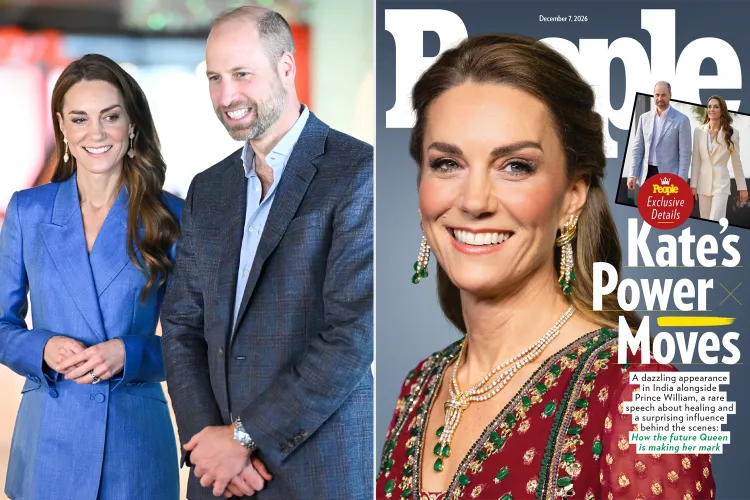
Kate Middleton has steadily transformed her position within the British royal family, becoming one of its most influential and closely watched figures. Once introduced to the public primarily as Prince William’s future wife, the Princess of Wales has developed a distinct royal identity built around diplomacy, public service, family values, and a growing commitment to issues that shape the lives of future generations.
As the wife of the heir to the British throne, Catherine occupies a unique position. Her influence is not measured through political authority or formal decision-making power, but through the causes she champions, the relationships she builds, and the way she represents the monarchy to millions of people around the world.
In recent years, her public role has taken on even greater significance. From her work supporting early childhood development to her carefully considered appearances at major national and international events, Kate has demonstrated an increasingly confident understanding of what modern royal leadership can look like.
Her approach is often quiet rather than dramatic, but that may be precisely what makes it effective. The Princess of Wales is becoming a central figure in the monarchy’s future, and her influence appears stronger than ever.
Kate Middleton Is Building a Royal Identity of Her Own
One of Catherine’s most important achievements has been establishing an identity that extends beyond her marriage to Prince William.
When she joined the royal family in 2011, public attention naturally focused on her transition from a commoner to the wife of a future king. Over time, however, she developed a recognizable approach to royal duties, choosing causes that reflect her interests and allowing her work to become a defining part of her public image.
Rather than attempting to dominate every headline, Kate has often focused on long-term projects that require consistency and patience. Her work has increasingly centered on family life, children’s development, mental well-being, and the importance of supportive relationships during the earliest years of life.
This has helped distinguish her role from that of other senior royals. She is not simply attending ceremonies or representing the Crown at official events. She is also using her position to bring attention to subjects that can influence public conversations and encourage practical change.
For a future queen consort, developing a clear sense of purpose is essential. Catherine appears to understand that lasting influence comes not only from visibility but also from the ability to build trust over time.
The Early Years Initiative Is One of Her Biggest Power Moves
Perhaps the clearest example of Kate’s growing influence is her commitment to early childhood development.
Through the Royal Foundation Centre for Early Childhood, launched in 2021, Catherine has worked to raise awareness of how experiences during the earliest years of life can shape emotional, social, and physical development.
Her approach is based on the idea that childhood experiences, relationships, and environments can have lasting effects on a person’s future well-being. Instead of treating early childhood as a private family matter, she has helped bring the subject into wider discussions involving education, health, business, and society.
In 2023, she introduced the Shaping Us campaign, designed to highlight the importance of the first five years of life and encourage greater understanding of how children develop.
This work represents a significant step in her royal journey. It gives her a long-term platform that is closely connected to her public responsibilities while allowing her to engage with experts, researchers, charities, and communities.
It also demonstrates a different kind of royal influence. Catherine does not need to make political decisions to contribute to meaningful discussions. By using her platform to highlight research and encourage collaboration, she can help bring attention to issues that might otherwise receive less public focus.
Her Public Image Combines Tradition With Modern Royal Leadership
The Princess of Wales has become particularly effective at balancing the traditions of the monarchy with the expectations of a modern audience.
Royal life comes with strict expectations, ceremonial responsibilities, and a long history of public service. At the same time, the public increasingly expects members of the royal family to appear approachable, communicate clearly, and demonstrate an understanding of contemporary challenges.
Kate’s public image often brings these elements together.
At formal occasions, she embraces the traditions associated with the royal family. Her appearance, clothing choices, and respectful approach to royal protocol reinforce the institution’s continuity. Yet during community visits and engagements with families, she often adopts a more relaxed manner that allows personal connections to develop.
Her fashion choices also contribute to her public influence. Catherine frequently wears British designers and has been known to repeat outfits, a practice that can draw attention to sustainability and the value of thoughtful wardrobe choices.
Her clothing is rarely just a matter of personal style. Because of the attention she receives, even relatively small decisions can influence fashion conversations, increase interest in particular designers, and bring visibility to British brands.
This combination of tradition and accessibility has helped her become one of the monarchy’s most recognizable representatives.
Her Partnership With Prince William Shapes the Monarchy’s Future
Kate’s influence is also closely connected to her partnership with Prince William.
As the Prince and Princess of Wales, the couple represent the next generation of the monarchy. Their public responsibilities are not identical, but their work often complements one another.
William has increasingly focused on major issues such as homelessness, environmental protection, and community development. Catherine’s work has developed around early childhood, family relationships, and emotional well-being.
Together, they present an image of a future royal household that is interested in both national responsibilities and the challenges affecting ordinary families.
Their family life also plays an important role in shaping public perceptions. As parents to Prince George, Princess Charlotte, and Prince Louis, they have often emphasized the importance of providing their children with stability and a sense of normality despite their unusual circumstances.
The couple’s efforts to balance royal duties with parenting responsibilities make their public image relatable to many families.
For the monarchy, this partnership could become increasingly important as King Charles III’s reign continues. William and Catherine are preparing for future responsibilities while building a public identity that reflects their own priorities.
The Princess of Wales Has Become a Powerful Diplomatic Presence
Another important part of Kate’s growing influence is her role in royal diplomacy.
Members of the royal family regularly participate in state visits, international tours, and official receptions. These occasions are not merely ceremonial. They provide opportunities to strengthen relationships, celebrate shared history, and demonstrate goodwill between countries.
Catherine’s presence at such events has become increasingly significant.
Her ability to communicate warmth and respect, combined with her understanding of royal protocol, helps her represent Britain on the international stage. She can engage with political leaders, cultural figures, charitable organizations, and members of the public without needing to hold a formal political position.
Her diplomatic role is also supported by her interest in cultural exchange and education. Royal engagements often allow her to highlight shared experiences and recognize the contributions of individuals and organizations across different communities.
In this sense, her influence operates through relationships rather than authority. It is a form of public diplomacy that depends on personal interaction, careful representation, and the symbolic importance of the royal institution.
Her Resilience Has Strengthened Public Respect
Catherine’s public standing has also been shaped by her personal resilience.
In 2024, she announced that she had been diagnosed with cancer and was undergoing preventative chemotherapy. The announcement prompted an enormous public response and brought attention to the personal challenges she was facing away from royal duties.
She later announced that she had completed her chemotherapy treatment, while making clear that recovery would take time. Her experience offered a rare glimpse into the private difficulties faced by someone whose public responsibilities are often carefully managed.
Her decision to speak openly about her health helped encourage conversations about cancer, treatment, and the emotional impact of serious illness.
It also changed the way many people viewed her. Rather than seeing only a composed royal figure, audiences were reminded that Catherine is also a mother, wife, and individual navigating difficult circumstances.
Her gradual return to public duties has demonstrated the importance of balancing responsibility with personal well-being. Although her schedule and level of activity may change according to her health, her commitment to her work remains an important part of her public identity.
Kate’s Influence Extends Beyond the Palace
One reason Catherine has become so influential is that her work reaches beyond the traditional boundaries of royal engagements.
Her early childhood initiative, for example, connects the royal family with researchers, educators, health professionals, business leaders, and charitable organizations. This creates opportunities for collaboration that extend well beyond the palace.
Her public appearances can also generate attention for smaller organizations and local communities. A visit from the Princess of Wales may bring media coverage to a charity, highlight the work of volunteers, or introduce an important social issue to a much wider audience.
That visibility is one of the monarchy’s most valuable resources.
Catherine’s influence is particularly effective because she tends to focus on subjects that affect people across different backgrounds. Early childhood development, family support, and mental well-being are not limited to one political group or social class.
By highlighting these issues, she can help create conversations that bring different parts of society together.
Why Kate Middleton’s Role Could Become Even More Important
As the future queen consort, Catherine’s responsibilities will eventually expand. She will be expected to support the monarch, represent the United Kingdom, participate in state occasions, and maintain relationships with communities and institutions at home and abroad.
However, her future influence will likely depend on the foundations she is building today.
Her long-term work on early childhood development gives her a recognizable area of expertise and advocacy. Her public image combines royal tradition with a modern understanding of family life. Her partnership with William provides a shared vision for the next chapter of the monarchy.
At the same time, she has shown that personal circumstances can require adjustments to public responsibilities. Her experience with cancer has reinforced the importance of compassion, privacy, and resilience in public life.
The challenge ahead will be maintaining these priorities while taking on the greater demands associated with becoming queen consort.
A Future Queen With a Distinct Vision
Kate Middleton’s growing influence is not the result of one dramatic announcement or a single high-profile appearance. It has developed through years of consistent work, carefully chosen causes, and an increasingly confident approach to royal service.
She has demonstrated that modern royal leadership can involve more than ceremonies and tradition. It can also mean supporting research, encouraging public awareness, building partnerships, and using a global platform to highlight issues that affect everyday life.
Her position as Prince William’s wife gives her a central place in the monarchy’s future, but her work is helping define what that future might look like.
As the Princess of Wales continues to shape her role, her influence is likely to remain an important part of the royal family’s evolution. She may not seek attention through bold declarations, but her steady approach is proving powerful in its own way.
For a woman preparing to become queen, that combination of purpose, patience, and public connection could become one of her greatest strengths.