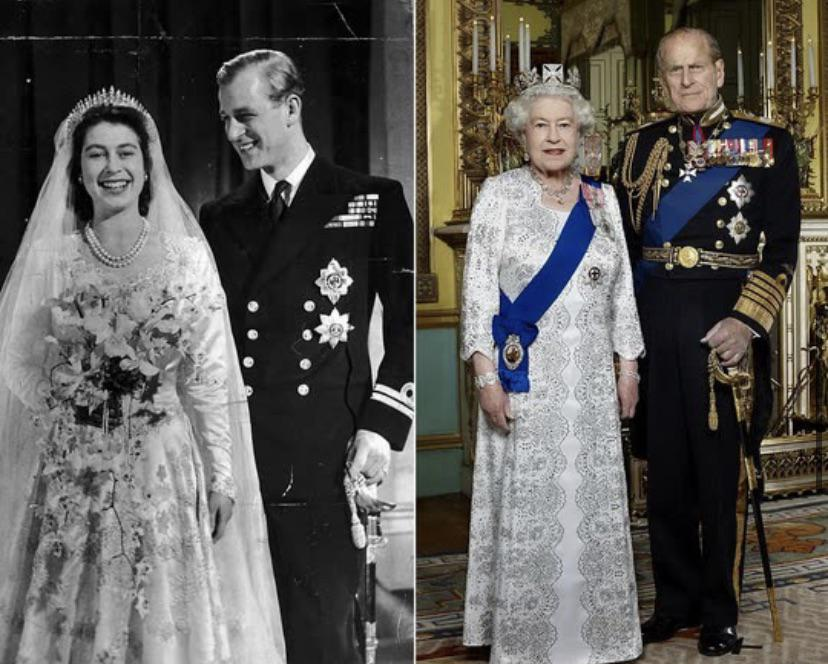
November 20, 1947, marked one of the most memorable occasions in British royal history. On that day, Princess Elizabeth, the future Queen Elizabeth II, married Lieutenant Philip Mountbatten at Westminster Abbey in London. Their wedding brought glamour, excitement, and a sense of hope to a country still recovering from the devastation of World War II.
Now, 79 years after that historic celebration, the story of Queen Elizabeth and Prince Philip’s wedding continues to fascinate royal enthusiasts around the world. From the bride’s extraordinary Norman Hartnell wedding dress to the thousands of spectators who gathered outside Westminster Abbey, almost every detail of their special day became part of royal history.
But beyond the magnificent ceremony and royal traditions, the wedding represented the beginning of a remarkable partnership that would last more than seven decades. Their marriage became the longest in British royal history, making their 1947 wedding an especially meaningful chapter in the story of the monarchy.
A Royal Love Story That Began Long Before the Wedding
The relationship between Princess Elizabeth and Prince Philip began years before their wedding day. The pair first met in 1934 at the wedding of Princess Marina of Greece and Denmark to Prince George, Duke of Kent. Elizabeth was still a young child, while Philip was a teenager.
They encountered each other again in 1939 when Princess Elizabeth visited the Royal Naval College in Dartmouth with her family. Philip, then a young naval cadet, was asked to entertain Elizabeth and her sister, Princess Margaret.
Although their first encounters were relatively brief, their connection gradually developed into something much deeper.
Elizabeth reportedly became increasingly interested in Philip, and the two began exchanging letters while he served in the Royal Navy during World War II.
Their relationship continued despite the challenges of distance, military responsibilities, and the expectations surrounding a future queen.
In July 1947, their engagement was officially announced, creating enormous excitement throughout Britain. The announcement came just four months before their wedding, giving the couple a relatively short period to prepare for one of the biggest royal celebrations of the decade.
Philip also made important adjustments before marrying the future monarch. He became a British subject, adopted the surname Mountbatten, and was granted the title Duke of Edinburgh shortly before the wedding.
Inside Princess Elizabeth’s Spectacular Wedding Dress
One of the biggest talking points surrounding the royal wedding was undoubtedly Princess Elizabeth’s wedding dress.
Designed by renowned British couturier Norman Hartnell, the gown became one of the most recognizable royal bridal outfits of the 20th century.
Hartnell drew inspiration from Sandro Botticelli’s famous Renaissance painting Primavera, using its floral imagery to create a design that symbolized renewal, hope, and new beginnings.
The choice was particularly meaningful in 1947. Britain was still experiencing the effects of wartime hardship, and the wedding offered a welcome moment of celebration after years of uncertainty.
The dress was made from luxurious ivory duchesse satin and featured a fitted bodice, long sleeves, a heart-shaped neckline, and a beautiful flowing skirt.
Its most extraordinary feature was the long silk tulle train, measuring approximately 13 feet. The gown was decorated with thousands of seed pearls, sparkling crystals, and intricate floral embroidery.
The embroidered flowers included roses, jasmine, and orange blossom, each carrying traditional symbolic meanings associated with love, happiness, and prosperity.
Princess Elizabeth also wore a beautiful diamond fringe tiara, which was lent to her by her mother, Queen Elizabeth.
Interestingly, the dress was created during a period when clothing rationing remained in force across Britain. Even a royal bride was required to follow the restrictions.
Elizabeth received additional clothing coupons to help pay for her wedding outfit. Supporters from across the country even offered to send their own coupons, although regulations meant those contributions could not legally be used and had to be returned.
The dress ultimately became a stunning example of British craftsmanship and remains an important piece of royal fashion history.
Westminster Abbey Welcomes a Historic Royal Wedding
On Thursday, November 20, 1947, Westminster Abbey became the center of attention as members of the royal family, distinguished guests, and thousands of spectators gathered to witness the marriage.
The ceremony began at 11:30 a.m., with approximately 2,000 guests inside the historic church.
Princess Elizabeth arrived with her father, King George VI, in the Irish State Coach. Her appearance was greeted with enormous excitement from the crowds who had gathered along the streets.
She was accompanied by eight bridesmaids, including her younger sister, Princess Margaret. The bridal procession entered the Abbey to a specially composed fanfare by Sir Arnold Bax.
Philip had already arrived quietly at the church and was waiting for his bride.
Dressed in his naval uniform, he stood alongside his best man, Lord Milford Haven, as the ceremony began.
The wedding service followed traditional royal and Anglican customs, with the couple exchanging vows before family members and distinguished guests.
One particularly meaningful detail was Elizabeth’s wedding ring. It was made using Welsh gold from the Clogau St David’s mine, a tradition that would continue to be associated with several other royal wedding rings.
When the ceremony concluded, the newly married couple processed from Westminster Abbey to Buckingham Palace, where celebrations continued.
For Britain, the wedding was more than a glamorous royal occasion. It was a moment of optimism during a difficult period in the country’s history.
The Royal Wedding Reception and Extraordinary Wedding Cake
Following the ceremony, Princess Elizabeth and Prince Philip returned to Buckingham Palace for their wedding breakfast.
The reception brought together members of the royal family, foreign royalty, politicians, and other important guests.
The wedding breakfast featured an impressive selection of dishes prepared for the occasion, although postwar food restrictions still influenced the celebrations.
One of the most remarkable attractions was the wedding cake.
The couple reportedly received 12 official wedding cakes, with ingredients sent from overseas because food rationing continued to affect Britain.
Their main wedding cake was particularly impressive, standing approximately nine feet tall and featuring four tiers.
Decorated with intricate designs, royal symbols, and elaborate icing, the cake became another unforgettable feature of the celebration.
Philip used his naval sword to cut the cake, creating one of the memorable photographic moments of the day.
The wedding also attracted an extraordinary number of presents and congratulatory messages from people around the world. The couple received thousands of gifts, demonstrating the enormous public interest in their marriage.
A Balcony Appearance That Captured the Nation’s Heart
After the wedding ceremony and reception, Elizabeth and Philip made an appearance on the balcony of Buckingham Palace.
Thousands of people had gathered outside the palace, hoping to catch a glimpse of the newlyweds.
Their appearance was greeted with enthusiastic cheers as the couple stood together before the enormous crowd.
Photographs from that moment remain among the most recognizable images of the 1947 royal wedding.
The balcony appearance also symbolized the beginning of their public life as husband and wife.
For Princess Elizabeth, it marked the start of a future that would eventually see her become Britain’s longest-reigning monarch.
For Philip, it represented the beginning of a lifelong commitment to supporting his wife and the institution of the monarchy.
Their Honeymoon at Broadlands
Following the wedding celebrations, the newlyweds departed for their honeymoon in Hampshire.
Their first destination was Broadlands, the country home of Philip’s uncle, Lord Mountbatten.
The couple later spent time at Balmoral in Scotland, enjoying a quieter period away from the attention surrounding their wedding.
Their beloved corgi, Susan, also accompanied them on their honeymoon.
Photographs from Broadlands show the young couple walking together through the estate grounds, offering a glimpse of their happiness during the earliest days of their marriage.
Interestingly, Broadlands would remain an important location in their personal history. In 2007, Elizabeth and Philip returned there to celebrate their Diamond Wedding Anniversary, recreating a photograph from their honeymoon decades earlier.
A Marriage That Lasted More Than 73 Years
The 1947 wedding marked the beginning of a partnership that would withstand enormous personal and public responsibilities.
Elizabeth became Queen in February 1952 following the death of her father, King George VI. Philip subsequently took on an increasingly important role supporting her throughout her reign.
Together, they welcomed four children: King Charles III, Princess Anne, Prince Andrew, and Prince Edward.
Their family grew to include eight grandchildren and numerous great-grandchildren, creating several generations of the royal family.
Although their marriage was not without challenges, they remained together through decades of royal duties, international travel, family milestones, and national celebrations.
Prince Philip retired from public duties in 2017 after decades of service.
He died on April 9, 2021, at Windsor Castle, aged 99. Queen Elizabeth died on September 8, 2022, at Balmoral Castle, aged 96.
Their marriage had lasted 73 years and 139 days.
Throughout those decades, Philip was widely recognized as the Queen’s closest companion and a constant source of support.
Remembering a Royal Wedding 79 Years Later
As November 20, 2026, marks 79 years since Queen Elizabeth and Prince Philip exchanged their wedding vows, their special day remains an extraordinary part of British history.
The ceremony took place during a period of national recovery, bringing happiness to a country that had experienced years of war and hardship.
Every detail, from Elizabeth’s beautifully embroidered wedding dress to the couple’s appearance on the Buckingham Palace balcony, helped create an unforgettable royal occasion.
Yet the most remarkable part of the story was not the grandeur of the wedding itself. It was the enduring partnership that followed.
Their marriage witnessed the transformation of the British monarchy, the arrival of four children, the passing of generations, and some of the most significant moments in modern British history.
Although both Elizabeth and Philip are no longer here, their wedding photographs and memories continue to remind royal admirers of the love story that began in 1947.
Seventy-nine years later, their wedding remains more than a beautiful royal celebration. It represents devotion, companionship, resilience, and a lifetime spent standing together through changing times.