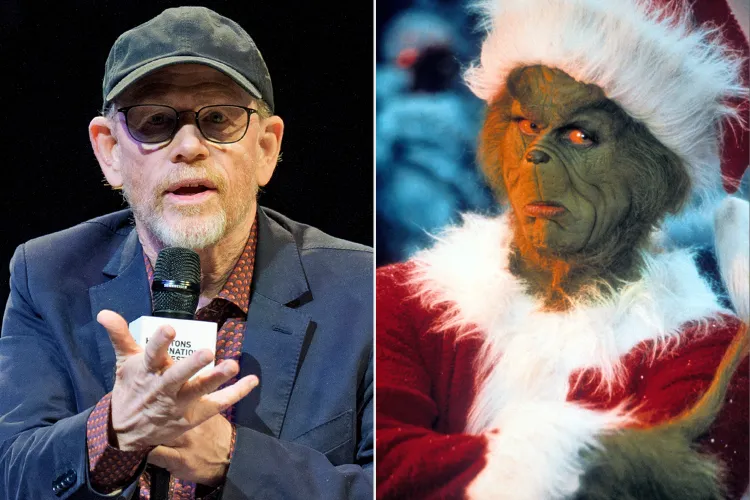
The possibility of a sequel to one of the most beloved Christmas movies of all time has once again captured the attention of Hollywood fans. Director Ron Howard has addressed the idea of revisiting How the Grinch Stole Christmas, the 2000 holiday classic starring Jim Carrey, making it clear that a follow-up would only happen under one important condition: it would have to be truly great.
For millions of viewers, Jim Carrey’s unforgettable portrayal of the green Christmas-hating character remains one of the most entertaining performances in holiday movie history. His exaggerated expressions, hilarious physical comedy, and surprisingly emotional transformation helped turn the film into a seasonal favorite that continues attracting new generations of audiences.
However, despite the ongoing enthusiasm surrounding a potential sequel, Howard is not interested in bringing the Grinch back simply for the sake of nostalgia. His comments suggest that both the creative quality of the project and the legacy of the original film would play an essential role in any decision to move forward.
And with Jim Carrey’s iconic performance still firmly embedded in popular culture, expectations for another Grinch adventure would undoubtedly be enormous.
Ron Howard Explains Why a Grinch Sequel Is Not Guaranteed
Ron Howard understands better than most filmmakers that a successful movie does not automatically need a sequel.
The original How the Grinch Stole Christmas became a major holiday entertainment favorite after its release in 2000. Based on Dr. Seuss’s classic children’s book, the live-action adaptation brought the familiar Christmas story to life with elaborate production design, colorful costumes, memorable characters, and Jim Carrey’s extraordinary comic energy.
More than two decades later, the film remains a regular part of Christmas viewing traditions for countless families.
Naturally, that lasting popularity has created interest in a possible continuation of the story. Yet Howard’s position is refreshingly cautious.
His comments indicate that he and Carrey would not simply agree to another installment because audiences recognize the character or because a sequel could generate significant commercial interest.
The project would need a compelling creative reason to exist.
A sequel that merely repeats the jokes, visual style, and emotional beats of the original could struggle to capture the same magic. For Howard, the challenge would be finding an idea that feels fresh while respecting what made the first movie special.
That approach could be particularly important for a character as recognizable as the Grinch.
Jim Carrey’s Performance Made the Original Grinch Unforgettable
One of the biggest reasons audiences continue asking about a sequel is Jim Carrey’s extraordinary transformation into the Grinch.
When the actor took on the role, he faced the challenge of bringing a familiar literary character to life without losing the personality that made the original story so beloved.
The result was a performance that combined physical comedy, unusual vocal expressions, exaggerated movements, and moments of genuine emotional vulnerability.
Carrey’s Grinch was mischievous, sarcastic, unpredictable, and often hilariously dramatic. Yet beneath the green makeup and outrageous behavior was a lonely character who had become disconnected from the community around him.
That combination helped make the movie more than a collection of Christmas jokes.
Carrey’s portrayal gave audiences a character they could laugh at while also understanding his emotional struggles. His eventual transformation from a bitter outsider into someone who discovers the meaning of Christmas provided the film with its enduring emotional appeal.
The actor’s performance also became one of the most recognizable roles of his career.
For a sequel to succeed, it would need to preserve that distinctive personality while giving the character a meaningful new direction.
Why Matching the Original Movie’s Magic Would Be Difficult
Creating a sequel to a beloved holiday classic comes with considerable pressure.
Audiences who grew up watching How the Grinch Stole Christmas have strong memories of its humor, music, costumes, and emotional storytelling. Many viewers return to the movie every December, making it part of their personal holiday traditions.
That familiarity can become both an advantage and a challenge.
On one hand, the Grinch already has an established audience. A new movie featuring Carrey could generate enormous excitement.
On the other hand, expectations would be difficult to satisfy.
A sequel would need to offer more than another adventure involving the Grinch and the residents of Whoville. It would need a storyline that justifies bringing these characters back after the emotional resolution of the original film.
The filmmakers would also need to consider how much the characters have changed.
Would the Grinch still struggle with his relationship with Christmas? Would he have become a respected member of Whoville? Could a new conflict challenge the lessons he learned in the first movie?
These questions offer several storytelling possibilities, but choosing the right one would require considerable creativity.
Howard’s insistence that the project must have a chance to be great suggests that he recognizes the importance of getting those decisions right.
Ron Howard and Jim Carrey’s Creative Partnership
Ron Howard and Jim Carrey played important roles in making the original film successful.
Howard, known for his ability to balance large-scale entertainment with emotional storytelling, helped create the movie’s distinctive visual world.
The production brought Whoville to life through elaborate sets, imaginative costumes, and a colorful aesthetic inspired by Dr. Seuss’s illustrations.
Meanwhile, Carrey supplied the unpredictable energy that made the Grinch such an entertaining central character.
Their collaboration required a careful balance between the movie’s visual spectacle and its emotional foundation.
The Grinch could be outrageous and funny, but the story also needed audiences to understand why he disliked Christmas and what eventually changed his heart.
That balance remains a major reason the movie continues to connect with viewers.
A reunion between Howard and Carrey could therefore be an exciting prospect. Their familiarity with the character and the original production would provide a valuable foundation for another installment.
However, recreating the same creative chemistry would not necessarily guarantee an equally successful sequel.
The story itself would still need to justify the return.
Jim Carrey’s Return Would Be a Major Attraction
Another important factor in the sequel conversation is Jim Carrey’s participation.
The actor has built an impressive career through performances in movies such as The Mask, Ace Ventura: Pet Detective, Dumb and Dumber, and The Truman Show.
His ability to move between outrageous comedy and more emotionally complex roles has made him one of the most distinctive performers of his generation.
However, his relationship with major Hollywood projects has evolved over the years, and any decision to revisit an iconic character would likely depend on whether the material genuinely interested him.
For many fans, a Grinch sequel without Carrey would feel very different.
His physical performance was so closely connected to the character that replacing him could create a difficult challenge for filmmakers.
A return would also provide an opportunity to explore how the Grinch has changed over the years.
The character could be older, wiser, and more comfortable with his place in Whoville, but he would still retain the sarcastic personality that audiences love.
That contrast could create plenty of opportunities for comedy and emotional storytelling.
What Could a Grinch Sequel Story Be About?
Although no specific sequel storyline is guaranteed, there are several directions a new film could explore.
One possibility would be to examine the Grinch’s life after becoming part of the Whoville community.
In the original movie, he discovers that Christmas is about more than presents, decorations, and material possessions. His transformation allows him to experience friendship, acceptance, and belonging.
A sequel could explore what happens when maintaining those relationships becomes more complicated.
Another possibility would be to introduce a new character who struggles with isolation, anger, or disappointment.
The Grinch could then find himself in an unexpected position: helping someone else understand the importance of kindness and connection.
Such a storyline would allow the filmmakers to revisit the emotional themes of the original without simply repeating its plot.
There could also be opportunities to expand the world of Whoville, introducing new locations, traditions, and characters while maintaining the imaginative atmosphere that made the first film memorable.
Whatever direction the filmmakers choose, the sequel would need to retain the heart of the original story.
Why Fans Still Want to See the Grinch Return
The continued popularity of How the Grinch Stole Christmas demonstrates the lasting appeal of holiday entertainment built around memorable characters and universal themes.
For many families, watching the film has become an annual tradition. Parents introduce it to their children, longtime fans revisit their favorite scenes, and Jim Carrey’s performance continues generating laughter year after year.
The movie also carries a message that remains relevant beyond the Christmas season.
It reminds audiences that kindness, friendship, and community are more meaningful than expensive gifts or elaborate celebrations.
That emotional message gives the story a timeless quality.
A sequel could introduce those themes to a new generation while allowing longtime fans to reconnect with a character they already know and love.
However, nostalgia alone cannot guarantee a satisfying movie.
Audiences want something that respects their memories while offering a worthwhile new experience.
This is precisely why Howard’s comments have attracted attention. His position suggests that protecting the original film’s legacy matters more than rushing into another production.
Ron Howard’s High Standards Could Be Good News for the Grinch’s Future
Although fans may be eager to see Jim Carrey return as the Grinch, Ron Howard’s cautious approach could ultimately benefit the possibility of a sequel.
Some of the most disappointing follow-ups in Hollywood history have emerged when studios prioritize commercial opportunities over storytelling.
A successful original film creates expectations, but those expectations should not become an excuse to produce another installment without a strong creative vision.
Howard’s emphasis on making something great suggests that he understands the responsibility involved in revisiting such an iconic movie.
If a genuinely entertaining story emerges and Carrey is equally enthusiastic, the possibility of another Grinch adventure could become much more exciting.
Until then, the original film remains a beloved holiday classic that audiences can enjoy without needing a continuation.
Will Jim Carrey and Ron Howard Ever Make a Grinch Sequel?
For now, the prospect of a live-action How the Grinch Stole Christmas sequel remains an intriguing possibility rather than a guaranteed project.
Ron Howard’s comments make one thing clear: any return would need to meet a high creative standard. The involvement of Jim Carrey, a compelling script, and a story worthy of the original would all be important considerations.
Fans may have to remain patient, but the interest surrounding the idea demonstrates just how deeply the 2000 movie has become part of Christmas movie culture.
More than two decades after its release, Jim Carrey’s Grinch continues to entertain audiences with his unforgettable personality and surprisingly big heart.
And if Howard and Carrey eventually decide that the right story has arrived, their return to Whoville could become one of the most anticipated holiday movie events in years.
Until that moment, one thing remains certain: a great Christmas sequel should never be made simply because audiences want another one. It should be made because there is a story worth telling.