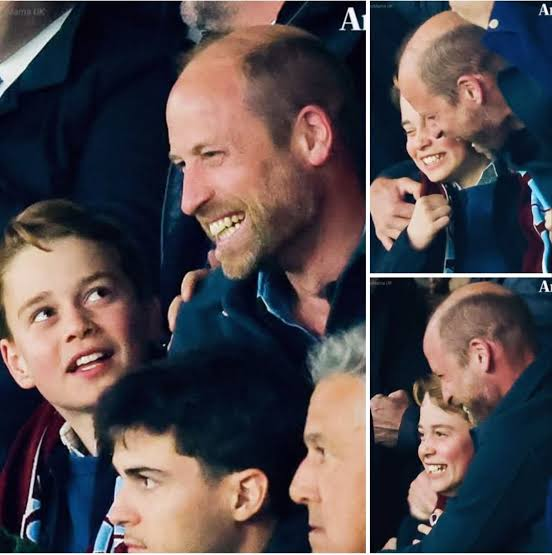
The future of the British monarchy may have been summed up in one deeply touching image of a father and his son. Prince William and Prince George have long attracted public attention during their appearances together, but their growing bond is becoming increasingly significant as the royal family prepares for the next generation of leadership. According to royal experts, the special connection between the Prince of Wales and his eldest child represents something far greater than an affectionate family relationship. Their apparent mutual devotion could play an important role in shaping the monarchy’s future.
As the eldest son of King Charles III, Prince William is expected to one day become king. Meanwhile, Prince George, currently second in line to the throne after his father, is gradually growing into his unique position within the royal family. Their relationship therefore carries both a deeply personal meaning and an important constitutional dimension.
Behind the formal ceremonies, royal traditions, and carefully managed public appearances is a father and son sharing the experiences of growing up within one of the world’s most recognizable institutions.
One Touching Image Reveals the Special Bond Between William and George
Photographs of Prince William and Prince George frequently attract attention because they offer a glimpse into a relationship that is developing under extraordinary circumstances.
Whether attending major royal celebrations, sporting events, or family occasions, the pair have often appeared comfortable in one another’s company. Small gestures, shared smiles, and moments of encouragement can sometimes communicate more than lengthy public statements.
For royal watchers, these moments are particularly meaningful because the British monarchy is not simply a family. It is an institution built around continuity, responsibility, and the passing of duties from one generation to another.
An affectionate image of William and George can therefore carry several layers of meaning.
On a personal level, it reflects the relationship between a father and his growing son. On a broader level, it offers a reassuring picture of the future of the royal family, suggesting that the next generation is developing within an environment where family relationships remain important.
Royal experts have increasingly highlighted the significance of the apparent mutual devotion between the two. Their connection is seen as an important part of the transition that will eventually take place when William inherits the throne.
The monarchy may rely on centuries-old traditions, but its future will also depend on the people who represent it.
Prince William’s Role as a Father Is Shaping the Next Generation
Prince William has frequently demonstrated that fatherhood is one of the most important parts of his life.
Together with Catherine, Princess of Wales, he is raising three children: Prince George, Princess Charlotte, and Prince Louis. Despite their royal responsibilities, William and Catherine have repeatedly emphasized the importance of providing their children with a stable family environment.
Their parenting approach appears to balance traditional royal expectations with a more modern understanding of childhood.
For William, this balance is especially important because he understands the pressures that come with being born into the royal family.
His own childhood was spent under intense public attention. As the elder son of King Charles and the late Princess Diana, he experienced the responsibilities and challenges of royal life from an early age.
The loss of his mother in 1997 was a defining moment that shaped his understanding of family, emotional support, and personal resilience.
Those experiences may influence the way he approaches raising George.
Rather than introducing his eldest son to every aspect of royal responsibility too early, William appears determined to allow him to experience childhood while gradually understanding the position he may eventually occupy.
This approach could prove important for George’s long-term development.
A future monarch needs more than knowledge of royal protocol. He will also need emotional maturity, confidence, compassion, and the ability to understand the lives of ordinary people.
A strong relationship with his father can help provide the foundation for those qualities.
Prince George Is Growing Into His Future Role
Prince George’s position within the royal family is unlike that of most children his age.
As the eldest child of the Prince and Princess of Wales, he is second in line to the British throne. His future responsibilities will eventually place him at the center of the monarchy.
However, he is still a young boy who deserves the opportunity to grow, learn, and develop his own interests.
William and Catherine have generally sought to protect their children’s privacy, carefully managing how much of their family life becomes public.
When George does appear at significant royal occasions, however, his growing confidence is noticeable to royal observers.
His attendance at major celebrations and carefully selected public engagements provides occasional opportunities to become familiar with the traditions surrounding the monarchy.
These experiences may help him understand the significance of his position without making royal life the only part of his identity.
The relationship with William is particularly important because his father understands exactly what it means to grow up knowing that one day the crown may become his responsibility.
William can offer George something that few people outside the royal family could provide: personal guidance based on his own experiences.
Rather than learning everything through formal instruction, George can observe how his father handles public duties, family responsibilities, and the expectations associated with being a senior royal.
Why ‘Mutual Devotion’ Could Be Pivotal to the Monarchy
The phrase “mutual devotion” captures an important element of the relationship between William and George.
A successful transition between generations requires more than the transfer of titles and responsibilities. It also involves trust, understanding, and a shared commitment to the institution.
The British monarchy has survived numerous periods of uncertainty by adapting to changing social expectations while maintaining a sense of continuity.
The relationship between William and George could become part of that process.
William represents a generation that has experienced both traditional royal expectations and the demands of modern public life. His approach to leadership is likely to reflect a desire for a monarchy that remains relevant without losing its historical identity.
George, meanwhile, will inherit an institution that may look different by the time he becomes king.
The bond between father and son could help bridge those two generations.
If William successfully prepares George through patience, encouragement, and personal example, his son may eventually enter public life with a stronger understanding of the responsibilities involved.
Equally important, their close relationship could help George feel supported rather than isolated by his extraordinary position.
A future monarch needs people he can trust. Having a father who understands the unique pressures of the crown may be invaluable.
William Is Determined to Give His Children a Different Royal Childhood
One of the most interesting aspects of William and Catherine’s family life is their apparent determination to create a childhood that feels as normal as possible.
Although their children are part of the royal institution, the couple have frequently emphasized ordinary family experiences.
School activities, family outings, hobbies, celebrations, and time together are all important parts of their approach.
This reflects William’s understanding that children need space to develop independently.
His own childhood was shaped by the complicated relationship between royal expectations and the intense media attention surrounding his parents.
Princess Diana was determined to expose William and his younger brother, Prince Harry, to experiences beyond palace life. She wanted them to understand the world outside their royal surroundings.
William has spoken about the importance of his mother’s influence on his life, particularly her compassion and concern for others.
Those lessons may now be reflected in the way he and Catherine raise George, Charlotte, and Louis.
By creating a supportive environment, the Prince and Princess of Wales can help their children develop a strong sense of identity before they face greater public responsibilities.
For George, this could be particularly valuable.
He will eventually need to understand the monarchy’s history while developing his own approach to leadership.
Catherine’s Influence on William and George’s Family Bond
While the relationship between William and George is at the center of royal discussions, Catherine’s influence should not be overlooked.
As Princess of Wales, she plays an essential role in maintaining the family’s balance between public responsibility and private life.
Her approach to parenting has often been associated with warmth, stability, and a strong emphasis on children’s emotional well-being.
Together, William and Catherine have created a family environment in which their children can support one another while developing their individual personalities.
Catherine’s influence is particularly important because the future of the monarchy will depend on more than the relationship between the next king and his eldest son.
Princess Charlotte and Prince Louis will also have their own roles within the family, even if their responsibilities differ from George’s.
Maintaining strong relationships between all three children could help create a supportive royal generation.
For George, having parents who understand both the opportunities and challenges of royal life may make the transition into adulthood considerably easier.
A Modern Monarchy Needs More Than Tradition
The British monarchy faces a constantly changing world.
Public expectations surrounding royal institutions are different from those of previous generations. People increasingly want to see authenticity, compassion, accountability, and a clear understanding of modern society.
For this reason, the future king will need to connect with people in ways that go beyond formal ceremonies.
William has already demonstrated an interest in issues such as homelessness, mental health, environmental protection, and community support.
His public work suggests an approach to royal responsibility that places considerable emphasis on practical impact.
George will eventually inherit the opportunity and responsibility to continue that work while developing his own priorities.
The relationship between father and son could help ensure that the values William considers important are passed to the next generation.
However, George will also need the freedom to establish his own identity.
A successful future monarch cannot simply copy his father’s approach. He must understand the institution, appreciate its history, and respond to the challenges of his own time.
That is why the relationship between William and George matters so much.
It is not simply about preparing a young prince to become king. It is about helping him become a confident individual capable of carrying a historic responsibility.
The Future of the Royal Family Begins at Home
The British monarchy is often associated with grand ceremonies, historic palaces, military traditions, and elaborate state occasions.
Yet its future may depend just as much on what happens away from the cameras.
The relationship between Prince William and Prince George offers a reminder that the institution is built around a family whose members must prepare for responsibilities that extend across generations.
A photograph capturing a father and son sharing a warm moment can therefore become a powerful symbol.
It represents the personal connection behind the public institution and the importance of passing values from one generation to another.
For William, raising George means preparing his eldest son for a future unlike that of most children. For George, growing up with a father who understands the weight of the crown may provide invaluable guidance.
Their apparent mutual devotion could become one of the most important foundations of the monarchy’s next chapter.
Ultimately, the future of the British royal family will not be determined by one photograph or a single public appearance. It will depend on the decisions, relationships, and values developed over many years.
But if the bond between William and George continues to grow, it may offer something the monarchy needs more than ever: a sense of stability, continuity, and genuine human connection.
And perhaps that is why one touching image of a father and son can say so much about the future of the crown.