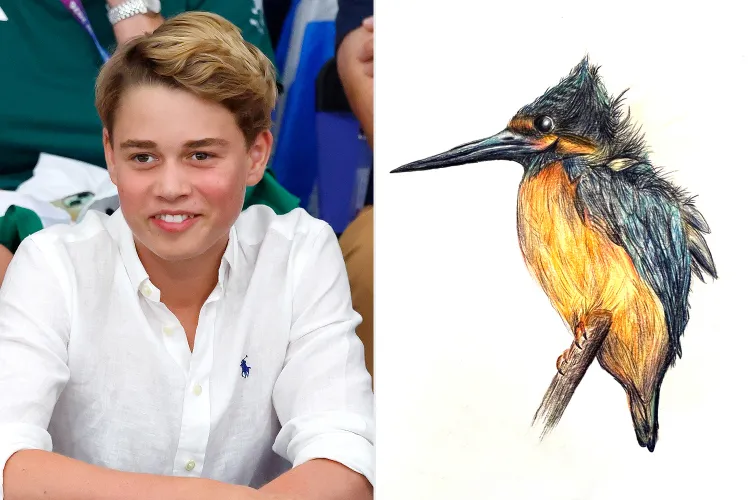
Prince George may be growing up in the spotlight as the future King of Britain, but a recent glimpse of his creative side has reminded royal fans that there is much more to him than royal duties and public appearances. The young prince has attracted attention for a new drawing, prompting fresh conversations about the artistic talents that appear to run through his family.
At just 13 years old, George is at an interesting stage of childhood. While he is gradually becoming more familiar with the responsibilities that come with being a senior member of the Royal Family, he is also developing his own interests, personality and talents. His latest artistic effort has offered a charming reminder that creativity can be an important part of growing up, even for a young royal whose future carries extraordinary expectations.
The interest surrounding George’s drawing has also brought attention to two members of his family with well-known creative interests: his mother, Catherine, Princess of Wales, and his grandfather, King Charles III. Both have demonstrated an appreciation for art and visual creativity, making the young prince’s apparent artistic ability an especially interesting detail for royal watchers.
Prince George’s New Drawing Captures Royal Fans’ Attention
Prince George’s latest drawing has sparked curiosity among royal followers, particularly because it offers a more personal glimpse into his interests away from official engagements.
Royal children often attract attention through carefully selected public appearances, birthday photographs and family occasions. However, creative activities such as drawing provide a different perspective. They reveal something about a child’s imagination and the ways they enjoy expressing themselves.
For George, drawing could simply be a favourite pastime or part of his wider interest in art. Like many children his age, he has the opportunity to explore different subjects, experiment with ideas and develop skills through practice.
What makes the moment particularly fascinating is the artistic background within his family. Catherine has long been associated with photography and visual storytelling, while King Charles has maintained a lifelong interest in painting and the arts.
The similarities have encouraged fans to wonder whether George may have inherited some of his family’s creative instincts.
Of course, artistic talent develops through a combination of natural curiosity, encouragement and experience. A single drawing cannot reveal the full extent of a person’s abilities, but it can certainly offer an exciting glimpse of an interest that may grow over time.
Kate Middleton Has a Strong Creative Side
Catherine, Princess of Wales, is widely recognised for her work as a senior royal, her charitable interests and her influence on modern royal fashion. However, her creative side is another important part of her personality.
Before marrying Prince William, Catherine studied art history at the University of St Andrews in Scotland. Her academic background gave her an opportunity to explore the history, meaning and cultural importance of visual art.
Her interest in photography has also become a familiar part of her public image. Catherine has frequently been involved in capturing family photographs, including portraits released to mark important occasions in the lives of her children.
These photographs often offer a more relaxed view of royal family life. Rather than relying entirely on formal portraits, Catherine’s images have helped present intimate moments of childhood, family celebrations and everyday experiences.
Photography requires many of the same creative instincts involved in drawing. Composition, attention to detail, an understanding of light and the ability to communicate emotion through images are all important elements.
It is easy to see why royal fans might connect Catherine’s artistic interests with George’s apparent enthusiasm for drawing.
As a mother, Catherine may also encourage her children’s curiosity through creative activities. Children often develop confidence when they are given opportunities to explore their interests without feeling pressured to achieve perfection.
For George, having a parent who appreciates visual creativity could provide a positive environment in which his own artistic interests can develop.
King Charles Has Been Passionate About Painting for Decades
While Catherine’s artistic interests are often connected to photography, King Charles III has a long-established passion for painting.
The monarch is particularly known for his interest in watercolour painting. Over many years, he has created works inspired by landscapes, architecture, gardens and places that have held personal significance during his travels.
Painting has offered Charles a creative outlet beyond the formal responsibilities of royal life. It allows him to observe his surroundings carefully and translate those experiences into visual compositions.
His watercolours frequently feature natural scenery, including mountains, countryside views and historic locations. The subjects reflect his appreciation for the environment and the beauty of the landscapes he encounters.
Charles has also spoken publicly about the value he places on artistic expression. For him, painting has been a meaningful personal interest rather than simply a public activity.
His creative pursuits demonstrate that artistic interests can remain important throughout adulthood, even when professional responsibilities become demanding.
This makes the connection with Prince George particularly interesting. The young prince has a grandfather whose enthusiasm for painting has been part of his life for decades and a mother who has developed a distinctive interest in photography.
Whether George eventually develops a similar passion remains to be seen, but he certainly has creative influences within his immediate family.
Prince George Is Growing Up Surrounded by Creativity
Prince George’s childhood has been shaped by a mixture of royal tradition and modern family life.
As the eldest child of Prince William and Catherine, he is second in line to the British throne. That position naturally means that his upbringing involves preparation for responsibilities that most children will never experience.
However, William and Catherine have also made efforts to give their children a childhood that includes ordinary activities, education, friendships and opportunities to discover personal interests.
George shares his childhood with his younger siblings, Princess Charlotte and Prince Louis. Together, the three children have appeared at public celebrations, royal events and family occasions, often showing different personalities.
Creative activities can play an important role in that environment. Drawing, painting, reading and other hobbies allow children to develop their imagination while learning patience and concentration.
For George, these experiences may be especially valuable because they provide an opportunity to focus on something unrelated to his future public role.
A drawing does not need to represent royal history or carry any symbolic meaning. It can simply be an expression of what interests him at a particular moment.
That freedom is an important part of childhood, and it is something that can help young people discover talents they might otherwise overlook.
Kate and William Want Their Children to Enjoy a Balanced Childhood
Prince William and Catherine have frequently emphasised the importance of family life and the well-being of their children.
Although royal responsibilities are part of their daily reality, the Prince and Princess of Wales have sought to create a supportive environment in which George, Charlotte and Louis can grow up with a sense of normality.
School, hobbies, family time and opportunities to spend time outdoors are all important elements of childhood.
For George, developing interests outside the royal spotlight could help him build confidence and a stronger sense of individuality.
Artistic activities are particularly useful because they encourage children to think independently. Drawing allows them to experiment with shapes, colours, subjects and ideas without needing to follow a single correct answer.
It can also provide a peaceful way to express emotions and communicate thoughts that may be difficult to put into words.
If George continues to enjoy drawing, it could become one of the many hobbies that help him maintain a healthy balance between his personal interests and his future responsibilities.
His parents’ own appreciation for creativity may also make art a natural part of family life.
Why Prince George’s Artistic Interests Matter to Royal Fans
Royal watchers are often interested in the small details that reveal the personalities of younger members of the Royal Family.
George’s appearance at official events has naturally attracted attention because of his future position in the monarchy. Yet moments that reveal his hobbies and personal interests can be even more engaging.
A drawing offers a glimpse of a young person exploring the world through imagination. It allows fans to see George not only as a future monarch but also as a child developing his own interests.
The comparison with Catherine and King Charles adds another layer of interest. Both family members have demonstrated that creativity can remain an important part of life regardless of age or public responsibility.
It also highlights how interests and traditions can pass between generations in unexpected ways.
George may eventually develop a passion for painting, photography or another creative discipline. Alternatively, his interests may take him in an entirely different direction.
There is no need to assume that he will follow exactly in his mother’s or grandfather’s footsteps. What matters most is that he has the freedom to explore the activities he enjoys.
A Creative Side of the Future King
Prince George’s new drawing has offered royal fans a charming reminder that the future King is still discovering who he is.
Behind the formal appearances and the attention surrounding his position in the line of succession is a young teenager with hobbies, interests and talents that will continue to develop.
His mother’s appreciation for photography and his grandfather’s lifelong passion for painting provide two fascinating examples of creativity within the family. Whether those influences have inspired George’s own artistic interests remains a personal matter, but the connection is certainly an appealing one.
As he grows older, George will have many opportunities to explore different subjects and discover what he enjoys most. Art may become a lasting passion, or it may simply remain one of the many activities that make his childhood memorable.
For now, his drawing has captured attention for a simple reason: it shows a more personal side of a young royal who is usually seen through the lens of tradition and public expectation.
And perhaps that is the most delightful part of the story. Long before he takes on the responsibilities of the crown, Prince George deserves the opportunity to be creative, curious and simply enjoy being a child.