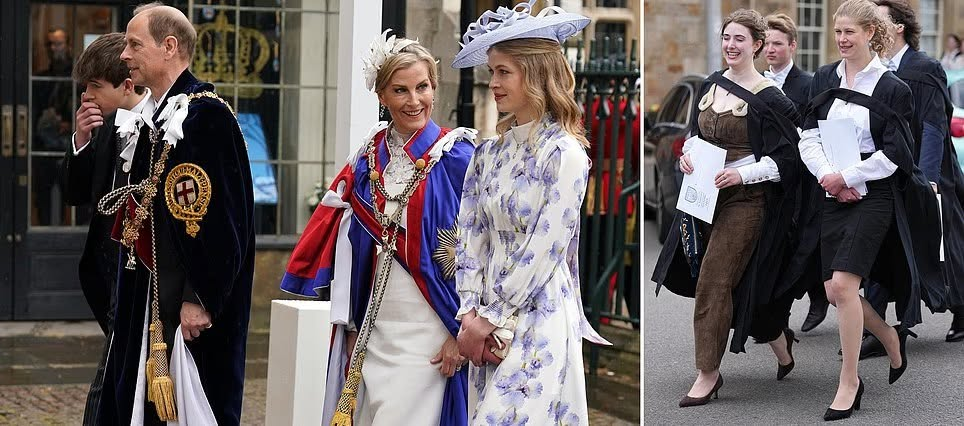
For years, Prince Edward and Sophie, Duchess of Edinburgh, have quietly built one of the most respected partnerships within the British royal family. While they have rarely sought the same level of public attention as some of their royal relatives, their steady commitment to royal duties has increasingly placed them in an important position within the monarchy. Yet, as the royal family looks toward the future, another member of their household is attracting growing interest: their daughter, Lady Louise Windsor.
Could Lady Louise become an important part of her parents’ royal legacy? And might her future choices help shape how Sophie and Edward are remembered in the years ahead?
Although no official announcement suggests that Lady Louise is preparing to take on a more prominent royal role, her upbringing, education, personality, and position within the family make her an intriguing figure in conversations about the monarchy’s next generation.
Sophie and Edward: A Royal Partnership Built on Loyalty and Experience
Prince Edward and Sophie have developed a distinctive place within the modern royal family. Their relationship has been shaped by years of public service, personal challenges, and a shared understanding of the responsibilities that come with royal life.
Edward, the youngest son of Queen Elizabeth II and Prince Philip, initially followed a different path from some of his older siblings. His early interests included television production and business, but over time, he gradually became more involved in official royal responsibilities.
Sophie also experienced a journey of transformation. Before marrying Edward in 1999, she had established her own career in public relations. Becoming a member of the royal family required significant adjustments, but she eventually developed a strong reputation for dedication, warmth, and professionalism.
Today, the couple undertake numerous engagements supporting charities, education, disability awareness, international relations, and community initiatives.
Their elevation to the titles of Duke and Duchess of Edinburgh in 2023 further strengthened their public position. The titles, previously associated with Prince Philip, carry considerable historical significance and reflect the importance of their contribution to the monarchy.
However, their royal future is not simply about the duties they perform today. It is also about the legacy they leave behind, particularly through their children.
Why Lady Louise Windsor Is Attracting Attention
Born on November 8, 2003, Lady Louise Windsor is the eldest child of Edward and Sophie. She grew up largely away from the intense public attention that has surrounded some other young members of the royal family.
Unlike several royal children whose childhoods were frequently documented by the media, Louise enjoyed a relatively private upbringing. Her parents have consistently sought to give her and her younger brother, James, Earl of Wessex, opportunities to develop their own identities.
This approach has helped Louise establish a reputation as a thoughtful and reserved young woman.
She has also attracted public interest through her education and personal interests. After attending St Mary’s School Ascot, she went on to study English at the University of St Andrews, the same university where Prince William and Catherine first met.
Her academic journey has highlighted an important aspect of her parents’ approach to raising their children: education and independence come before expectations associated with royal status.
Louise has also demonstrated an interest in carriage driving, a passion she shared with her grandfather, Prince Philip. Her participation in the sport has provided a personal connection to the late Duke of Edinburgh and offered glimpses of a young woman comfortable with tradition without necessarily being defined by it.
Could Louise Become an Important Part of the Edinburgh Legacy?
One reason Lady Louise is particularly interesting is her connection to two generations of royal history.
Through her father, she is part of the Windsor family and the wider royal institution. Through her mother, she has witnessed the experience of someone who entered royal life from outside the traditional aristocratic environment and gradually established a respected position.
Sophie and Edward have demonstrated that royal influence does not always require constant headlines or dramatic public appearances. Their approach has been based on reliability, long-term commitments, and carefully chosen responsibilities.
Louise has grown up observing this model.
If she eventually decides to participate more actively in royal life, she could bring a different perspective to the institution. Her generation faces a monarchy operating in a world shaped by social media, changing public expectations, financial pressures, and questions about the relevance of inherited privilege.
A younger royal who understands both tradition and modern independence could potentially offer valuable contributions.
Nevertheless, it is important to distinguish possibility from confirmed plans. Lady Louise has not publicly committed herself to becoming a working royal, and her future remains her own decision.
Her importance to her parents’ legacy may ultimately have less to do with official titles or royal engagements and more to do with the values they have encouraged throughout her upbringing.
The Significance of Sophie’s Parenting Choices
Sophie has often been praised for maintaining a relatively grounded family environment despite her position within the monarchy.
In previous interviews, she and Edward have discussed their intention to give their children as normal an upbringing as possible. This has included allowing Louise and James to understand their royal connections while developing their own lives outside the expectations of palace life.
The decision not to use HRH titles for their children in their everyday lives reflects this philosophy.
It is a notable contrast with the more traditional expectations sometimes associated with royal families. Sophie and Edward have appeared determined to ensure that their children understand that royal heritage is a responsibility rather than an automatic career path.
For Louise, this approach could be particularly significant.
She has the freedom to explore academic interests, friendships, and professional opportunities without being publicly committed to a predetermined royal future.
At the same time, her upbringing means she has firsthand experience of royal protocol, charitable work, and the responsibilities attached to her family name.
This combination of independence and familiarity with royal life could become one of her greatest strengths, whatever direction she chooses.
James, Earl of Wessex, and the Future of the Family
Lady Louise is not the only child whose future may influence how Edward and Sophie are remembered.
Her younger brother, James, Earl of Wessex, also represents the next generation of the Edinburgh family.
Born in December 2007, James has similarly enjoyed a childhood largely protected from the pressures of royal publicity. His parents have allowed him to grow up without making frequent public appearances a central part of his life.
As the younger generation gradually reaches adulthood, both siblings will have decisions to make about their relationships with the monarchy.
There is no guarantee that either will become a full-time working royal. In fact, their parents’ approach suggests that personal independence will remain an important consideration.
However, their presence provides Edward and Sophie with a family legacy that extends beyond ceremonial responsibilities.
Whether Louise and James pursue careers outside the monarchy or eventually become involved in selected royal activities, their upbringing reflects a changing understanding of what it means to belong to the House of Windsor.
Why the Monarchy May Need a Different Kind of Younger Royal
The British monarchy is entering a period in which its future depends not only on established traditions but also on its ability to connect with younger generations.
King Charles III has inherited an institution facing considerable challenges, including questions about public support, transparency, relevance, and the long-term sustainability of royal duties.
Prince William and Catherine are expected to play central roles in the monarchy’s future, but the wider royal family also has an important part to play.
This is where Edward and Sophie have become increasingly valuable.
Their experience allows them to undertake responsibilities that support the King while maintaining a relatively low-key public profile. They have also developed connections with organisations and communities that benefit from consistent royal involvement.
Lady Louise represents a younger generation that has grown up watching these changes unfold.
Her age, education, and personal experiences could potentially help her understand the expectations of modern audiences. If she chooses to become involved in public service, she may bring a fresh approach to traditional royal responsibilities.
However, the monarchy’s future should not depend on placing expectations on someone simply because of her family background.
A sustainable royal institution must also respect the personal choices of its younger members.
A Legacy That Does Not Depend on Royal Titles
Perhaps the most interesting question surrounding Lady Louise is not whether she will become a working royal, but what her story reveals about Sophie and Edward as parents.
For many years, the couple have demonstrated that commitment to the monarchy can exist alongside a desire for family privacy. They have built their public reputations gradually, without constantly seeking attention.
Their children appear to have benefited from that balance.
Louise’s relatively private life, academic ambitions, and interest in carriage driving suggest that she has been given room to develop beyond her royal identity.
That may ultimately be one of Sophie and Edward’s most meaningful achievements.
If Louise chooses to embrace a greater public role, she could help carry forward the principles her parents have demonstrated: dedication, discretion, independence, and a strong sense of responsibility.
If she chooses a completely different path, that decision would not diminish their legacy.
Instead, it could demonstrate that the couple successfully prepared their children to make independent choices in a world where royal expectations are changing.
Could Lady Louise Be the Key to Sophie and Edward’s Royal Future?
Lady Louise Windsor may not currently occupy a central position in the monarchy’s official public agenda, but her place within the Edinburgh family gives her a unique connection to its future.
She represents a generation that has witnessed the monarchy evolve while being raised by two parents who understand both its traditions and its challenges.
For Sophie and Edward, their royal future will continue to depend primarily on their own public service, loyalty, and relationship with the wider institution. Yet the example they set for their children may prove just as important as the engagements they undertake.
Whether Lady Louise eventually chooses royal duties, a private career, or a combination of both, her story offers an interesting glimpse into the next chapter of the Windsor family.
Perhaps the real secret to Sophie and Edward’s royal future is not that their daughter will inherit a greater role, but that they have given her the freedom to decide what her own future should look like.
And in a monarchy increasingly expected to balance tradition with modern values, that may be a legacy worth celebrating.