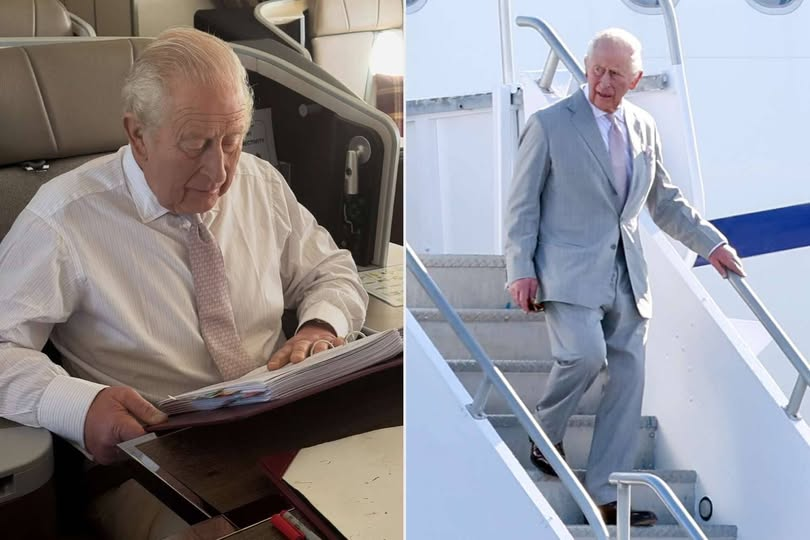
For most people, flying means settling into an airline seat, fastening a seat belt, and waiting for the familiar announcement that the aircraft is ready for takeoff. For King Charles, however, air travel can be a very different experience. As Britain’s monarch, his journeys often involve official responsibilities, international diplomacy, and carefully coordinated schedules. Now, a rare glimpse inside the royal plane has sparked fresh interest in what life above the clouds looks like for the King.
Royal travel has always fascinated the public, particularly when it offers an opportunity to see beyond the traditional image of palaces, grand ceremonies, and formal state occasions. An aircraft used for royal journeys represents another side of the monarchy: a working environment where important conversations, demanding schedules, and moments of rest can all take place thousands of feet above the ground.
Although royal aircraft are not simply flying versions of Buckingham Palace, the idea of seeing how the King travels offers an intriguing look at the practical realities of modern royal life.
From the importance of comfort to the challenges of maintaining security and managing official duties while traveling, King Charles’s life in the air reflects the changing demands of the British monarchy.
A Rare Look at King Charles’s Royal Travel Arrangements
King Charles’s official journeys are rarely ordinary trips. Whether traveling within the United Kingdom or heading overseas for diplomatic engagements, his movements require careful planning and coordination.
Royal travel can involve meetings with government representatives, engagements with international leaders, cultural visits, and appearances at major public events. As a result, transportation plays an important role in ensuring that the King’s schedule runs smoothly.
The possibility of seeing inside an aircraft associated with royal travel naturally attracts attention because such spaces are usually far removed from everyday public experience.
Unlike commercial airlines, official royal journeys are organized around the specific needs of the monarch and the responsibilities of his office. This can include appropriate seating arrangements, communication facilities, logistical support, and coordination with security teams.
However, it is worth remembering that there is no permanently dedicated royal airliner that functions as a private palace in the sky. The British royal family has used different aircraft arrangements over the years, depending on the journey, official requirements, and available government or chartered services.
That distinction makes the subject even more interesting. Royal air travel is not simply about luxury; it is also about practicality, efficiency, and representing the United Kingdom abroad.
What Life Above the Clouds Looks Like for the King
For King Charles, time spent traveling by air can be an extension of his working day.
While passengers on an ordinary flight may spend their time watching films, reading books, or enjoying a meal, a monarch traveling for official business may have a much more demanding schedule.
International journeys often involve preparing for meetings, reviewing briefing materials, and understanding the cultural or political background of the destination.
Even during a relatively short flight, there may be important details to consider before arriving.
The King’s responsibilities do not disappear simply because he is away from Buckingham Palace. His role as head of state requires regular engagement with national and international affairs, meaning that travel time can become an opportunity to prepare for upcoming commitments.
At the same time, comfort remains important.
Long journeys can be physically demanding, especially for older travelers with busy schedules. A suitable environment, comfortable seating, refreshments, and opportunities to rest can make a significant difference.
For a monarch who frequently travels as part of official duties, these practical considerations are essential.
Why Royal Aircraft Are Different From Ordinary Passenger Flights
The most noticeable difference between royal travel and commercial aviation is the purpose behind each journey.
Commercial aircraft are designed to transport large numbers of passengers efficiently. Royal travel, by comparison, is generally arranged around a much smaller group of people and a specific itinerary.
Depending on the aircraft and arrangements, the traveling party may include members of the King’s official team, advisers, representatives, and other essential personnel.
The aircraft must also meet standard aviation safety requirements while accommodating the logistical needs of the journey.
For official international visits, coordination can begin well before the aircraft leaves the runway.
Ground transportation, arrival procedures, diplomatic arrangements, and security planning all need to work together.
This is particularly important when the King visits countries where his presence carries diplomatic significance.
A successful royal trip involves much more than the flight itself. Every stage, from departure to arrival, contributes to the overall organization of the visit.
The King’s Busy Schedule Does Not Stop at 30,000 Feet
King Charles inherited the throne in September 2022 following the death of Queen Elizabeth II. Since then, his responsibilities as monarch have included a demanding combination of constitutional duties, public appearances, diplomatic engagements, and international travel.
The King’s working life is carefully structured, but unexpected developments can also require adjustments.
Official journeys often involve several engagements within a limited period. A single overseas visit may include meetings with political leaders, visits to cultural institutions, speeches, and opportunities to recognize community organizations.
This makes preparation particularly important.
Travel time can provide an opportunity to review the details of upcoming engagements and ensure that the King is familiar with the people and organizations he will meet.
For someone in his position, preparation is not simply a matter of remembering names. It involves understanding the wider significance of each visit and the message the monarchy hopes to communicate.
The aircraft therefore becomes part of a much larger working environment.
Security and Privacy Remain Essential During Royal Flights
One of the most important aspects of royal air travel is security.
As Britain’s head of state, King Charles is a highly recognizable public figure. His travel arrangements naturally require careful attention to safety, privacy, and coordination.
However, responsible discussions about royal aircraft should distinguish between general travel arrangements and sensitive operational information.
Specific flight procedures, detailed schedules, and security arrangements are not appropriate subjects for unnecessary public disclosure.
What can be understood is that international royal journeys involve cooperation between different teams and authorities.
The destination country may also have its own responsibilities when welcoming a visiting head of state.
This cooperation helps ensure that official travel can take place safely while allowing the King to concentrate on his responsibilities.
Privacy is equally important. Although the public may be curious about the aircraft’s interior, not every detail of royal travel needs to become public information.
A limited glimpse can provide an interesting insight without compromising the privacy of the people involved.
King Charles’s Approach to Travel Reflects a Changing Monarchy
The British monarchy has experienced considerable changes over the past several decades.
Queen Elizabeth II traveled extensively throughout her reign, visiting countries around the world and representing Britain at important diplomatic events.
King Charles has continued many of those responsibilities while bringing his own priorities and interests to the role.
His approach to public life reflects an awareness that the monarchy must balance tradition with the expectations of a modern society.
Travel remains an important part of that mission.
Meeting international leaders, strengthening relationships, and recognizing the work of communities abroad all help maintain the monarchy’s diplomatic and symbolic role.
At the same time, modern technology and changing expectations have transformed how royal journeys are organized.
Communication systems, logistical planning, and international coordination allow official responsibilities to continue even when the King is far from home.
In this sense, royal air travel offers a fascinating example of how an ancient institution operates in a modern world.
Is Royal Travel Really as Luxurious as People Imagine?
The image of a monarch traveling above the clouds naturally creates expectations of exceptional luxury.
People may imagine spacious private cabins, elegant furnishings, personalized meals, and every possible comfort.
While certain official aircraft and charter arrangements can offer premium facilities, it is important not to assume that every royal journey involves the same level of luxury.
Aircraft differ considerably, and the arrangements depend on the nature of the trip.
A short domestic journey may require a very different setup from a long international visit.
The priority is generally to provide an appropriate and practical environment for the official responsibilities involved.
Comfort matters, but efficiency and security are equally important.
For King Charles, the real advantage of carefully organized air travel is not necessarily extravagance. It is the ability to reach important destinations while maintaining a demanding schedule.
That may be less glamorous than the public imagination suggests, but it offers a more realistic picture of life as a modern monarch.
A Different Side of the Royal Family
Royal life is often presented through images of grand state banquets, historic residences, formal ceremonies, and elaborate public celebrations.
Yet much of the monarchy’s work happens behind the scenes.
Travel is one example.
Behind every official appearance is a considerable amount of preparation involving staff, advisers, transportation teams, and diplomatic representatives.
A rare look at the King’s aircraft provides a reminder that the monarchy operates through a combination of public tradition and practical organization.
For King Charles, the time spent traveling may offer a mixture of preparation, professional discussions, and opportunities to rest between engagements.
It is a less familiar side of his public role, but one that helps explain the demands placed on Britain’s monarch.
Why a Glimpse Inside the Royal Plane Captures Public Interest
The fascination with royal aircraft goes beyond curiosity about expensive seats or exclusive interiors.
People are interested in understanding how members of the royal family live when they are away from their famous residences.
Seeing the practical side of royal travel helps make an otherwise distant institution feel more accessible.
It also reveals the contrast between the King’s public image and the everyday demands of his position.
While royal appearances may look effortless, the organization behind them can be extremely complicated.
Every journey represents an opportunity to strengthen relationships, fulfill responsibilities, and maintain the visibility of the monarchy.
For King Charles, the aircraft is simply one part of that wider responsibility.
Life Above the Clouds: More Than Just a Royal Luxury
A rare glimpse into King Charles’s royal travel arrangements offers an intriguing reminder that life as Britain’s monarch involves much more than palace ceremonies and public celebrations.
The aircraft, the journey, and the preparation all reflect the practical demands of a role that continues across borders and time zones.
Although the public may always be fascinated by the possibility of seeing inside a royal plane, the most interesting aspect is perhaps what happens beyond the cabin itself.
There are diplomatic responsibilities to fulfill, important relationships to maintain, and a demanding schedule that continues even when the King’s feet are far from the ground.
Ultimately, King Charles’s life above the clouds is not simply a story about luxury travel. It is a glimpse into the realities of modern royal duty, where comfort, organization, privacy, and responsibility must all come together.
And that may be the most revealing detail of all: even thousands of feet above the ground, the King’s work is never entirely out of reach.