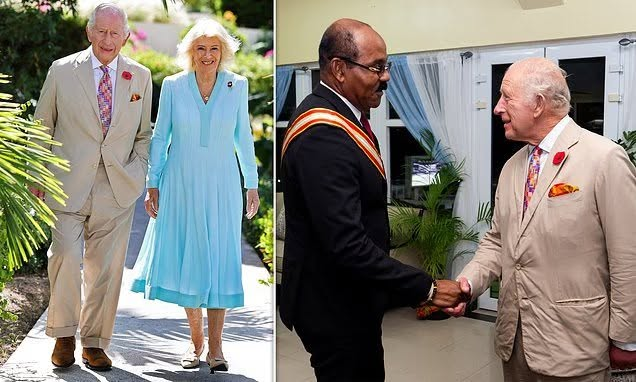
King Charles III is reportedly prepared to accept a major constitutional change in the Caribbean, with Buckingham Palace signaling that it would not stand in the way of countries that decide to remove the British monarch as their head of state. The reported position marks an important moment for the modern monarchy, particularly as several Caribbean nations continue to debate their colonial history, national identity, and future relationship with the British Crown.
The development follows the King’s recent nine-day Caribbean tour, which brought him face-to-face with difficult questions about slavery, reparations, and the legacy of British colonial rule. While the visit included celebrations, cultural events, and diplomatic engagements, it also highlighted the growing political conversations surrounding republicanism in the region.
According to reports, a senior royal aide indicated that the King and the Royal Family are fully open to countries choosing a different constitutional arrangement. The message was straightforward: the monarchy exists to serve people who want it, and those nations should be free to decide their own future.
Although the comments do not mean that King Charles is about to lose his position in any particular country, they underline a significant principle: the future of the Crown in the Caribbean ultimately belongs to the people and governments of those independent nations.
Buckingham Palace Signals It Will Respect Each Nation’s Decision
The reported comments from a senior royal aide have attracted attention because they address an issue that has become increasingly important to the Commonwealth’s Caribbean members.
Rather than suggesting that the monarchy should remain in place at all costs, the Palace reportedly emphasized that the Royal Family would respect the wishes of countries that no longer want the British monarch as their head of state.
The aide’s message reflected the idea that royal service depends on public support. If a country decides that a different system better represents its national identity, a new constitutional arrangement can be established.
For King Charles, this position is particularly relevant. His role extends beyond the United Kingdom. He is also the monarch of 14 other independent Commonwealth realms, several of which have been discussing whether they should retain the monarchy or become republics.
The distinction is important. These countries are independent states, not territories governed by Britain. They have their own elected governments, laws, and political institutions. The King serves as their constitutional head of state because their respective constitutions recognize him in that role.
Any decision to replace him would therefore be a matter for each country, not something that Buckingham Palace could decide on its behalf.
The Caribbean Tour Put the Monarchy Under a Spotlight
King Charles and Queen Camilla’s recent Caribbean tour was intended to strengthen relationships across the region and celebrate the Commonwealth’s connections. However, the visit also unfolded against a complicated historical and political background.
The transatlantic slave trade remains one of the most sensitive subjects in the relationship between Britain and several Caribbean nations. For generations, campaigners, historians, and political leaders have called for greater acknowledgment of the suffering caused by slavery and its lasting consequences.
During his visit, Charles addressed the historical injustice directly. In remarks connected with the Commonwealth summit, he said that the transatlantic slave trade filled his heart with horror and his soul with profound personal sorrow.
His words expressed sympathy and recognition of the immense human suffering involved. However, they stopped short of delivering the formal apology that some campaigners and political figures have requested.
For many people across the Caribbean, the issue is not simply about historical remembrance. It is also about how the legacy of slavery shaped economic inequality, social structures, and relationships between former colonial powers and the nations that gained independence.
The King therefore found himself representing an institution whose history is closely connected to a period that many Caribbean communities continue to examine and challenge.
Antigua and Barbuda’s Prime Minister Wants a Republic
One of the clearest examples of the changing political mood came from Antigua and Barbuda.
Prime Minister Gaston Browne has openly expressed his support for transforming the country into a republic. During the royal visit, he made clear that his personal preference would be to see Antigua and Barbuda replace the British monarch as its head of state.
However, Browne also acknowledged that his preference does not automatically determine the country’s future. Constitutional requirements must be followed, and the people must ultimately have the opportunity to decide.
Under the country’s constitutional arrangements, replacing the monarchy requires significant public support, including approval by a two-thirds majority of voters in a referendum.
That requirement illustrates why the transition from a constitutional monarchy to a republic can be a complicated process. Even when a prime minister supports the change, the government cannot simply announce that the King is no longer head of state without following the necessary legal procedures.
Browne’s position also demonstrates that support for republicanism does not necessarily mean hostility toward Charles personally. A country can respect the monarch while believing that its national identity would be better represented by a locally chosen head of state.
The Bahamas Also Faces Questions About Its Future
The Bahamas is another Caribbean nation where the question of republicanism has attracted attention.
Prime Minister Philip Davis has indicated that the decision about the country’s constitutional future should rest with its people. His position highlights the importance of public choice rather than treating the issue as a decision that political leaders or the monarchy can make alone.
For supporters of constitutional change, becoming a republic could represent another step toward expressing the country’s independence and defining its national institutions on its own terms.
However, the debate is not necessarily simple. Some citizens may value the continuity and familiarity of the existing system, while others may believe that a locally selected president would better reflect the country’s sovereignty.
Questions about the cost of constitutional reform, the structure of a future presidency, and the powers that would be assigned to a new head of state can also influence public opinion.
As a result, the discussion involves more than whether people support King Charles personally. It is about what kind of political system they believe should represent their country in the years ahead.
Barbados Already Made the Historic Transition
The Caribbean has already seen a major example of this constitutional shift.
In November 2021, Barbados officially became a republic, ending the British monarch’s position as its head of state. The country appointed its first president, Dame Sandra Mason, marking a significant moment in its modern political history.
The transition did not mean that Barbados left the Commonwealth. Instead, it changed its constitutional structure while maintaining its membership in the wider organization.
Barbados demonstrated that a country can preserve diplomatic relationships, cultural connections, and cooperation with Britain while choosing a different head of state.
Its transition is also an important reference point for other Caribbean nations considering similar changes. It shows that becoming a republic does not necessarily require cutting ties with the Commonwealth or rejecting every aspect of a shared history.
For King Charles, Barbados provides an example of how a constitutional transition can take place through cooperation rather than confrontation.
Jamaica’s Republican Debate Adds to the Pressure
Jamaica has also taken steps toward reconsidering its relationship with the monarchy.
The country has been discussing constitutional reform for years, with republicanism forming part of a broader conversation about national independence and the legacy of British colonial rule.
In December 2024, Jamaica’s government introduced legislation intended to begin the process of replacing the British monarch as head of state. The move reflected a continuing political effort to reshape the country’s constitutional identity.
However, proposing legislation is not the same as completing the transition. Constitutional changes require further legal and political steps, and the precise process matters.
Jamaica’s debate is especially significant because the country’s independence in 1962 did not immediately remove the British monarch from its constitutional system. The King remains head of state under the existing arrangement, represented locally by a governor-general.
For many supporters of republicanism, changing that arrangement would be a symbolic and constitutional step toward completing the country’s journey as an independent nation.
What Would Removing King Charles Actually Mean?
If a Caribbean country decides to remove King Charles as its head of state, the change would primarily affect its constitutional structure.
The monarch currently serves as the formal head of state, with a governor-general representing him locally. In practice, elected political leaders and their governments are responsible for running the country.
A republic would replace the monarch with a different head of state, often a president. The exact powers and selection process would depend on the constitution adopted by that country.
Some republics have largely ceremonial presidents, while others give the office more substantial constitutional responsibilities. Each nation would need to decide which model best fits its political system.
Importantly, removing the monarch would not automatically mean leaving the Commonwealth. Barbados has already demonstrated that republican countries can remain members of the organization.
Nor would such a change necessarily end diplomatic, educational, economic, or cultural relationships with the United Kingdom. Those connections can continue even when countries choose different constitutional arrangements.
A Defining Moment for King Charles and the Modern Monarchy
For King Charles, the reported willingness to accept republican transitions reflects the changing nature of the monarchy in the 21st century.
The institution has faced growing expectations to acknowledge historical injustices, adapt to changing public attitudes, and demonstrate that it remains relevant to independent nations with their own identities and ambitions.
Charles has repeatedly emphasized the importance of service, dialogue, and the Commonwealth’s shared future. However, maintaining those relationships may require accepting that not every member country wants the same constitutional arrangement.
That does not necessarily represent a personal defeat for the King. Instead, it could reflect a more flexible understanding of the monarchy’s place in a modern international community.
The Caribbean nations involved will face their own decisions, shaped by domestic politics, public opinion, historical experience, and constitutional requirements. Some may move toward republicanism sooner than others, while some may choose to retain the King for the foreseeable future.
The Future of the Crown Will Be Decided by the People
The reported Palace position sends a clear message: King Charles is not expected to oppose a Caribbean nation’s decision to choose a different head of state.
But the future remains uncertain. No single royal statement can determine whether Antigua and Barbuda, The Bahamas, Jamaica, or other Commonwealth realms will become republics. Each country must follow its own democratic and constitutional process.
What is becoming increasingly clear is that the relationship between the Caribbean and the British monarchy is evolving. Historical questions, national identity, and the desire for greater constitutional independence are shaping conversations that will likely continue for years.
For King Charles, the challenge may be less about preventing countries from leaving the monarchy and more about maintaining respectful relationships regardless of the decisions they make.
Ultimately, the Crown’s future in the Caribbean will not be decided by Buckingham Palace alone. It will be shaped by the people of each nation, their elected representatives, and the kind of future they want to build for the next generation.