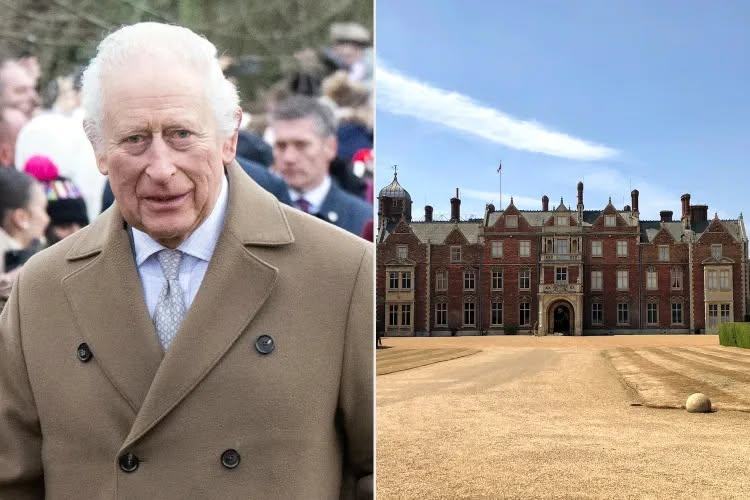
Far from the busy streets of London and the familiar royal landmarks of Buckingham Palace and Windsor Castle, a vast country estate in Norfolk has become the focus of renewed public interest. Sandringham, one of the British Royal Family’s most treasured private properties, stretches across more than 20,000 acres of countryside, woodland, farmland and historic buildings. Today, the estate is attracting attention for another reason: it has become the home of King Charles III’s younger brother, Andrew Mountbatten-Windsor.
For generations, Sandringham has represented a quieter side of royal life. It is a place where the family traditionally gathers during the Christmas season, enjoys the surrounding countryside and steps away from the formal demands of public duties. But Andrew’s move to the estate has brought fresh attention to its properties, history and role within the modern monarchy.
The former Prince Andrew now lives at Marsh Farm, a five-bedroom property within the wider estate. His relocation followed his departure from Royal Lodge in Windsor, marking a significant change in his living arrangements and public position within the royal family.
Sandringham: A 20,000-Acre Royal Retreat
Located in Norfolk, approximately 110 miles north of London, the Sandringham Estate is one of the most recognisable privately owned royal properties in Britain. Its extensive grounds include open parkland, woodland, agricultural land, gardens and a collection of historic residences.
Unlike Buckingham Palace and Windsor Castle, Sandringham is not owned by the Crown Estate. It is the personal property of the monarch, having been passed down through the royal family for generations. King Charles inherited the estate following the death of Queen Elizabeth II in 2022.
The property’s royal history dates back to the 19th century, when it was purchased by the future King Edward VII in 1862. Since then, Sandringham has remained closely connected with the private lives of successive generations of the Windsor family.
Its importance is not simply measured by its size. Sandringham has developed into a place of family tradition, personal memories and rural retreat. The estate offers a very different atmosphere from the grand ceremonial settings that usually define the British monarchy.
For King Charles, it is part of a collection of private residences that provide space away from the pressures of official royal engagements.
Inside Sandringham House, the Family’s Traditional Christmas Home
At the heart of the estate stands Sandringham House, a country residence that has played an important role in royal family life for more than a century.
The house is particularly associated with the family’s Christmas celebrations. In recent decades, members of the royal family have traditionally travelled to Norfolk for the festive season, gathering at Sandringham for private celebrations and the annual Christmas Day church service.
The surrounding grounds provide a picturesque setting for one of the monarchy’s most familiar seasonal traditions. Each Christmas, members of the family are often seen walking together to St Mary Magdalene Church, located on the estate, before returning to the house for the rest of the celebrations.
Although the royal family’s public appearances during this period attract considerable attention, Sandringham itself offers a more relaxed environment than the official residences in London.
The estate also reflects the late Queen Elizabeth II’s personal connection with the countryside. For her, Sandringham was an important private retreat, and its atmosphere remained closely linked to family traditions throughout her reign.
Now that the property belongs to King Charles, it continues to represent an important part of the monarchy’s private heritage.
Marsh Farm: Andrew Mountbatten-Windsor’s New Home
While Sandringham House is the estate’s best-known residence, it is not where Andrew currently lives. His new home is Marsh Farm, a five-bedroom property situated near the village of Wolferton.
The farmhouse is considerably different from the grand residence he previously occupied in Windsor. Rather than a large royal mansion associated with formal entertaining and a prominent public profile, Marsh Farm offers a more modest rural setting within the extensive Norfolk estate.
Andrew initially stayed at Wood Farm while work was being completed on his longer-term accommodation. Once renovations at Marsh Farm were finished in April 2026, he moved into the property.
The move marked another chapter in a period of considerable change for the former prince. His departure from Royal Lodge followed King Charles’s decision that he should leave the Windsor residence amid renewed scrutiny surrounding his association with Jeffrey Epstein.
Andrew, who has denied wrongdoing in relation to Epstein, has also lost his former royal titles and honours. He is now known as Andrew Mountbatten-Windsor.
His relocation to Sandringham has therefore attracted attention beyond the property itself. It has become a visible example of how his position and living arrangements have changed within the royal family.
From Royal Lodge to the Norfolk Countryside
For more than two decades, Royal Lodge in Windsor Great Park was closely associated with Andrew’s life. The substantial residence provided a very different setting from the farmhouse he now occupies.
Royal Lodge was a large property with a long history and an established place within the royal landscape. Andrew’s departure from the residence was therefore a significant development, particularly given the public attention surrounding his relationship with the monarchy.
Moving to Sandringham placed him in a more secluded part of the country, away from the Windsor surroundings where he had lived for many years.
The contrast between the two properties is striking. Royal Lodge was a substantial residence close to Windsor Castle, while Marsh Farm is a five-bedroom home in a rural setting surrounded by the wider Sandringham landscape.
The change also highlights an important distinction between different types of royal property. Windsor Castle and much of the Windsor Estate are associated with the Crown Estate, whereas Sandringham is privately owned by the King.
That distinction matters because the arrangements surrounding Andrew’s accommodation are connected to the monarch’s private property rather than a publicly owned royal residence.
A Wider Estate Filled With Royal History
Marsh Farm is only one small part of the enormous Sandringham Estate. Across its grounds are several properties and locations with their own connections to the royal family.
Among the best-known is Anmer Hall, the country home associated with Prince William and Catherine, Princess of Wales. The residence has become an important family retreat for the couple and their children, Prince George, Princess Charlotte and Prince Louis.
The estate is also connected to the life of Diana, Princess of Wales. Park House, located on the Sandringham grounds, was her childhood home. She spent part of her early life there before her marriage to the then Prince of Wales brought her into the centre of the British royal family.
These connections give Sandringham a remarkable place in royal history. It is not simply a country property belonging to the monarch, but a landscape that has witnessed different generations of the family grow up, celebrate important occasions and create lasting memories.
Its combination of private homes, historic buildings, farmland and natural scenery makes it one of Britain’s most distinctive royal estates.
Why Sandringham Is Different From Buckingham Palace
For many people, Buckingham Palace remains the defining image of the British monarchy. Its famous balcony, grand rooms and ceremonial functions make it one of the world’s most recognisable royal residences.
Sandringham serves a very different purpose.
While Buckingham Palace is closely associated with official duties and state occasions, Sandringham is primarily a private country estate. Its rural setting allows the monarch and members of the family to enjoy a more relaxed environment away from the demands of public life.
The property also has a practical side. Its agricultural land and estate operations mean that Sandringham is more than a collection of royal homes. It is a working country estate with a long history of managing land and maintaining its surrounding communities.
King Charles has long expressed an interest in environmental conservation, sustainable farming and the countryside. Sandringham’s extensive landscape provides an important setting for those interests, as well as a connection to the traditions he inherited from his mother.
What Andrew’s Move Means for the Royal Family
Andrew’s presence at Sandringham has inevitably renewed questions about the royal family’s private living arrangements and the relationship between King Charles and his younger brother.
The move demonstrates how a monarch’s private property can become part of complicated family decisions, particularly when a member of the family is no longer carrying out official royal duties.
For Charles, the situation involves balancing family relationships with the wider expectations placed on the monarchy. His decision to provide accommodation for Andrew on privately owned land also distinguishes the arrangement from a residence connected to the Crown Estate.
However, Andrew’s presence does not change the traditional purpose of Sandringham. The estate remains one of the royal family’s most important private retreats, with its long-standing Christmas traditions and connections to several generations of the Windsors.
Whether Andrew will become a more visible presence in Norfolk remains uncertain. For now, his life at Marsh Farm appears to be considerably quieter than the public role he once held.
Sandringham’s Enduring Place in Royal Life
The renewed attention surrounding Andrew’s residence has brought Sandringham back into the spotlight, but the estate’s importance extends far beyond one member of the royal family.
With more than 20,000 acres of countryside, a rich royal history and a collection of properties connected to some of Britain’s most familiar royal figures, Sandringham remains a remarkable part of the monarchy’s private world.
For King Charles, it is an inheritance that carries both personal memories and generations of family tradition. For Andrew Mountbatten-Windsor, it has become the setting for a new and quieter chapter of life.
And for royal watchers, the estate offers a fascinating glimpse into a side of the British monarchy rarely seen behind the gates of Buckingham Palace: a world of country homes, historic landscapes, family connections and private arrangements that continue to evolve with each generation.