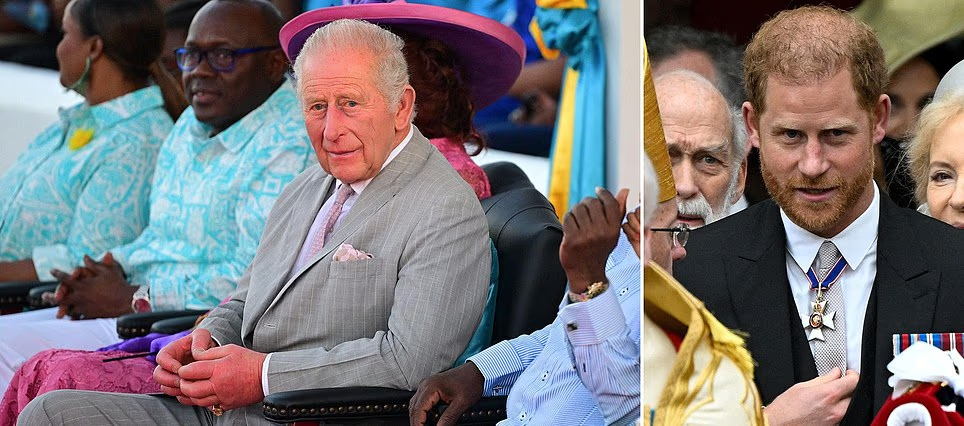
King Charles III’s reign has been marked by a series of challenges that have tested his leadership, resilience, and ability to guide the British monarchy through an increasingly complicated period. Although his coronation in May 2023 represented the beginning of a historic new chapter, the years surrounding his accession have brought unexpected difficulties, from family controversies and royal health concerns to public scrutiny and questions about the future of the institution.
For a monarch who spent decades preparing to become king, the transition to the throne was always likely to involve considerable pressure. However, the scale and timing of some of the problems facing the royal family have created an unusually demanding environment for Charles. One royal expert has suggested that His Majesty could not have anticipated that certain scandals would become so significant, placing additional strain on an already complicated reign.
The phrase “reign of pain” captures the difficult atmosphere surrounding the monarchy, but it does not tell the whole story. Charles has also overseen important royal occasions, continued his public duties, and sought to establish his own approach to kingship. Nevertheless, the challenges that have emerged since his coronation have repeatedly drawn attention to the personal and institutional pressures that come with wearing the crown.
King Charles III’s Coronation Marked the Beginning of a Difficult Chapter
King Charles III was crowned at Westminster Abbey on May 6, 2023, in a ceremony that combined centuries-old traditions with a carefully considered vision of a modern monarchy. The occasion formally confirmed his position as sovereign following the death of Queen Elizabeth II in September 2022.
For Charles, the moment represented the culmination of a lifetime spent preparing for the responsibilities of kingship. As the longest-serving heir apparent in British history, he had spent decades undertaking royal engagements, supporting charitable causes, and developing interests in environmental protection, architecture, and community life.
Yet becoming king also meant inheriting an institution facing significant challenges. Public expectations had changed, the royal family had experienced years of controversy, and the monarchy needed to demonstrate that it could remain relevant in a modern society.
Charles was also stepping into the role after the extraordinary 70-year reign of his mother. Queen Elizabeth II had become a symbol of continuity for generations, making the task of establishing a distinct identity particularly demanding.
Although the coronation was a moment of celebration, it could not remove the problems that had accumulated within the royal family. Instead, it marked the beginning of a new period in which Charles would have to manage those difficulties while demonstrating stability and leadership.
Royal Family Scandals Put Additional Pressure on the Monarchy
One of the most difficult aspects of Charles’s reign has been the continued attention surrounding controversies involving members of the wider royal family.
The monarchy depends heavily on public confidence, tradition, and the perception that its members uphold standards appropriate to their positions. When serious controversies arise, the consequences can extend beyond the individuals directly involved and affect the reputation of the institution as a whole.
The ongoing scrutiny surrounding Prince Andrew has been particularly challenging. His association with convicted sex offender Jeffrey Epstein and the allegations made against him have generated years of controversy. Andrew has denied Virginia Giuffre’s allegations, and the civil case was settled in 2022 without an admission of liability.
Although Andrew no longer undertakes official royal duties, the controversy has continued to attract public attention. For Charles, the situation has presented a difficult balance between family relationships and the need to protect the monarchy’s reputation.
The issue is especially sensitive because the public often views the royal family as both a private family and a national institution. Decisions involving one member can therefore become questions about the wider monarchy.
A king may have considerable influence over royal arrangements, but he cannot simply make every controversy disappear. Legal matters, public criticism, and the personal decisions of relatives can continue to create difficulties long after official roles have changed.
This is one reason why the challenges facing Charles may have proved more complicated than anyone could have expected when he first became monarch.
Prince Harry and Meghan’s Departure Continues to Cast a Shadow
Another significant source of pressure has been the continuing distance between Prince Harry and the rest of the royal family.
Harry and Meghan, Duchess of Sussex, stepped back from their roles as senior working royals in 2020 before establishing their lives in the United States. Their departure marked a major turning point for the monarchy and raised questions about the future responsibilities of younger members of the family.
The situation became more complicated through television interviews, public statements, and Harry’s memoir, Spare, published in January 2023. The book included personal accounts of family disagreements and offered Harry’s perspective on his experiences within the institution.
For Charles, the disagreement has been particularly difficult because Harry is his younger son. The king must navigate the emotional realities of a family dispute while also considering the wider implications for the monarchy.
Prince William has also been drawn into public discussion because of his position as heir to the throne and his reportedly strained relationship with his younger brother.
The brothers’ relationship remains a private matter in many respects, and outsiders cannot know the full extent of their conversations or disagreements. However, the continuing public interest has ensured that the family tension remains part of the wider conversation about Charles’s reign.
Reconciliation may be possible, but rebuilding trust within a family that has experienced years of disagreement is rarely straightforward. For the king, the challenge is made more complicated by the fact that even private developments can become international news.
Health Concerns Added an Unexpected Dimension to His Reign
Perhaps one of the most personal challenges Charles has faced since his coronation has been his health.
In February 2024, Buckingham Palace announced that the king had been diagnosed with cancer following a procedure for an enlarged prostate. The Palace confirmed that the condition was not prostate cancer, but it did not publicly disclose the specific type of cancer.
The announcement prompted widespread concern in Britain and around the world. Charles temporarily postponed public-facing duties while receiving treatment, although he continued to undertake some state business and official paperwork.
His decision to speak publicly about his diagnosis was also significant. The king expressed appreciation for the medical teams supporting him and acknowledged the interest and concern shown by the public.
The announcement came during an already difficult period for the royal family, as Catherine, Princess of Wales, also revealed that she was undergoing cancer treatment in 2024.
Having two prominent members of the royal family facing serious health challenges at the same time created additional uncertainty around the monarchy’s public schedule.
Charles subsequently returned to a programme of public engagements, demonstrating his determination to continue working while managing his treatment. His health, however, remains a matter of legitimate public interest because of the constitutional responsibilities attached to the position of monarch.
The experience also highlighted a reality that is sometimes overlooked when discussing royal life: behind the ceremony and public appearances, the king is an individual facing personal challenges like anyone else.
The Pressure of Following Queen Elizabeth II
Charles’s reign has also been shaped by the enormous legacy of Queen Elizabeth II.
Her long service created a powerful association between the monarchy and continuity. For many people, she was the only monarch they had ever known, and her approach to public duty became an important part of the institution’s identity.
Charles has had to establish his own style while maintaining the stability associated with his mother’s reign.
This is not an easy task. A new monarch must demonstrate leadership without appearing to dismiss the traditions that helped sustain the institution for generations.
Charles has brought his own interests and priorities to the role, including environmental sustainability, social cohesion, and support for communities. These subjects reflect concerns he developed long before becoming king, but they also require careful handling because the monarch is expected to remain politically neutral.
His challenge is to give the monarchy a clear sense of purpose without allowing personal interests to overshadow its constitutional position.
The comparison with Elizabeth II is inevitable, but Charles’s reign should also be understood on its own terms. He became king in a different political, social, and media environment, one in which royal decisions are examined almost instantly and often internationally.
Public Expectations and the Future of the Royal Family
The monarchy is facing broader questions about its role in contemporary Britain. Public attitudes toward inherited privilege, royal spending, institutional transparency, and the responsibilities of public figures have evolved considerably.
Charles has inherited these debates alongside the ceremonial and constitutional duties of the crown.
For the king, maintaining public confidence requires more than attending official events. It involves demonstrating that the institution can adapt while preserving the traditions that remain meaningful to many people.
The future of the monarchy will also depend heavily on the next generation. Prince William and Catherine are expected to play increasingly important roles as the institution prepares for the eventual transition to another reign.
Their public work, family responsibilities, and ability to connect with younger generations may help shape how the monarchy develops in the years ahead.
However, the royal family must also recognize that public interest can be unpredictable. Controversies that initially appear manageable can grow into major issues, while personal matters can become institutional questions because of the family’s unique position.
This is likely part of what makes the challenges of Charles’s reign so difficult to anticipate. The king can prepare for official responsibilities, but he cannot control every event that affects the people around him.
Can King Charles Turn a Difficult Reign Into a Lasting Legacy?
Despite the challenges, it would be premature to define Charles’s reign solely through controversy and hardship.
The king has continued to carry out constitutional responsibilities, receive visiting leaders, support charitable initiatives, and represent Britain at important national and international occasions.
His return to public duties following his cancer diagnosis also demonstrated a determination to remain active despite personal difficulties.
Nevertheless, the pressures of recent years have raised important questions about how the monarchy can protect its reputation and maintain public confidence during periods of uncertainty.
Charles may not be able to resolve every family dispute or prevent every controversy, but his response to difficult situations will form an important part of his legacy.
A successful reign does not necessarily require a problem-free royal family. It requires the ability to respond responsibly when problems arise, preserve institutional stability, and maintain a meaningful connection with the public.
The king’s greatest challenge may therefore be to demonstrate that the monarchy can endure difficult moments without losing its sense of purpose.
The Bottom Line
King Charles III’s reign began with the historic celebration of his coronation, but the years since have brought a succession of challenges that few could have predicted in their full complexity.
Family controversies, Prince Harry’s departure, questions surrounding Prince Andrew, serious health concerns, and the pressure of following Queen Elizabeth II have all contributed to an unusually demanding period for the new monarch.
A royal expert’s suggestion that Charles could not have anticipated certain scandals becoming so significant reflects the unpredictable nature of modern royal life. Even decades of preparation cannot guarantee that a monarch will be ready for every personal, institutional, or public crisis.
Yet Charles’s story is still unfolding. His reign will ultimately be judged not only by the difficulties he has faced, but also by how he responds to them and what kind of monarchy he leaves behind.
For now, the king continues to navigate a period defined by both uncertainty and responsibility. Whether the challenges of recent years become lasting scars or important lessons in his leadership will depend on the decisions made in the years ahead.