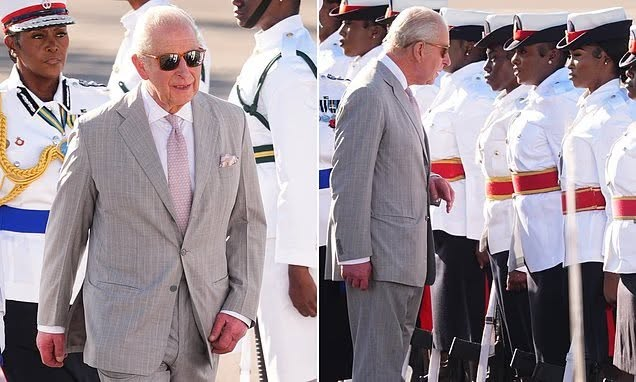
King Charles III has begun a significant nine-day tour of the Caribbean amid growing pressure on Britain to confront its historic role in the transatlantic slave trade. What might otherwise have been a traditional royal visit has become an important diplomatic moment, with calls for a formal apology, slavery reparations and a deeper acknowledgment of colonial injustices taking center stage.
The monarch’s journey, which includes visits to the Bahamas, Guyana and Antigua and Barbuda, comes at a time when several Caribbean nations are increasingly determined to address the long-term consequences of slavery. Regional leaders and campaigners argue that acknowledging historical suffering is not enough without meaningful action to address the inequalities that continue to affect their societies.
Charles has already made a significant statement during the opening stage of his visit, recognizing the suffering and injustices experienced by people in the Caribbean during the colonial era. However, his remarks have not satisfied everyone. Reparations advocates say the region deserves more than expressions of regret, while the British government has maintained its opposition to financial compensation and has not indicated that a formal apology is forthcoming.
As the King continues his tour, the difficult question facing the monarchy and the British government is how to acknowledge a painful shared history while responding to the demands of nations seeking justice, recognition and a more equal future.
King Charles Opens Caribbean Tour With Acknowledgment of Historical Injustice
King Charles began his Caribbean tour in the Bahamas, where his arrival attracted considerable attention from political leaders, residents and campaigners. The visit marked an important opportunity for the monarch to engage with a region whose relationship with Britain remains closely connected to centuries of colonial history.
During an event in Nassau, Charles addressed a gathering of young Bahamians and acknowledged the suffering and injustices of the past. He reflected on how some of the region’s most positive cultural achievements emerged despite a history marked by profound hardship.
His remarks recognized that the Caribbean’s present-day identity cannot be separated entirely from its colonial past. The transatlantic slave trade forcibly transported millions of Africans across the Atlantic, with countless people subjected to brutal conditions on plantations throughout the region.
Although the King did not issue a formal apology, his acknowledgment placed the historical legacy of slavery firmly within the conversation surrounding his visit.
The distinction is important. For some observers, a public recognition from the British monarch represents a meaningful step toward understanding the past. For others, words alone cannot address the economic, social and institutional consequences that they believe continue to affect Caribbean communities.
The reaction to Charles’s remarks demonstrated how emotionally and politically significant the issue remains.
Why Slavery Reparations Are Becoming a Central Issue
The calls for slavery reparations are not new. Caribbean governments, historians and advocacy organizations have spent years discussing how former colonial powers should respond to the consequences of slavery.
However, the issue has gained renewed attention as regional leaders seek to place reparations more firmly on the international political agenda.
The Caribbean Community, commonly known as CARICOM, has been among the organizations advocating for reparatory justice. Its position includes demands for meaningful engagement with European countries that benefited from the transatlantic slave trade and colonial exploitation.
Reparations can take different forms. Although financial compensation is frequently discussed, campaigners have also proposed investment in education, healthcare, infrastructure, cultural preservation, debt relief and development programs.
Supporters argue that the legacy of slavery extends far beyond the period in which the institution legally existed. They point to historical patterns of land ownership, economic inequality and limited access to resources as issues that cannot be understood without considering the region’s colonial history.
For many advocates, reparations are therefore about more than calculating financial losses. They represent an attempt to recognize historical responsibility and establish a framework for addressing its continuing effects.
Not everyone agrees on the best approach. Some critics question how compensation should be calculated, who should receive it and how any funding would be administered. Others argue that contemporary governments should focus primarily on domestic economic policies.
These disagreements have not stopped campaigners from insisting that the conversation deserves serious international attention.
The Bahamas Responds to the King’s Message
The Bahamas was the first major stop on Charles’s itinerary, and the response to his remarks revealed the different expectations surrounding the royal visit.
The Bahamas National Reparations Committee expressed disappointment with the King’s comments, arguing that acknowledgment of historical suffering did not go far enough to meet the demands of justice.
Campaigners have emphasized that Caribbean culture should not be defined solely by the suffering experienced during slavery. They argue that the region’s identity was also shaped by the resilience, creativity, resistance and determination of enslaved Africans and their descendants.
This distinction is particularly important when discussing the historical legacy of slavery. While the horrors of the past must be recognized, Caribbean communities also want their achievements and contributions to be understood on their own terms.
The Bahamas gained independence from Britain in 1973 but remains a constitutional monarchy, with Charles serving as its head of state. That arrangement adds another dimension to the discussion about the relationship between the Caribbean and the British Crown.
For some residents, the monarchy represents continuity and shared history. For others, it remains a symbol of colonial rule and an institution whose historical connections to slavery deserve greater scrutiny.
The King’s visit has therefore brought together questions of history, national identity and the future of constitutional relationships in the Caribbean.
Guyana Visit Brings Historical Questions Into Focus
Following his time in the Bahamas, Charles traveled to Guyana, where he is expected to engage with political leaders, local communities and representatives from different sectors of society.
The visit carries particular historical significance because Guyana experienced some of the most difficult chapters of British colonial rule.
One defining event was the Demerara slave rebellion of 1823. Enslaved people rose against the conditions imposed on them, seeking freedom from a system that denied them basic human rights. The uprising was violently suppressed, and more than 200 enslaved people were killed.
The rebellion remains an important part of Guyana’s historical memory and illustrates the resistance that existed throughout the Caribbean during the era of slavery.
President Mohamed Irfaan Ali has argued that acknowledging the horrors of slavery should be followed by a formal apology. His position reflects a broader regional expectation that recognition must be accompanied by meaningful engagement.
Guyana also presents a modern economic dimension to the discussion. The country has become an important oil producer, creating new opportunities as well as challenges involving development, inequality and the management of national resources.
During the visit, Charles is expected to meet President Ali, business representatives and Indigenous community leaders. These engagements provide an opportunity to discuss not only the colonial past but also the country’s present-day priorities.
The inclusion of Indigenous communities is significant because the history of colonialism in the region extends beyond the transatlantic slave trade. Land rights, cultural protection and the treatment of Indigenous populations remain important subjects in discussions about historical justice.
Commonwealth Summit Could Give Reparations Debate a Bigger Platform
The final major stage of the King’s tour will take place in Antigua and Barbuda, where Charles and Queen Camilla are scheduled to attend the Commonwealth Heads of Government Meeting.
The summit brings together leaders from Commonwealth countries, many of which have historical connections to the British Empire.
With slavery and reparations already attracting attention, the meeting could provide an important opportunity for Caribbean representatives to raise the issue directly with other Commonwealth leaders.
CARICOM has been seeking to place reparations on the summit’s agenda, arguing that the subject deserves serious consideration within the wider organization.
The Commonwealth faces a delicate challenge. Its member states have different historical experiences, economic priorities and political positions. Some are strongly supportive of reparatory justice, while others may prefer to emphasize cooperation on development, trade, climate change and international security.
Charles occupies a distinctive position in this debate because he is both Britain’s monarch and head of the Commonwealth. His role gives him an opportunity to encourage dialogue, but it does not give him the authority to independently determine British government policy on compensation or formal apologies.
The summit will therefore be closely watched for signs of whether the organization can create space for a more substantial discussion about historical responsibility.
Why the British Government’s Position Matters
Although the King is the most visible figure during the tour, decisions about Britain’s official response to reparations ultimately rest with the government.
Buckingham Palace has indicated that Charles will not avoid discussing the legacy of slavery. However, the Palace has also made clear that a formal apology is not part of the planned visit.
The British government has separately maintained that it does not support financial reparations for slavery.
This distinction reflects the constitutional relationship between the monarchy and elected ministers. The King is expected to act in accordance with government advice, particularly on matters involving foreign policy and official national positions.
As a result, even if Charles personally expresses sympathy for those affected by historical injustices, he cannot independently commit Britain to a compensation program.
The question is complicated by the historical involvement of the British state, commercial institutions and elements of the monarchy in the slave trade.
Britain abolished slavery across most of its empire in 1834. Under the compensation arrangements associated with abolition, £20 million was paid to slave owners rather than to the formerly enslaved people. The decision remains a major point of criticism in modern discussions about historical responsibility.
For reparations advocates, this history illustrates the imbalance between those who received financial compensation and those whose labor and freedom had been taken away.
Queen Camilla’s Role and the Wider Purpose of the Tour
Queen Camilla is joining Charles for the Commonwealth summit in Antigua and Barbuda, adding another public dimension to the royal visit.
Royal tours traditionally include cultural events, meetings with community organizations and opportunities to highlight partnerships between the United Kingdom and host countries.
This visit is expected to include similar engagements, with an emphasis on the future of the Commonwealth as well as the difficult questions surrounding its history.
The Palace has indicated that the tour will recognize the past while also highlighting opportunities for cooperation in areas such as education, sustainability and economic development.
That approach reflects the challenge facing the royal family. The monarchy must engage with historical criticism without allowing every aspect of the visit to become defined by disagreement.
However, the reparations debate cannot easily be separated from the wider purpose of the journey. For Caribbean communities, the relationship with Britain is not simply a matter of ceremonial friendship. It is also connected to questions about how historical power shaped modern institutions and economic conditions.
Can King Charles Help Move the Debate Forward?
Whether Charles can influence the reparations discussion remains uncertain.
The monarch cannot decide the government’s financial policy, but his words and public engagement can shape the atmosphere in which difficult conversations take place.
A meaningful acknowledgment of the past may help build trust, particularly if it is accompanied by a willingness to listen to Caribbean leaders and communities.
However, campaigners are likely to continue asking what practical steps could follow. They may seek a formal apology, structured negotiations, development initiatives or other forms of reparatory action.
The challenge is to move beyond symbolic gestures without overlooking the complexity of the historical and political issues involved.
Any serious progress would require sustained dialogue between Caribbean governments, Britain and other countries connected to the transatlantic slave trade.
It would also require careful consideration of what reparations should involve, how they could be delivered and how affected communities would participate in shaping the process.
The Bottom Line
King Charles’s Caribbean tour has become much more than a series of royal engagements. His visits to the Bahamas, Guyana and Antigua and Barbuda are taking place against the backdrop of renewed demands for Britain to confront its role in slavery and consider reparations.
The King’s acknowledgment of historical suffering has opened an important conversation, but it has not resolved the deeper questions being raised by Caribbean leaders and campaigners.
For those calling for reparatory justice, recognition is only the beginning. They want meaningful discussions about responsibility, compensation and the lasting consequences of colonial exploitation.
Whether the Commonwealth summit produces any concrete progress remains to be seen. What is clear is that the debate over slavery’s legacy is unlikely to disappear.
As Charles continues his journey, the central challenge will be finding a way to connect historical acknowledgment with genuine cooperation and respect for the countries whose past and present remain closely linked to Britain’s history.