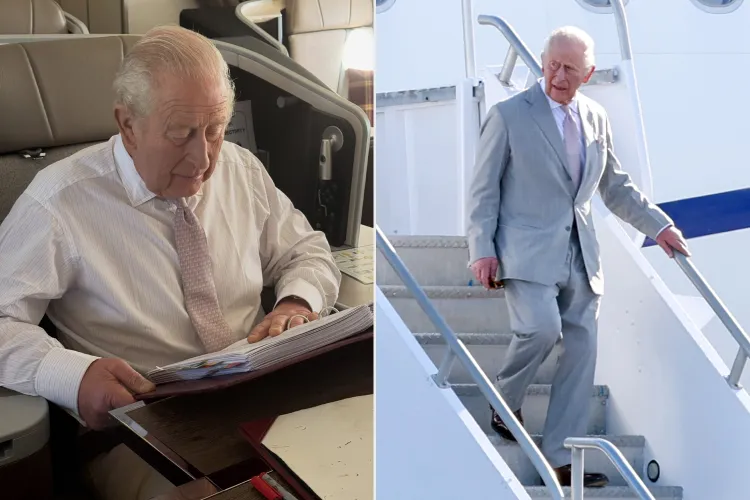
King Charles III has offered a rare glimpse into the world of royal air travel, bringing fresh attention to the arrangements that help the British monarch carry out his demanding schedule of official engagements. While royal tours often capture public interest through ceremonial welcomes, diplomatic meetings, and appearances alongside world leaders, the journey between destinations is another important part of the work behind the Crown.
For the King, flying is not simply a matter of getting from one country to another. International visits can involve tightly planned schedules, extensive preparation, and a series of responsibilities that continue even when he is thousands of feet above the ground. A rare look inside the royal aircraft offers an opportunity to consider how travel fits into the monarch’s working life and how he may use time in the air between official commitments.
Although the precise details of every royal flight are not made public, the broader picture reveals the practical considerations behind transporting the monarch, members of his entourage, and the people responsible for coordinating official visits. From preparing for engagements to managing the demands of long-distance travel, the experience is closely connected to the work of the modern monarchy.
The glimpse also challenges the familiar image of royal travel as an uninterrupted display of luxury. Comfort and privacy matter, but so do security, efficiency, and the ability to remain prepared for the next event.
Inside the World of Royal Air Travel
Royal travel has long fascinated the public, partly because it combines the traditions of the British monarchy with the practical demands of modern international diplomacy.
When King Charles travels overseas, his itinerary may include meetings with political leaders, state ceremonies, cultural visits, charitable engagements, and conversations with representatives of local communities. Each event requires planning, and the overall schedule often leaves limited room for unexpected delays.
Air travel can therefore play a significant role in making official visits possible. Moving between countries efficiently allows the King to undertake several engagements within a limited period while maintaining the formal standards expected of a head of state.
However, it is important to distinguish between a dedicated royal aircraft and the aircraft used for particular official journeys. The British monarchy does not maintain a single, permanently assigned luxury passenger jet for every royal trip. Depending on the circumstances, members of the Royal Family may travel using government or military aircraft, chartered planes, or commercial services.
The arrangements can vary according to the destination, the size of the delegation, security requirements, and the purpose of the visit.
Consequently, descriptions of the royal plane should not automatically be understood as referring to one aircraft with an identical interior and configuration on every journey.
What remains consistent is the need to coordinate travel carefully. For the King, a flight is part of a much larger operation involving official staff, security personnel, diplomatic representatives, and those responsible for ensuring that each engagement runs smoothly.
How King Charles May Spend His Time While Flying
One of the most intriguing questions surrounding royal air travel is what the monarch does during the hours between destinations.
Although the exact routine aboard a particular flight may remain private, the demands of the King’s position offer some insight into the kinds of activities that can occupy his time.
Preparing for upcoming engagements is an important possibility. Before meeting a foreign leader, attending a formal reception, or visiting a cultural institution, the King may need to review briefing materials and familiarise himself with the people and subjects on his itinerary.
Such preparation helps ensure that official conversations are informed and that the monarch can engage meaningfully with the communities and organisations he visits.
Reading may also be a practical way to use time during a long journey. King Charles has maintained longstanding interests in architecture, the natural environment, literature, and the arts. These interests have been reflected throughout his public work, although it would be speculative to claim that he follows a particular reading routine on every flight.
Travel can also provide an opportunity for members of an official party to review schedules and coordinate arrangements for the next destination. The King does not manage every logistical detail personally, but his engagements depend on the work of a wider team.
It is equally reasonable to recognise that rest has a place in a demanding travel schedule. International tours can involve time-zone changes, lengthy ceremonies, and consecutive days of public appearances. Periods of quiet during a flight may help the monarch prepare for the responsibilities waiting after landing.
Without a confirmed account of a specific journey, however, the precise balance between reading, preparation, meetings, and relaxation should not be presented as established fact.
Why Preparation Matters Before a Royal Engagement
For many people, air travel represents a pause between one part of a journey and the next. For a reigning monarch, that transition can be more complicated.
An overseas visit may have been arranged months in advance and involve close cooperation between the British government, the host nation, royal officials, and local organisations. Every stage must fit into a schedule that may include numerous engagements over several days.
The King may be expected to understand the background of the people he meets, the significance of particular locations, and the purpose of the organisations he visits.
Briefing materials help provide this context. They can include information about local issues, historical connections, cultural traditions, and the objectives of official meetings.
Such preparation is especially important during state visits, when diplomatic symbolism can carry considerable weight. A speech, a meeting, or a visit to a significant location may communicate respect and strengthen relationships between countries.
The monarch’s role is not identical to that of an elected political leader, but his public engagements can still contribute to Britain’s diplomatic relationships and international profile.
Time in the air can therefore be part of a wider process of preparation, even if the precise activities undertaken during an individual flight are not publicly documented.
The Comfort and Practicalities of Flying as a Monarch
Images of royal travel can encourage assumptions about luxurious surroundings, private lounges, and personalised service. While official aircraft and chartered arrangements may provide comfortable working environments, their design and facilities depend on the aircraft being used.
Some aircraft configured for government or official travel may include seating areas suitable for meetings, places to work, and facilities that support longer journeys. Others may have more conventional passenger arrangements.
It would be inaccurate to assume that every aircraft carrying King Charles has the same rooms, furnishings, or onboard amenities.
The practical needs of an official delegation also extend beyond passenger comfort. Baggage, communications, security arrangements, flight schedules, and coordination with ground teams all contribute to the success of a journey.
For the monarch, privacy is another consideration. A public appearance may be carefully documented, but the hours between engagements can involve personal conversations, preparation, and periods away from cameras.
This distinction is important when considering a rare glimpse inside the royal plane. A photograph or brief description may reveal part of the travel environment, but it cannot necessarily establish the complete layout of an aircraft or the full routine of those travelling aboard it.
The most informative perspective is therefore not simply how impressive the interior looks, but how the arrangements support the responsibilities of an official visit.
The People Who Make Royal Travel Possible
Behind every royal journey is a team of people working to coordinate the details.
Royal household staff help organise the King’s schedule and prepare for engagements. Government officials and diplomatic representatives contribute to the planning of official visits, while aviation professionals are responsible for the safe operation of the aircraft.
Security teams also play a role in ensuring that movements are coordinated appropriately. Their work can involve careful planning before departure, communication with personnel at the destination, and adjustments when circumstances change.
For overseas visits, the host country may have its own teams responsible for transport, protocol, and security. These arrangements must work alongside the British delegation’s plans.
The result is a complex operation in which a seemingly simple flight is connected to a much larger network of responsibilities.
This is one reason royal travel can require considerable preparation. A delay or change in one part of an itinerary may affect several subsequent engagements, particularly when the schedule includes multiple locations.
The King is the central figure in the public-facing part of the journey, but the success of the visit depends on the coordinated efforts of many people whose work rarely attracts the same attention.
How Royal Travel Has Changed Over Time
The British monarchy’s approach to travel has evolved significantly over the centuries.
Earlier monarchs travelled by carriage, ship, and rail, depending on the distance and the technology available. Modern aviation has transformed the possibilities for international visits, making it easier for the monarch to reach distant destinations within a relatively short period.
Air travel has also changed public expectations. A royal visit that once might have required an extended journey can now be incorporated into a carefully scheduled itinerary spanning several countries or regions.
Nevertheless, modern travel has not removed the challenges associated with official duties. Long flights, time-zone changes, and demanding schedules can still affect energy levels and preparation.
The contemporary monarchy must also consider the practical and financial implications of official travel, including the need to use resources responsibly and select arrangements suited to each trip.
These questions form part of a wider discussion about how the institution balances tradition with the expectations of modern public life.
A glimpse inside the royal plane is therefore interesting not only because it offers a view of the monarch’s surroundings, but because it illustrates how the Royal Family’s working practices have adapted to modern transportation.
Why a Rare Glimpse Inside the Royal Plane Captures Attention
The public’s fascination with royal life often centres on details that remain largely outside ordinary experience.
State banquets, historic residences, ceremonial uniforms, and royal collections provide visible reminders of the monarchy’s distinctive traditions. Travel adds another dimension because it connects these formal occasions with the less visible work that makes them possible.
An image or description of the royal aircraft can prompt questions about how the King travels, what preparations are made before an engagement, and how official duties fit into the hours between destinations.
Yet the appeal does not necessarily depend on discovering extravagant details. Often, the most interesting aspect is the contrast between the public image of a monarch and the practical routines required by the role.
King Charles’s position involves representing the Crown at home and abroad, maintaining relationships with a wide range of organisations, and participating in events that carry historical and diplomatic significance.
The aircraft is simply one part of the infrastructure that supports those responsibilities.
For royal watchers, understanding that context provides a more complete picture than focusing exclusively on the appearance of the cabin or speculating about private habits that have not been confirmed.
The Bottom Line
King Charles III’s air travel offers a rare perspective on the practical side of life as Britain’s monarch. While official appearances receive much of the public attention, the journeys connecting those events are an essential part of carrying out royal duties.
The King may use travel time for preparation, reading, coordination, or rest, but the exact details of his routine on a particular flight should not be assumed without a confirmed account. Similarly, the aircraft and onboard arrangements can differ depending on the nature of the journey.
What is clear is that royal travel involves far more than transportation. It requires careful scheduling, cooperation between multiple teams, and preparation for the diplomatic, cultural, and ceremonial responsibilities that await at the destination.
A rare glimpse inside the royal plane offers a reminder that even the most visible members of the Royal Family depend on extensive planning behind the scenes.
For King Charles, the time spent in the air forms part of a working life defined by public service, international engagement, and the continuing responsibilities of the Crown. The aircraft may provide a private space between appearances, but the duties associated with the monarchy remain at the heart of the journey.