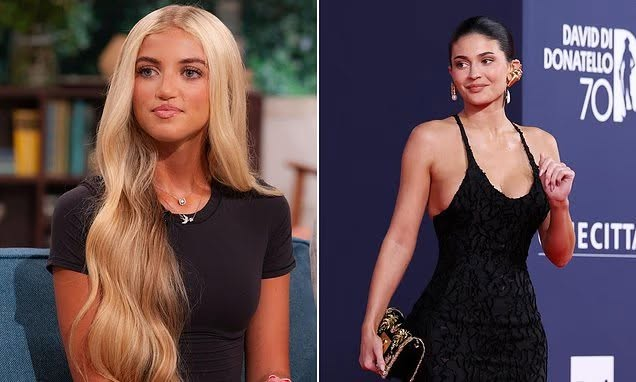
Princess Andre could be preparing to take her ambitions well beyond Britain as she explores opportunities for her makeup brand in the United States. The 19-year-old daughter of singer Peter Andre and media personality Katie Price is reportedly setting her sights on the American beauty market, a move that could mark an important new chapter in her growing public profile.
With comparisons to Kylie Jenner already emerging, Princess is entering an industry where celebrity influence, social media engagement, and distinctive branding can play a major role in a business’s success. Yet establishing herself as a beauty entrepreneur will require more than a recognizable surname or a growing following. She will need to develop a clear identity, understand her audience, and offer products that stand out in an increasingly crowded marketplace.
For Princess, the potential move into the United States represents an opportunity to demonstrate that her ambitions extend beyond being the daughter of two well-known British personalities. It could also place her among a new generation of young public figures attempting to turn their visibility into independent businesses.
Although the reported American plans should not be confused with a confirmed nationwide launch, the possibility has already raised an interesting question: could Princess Andre become one of Britain’s next notable names in celebrity beauty?
Who Is Princess Andre? Inside Her Growing Public Profile
Princess Andre grew up in a family that has remained familiar to British entertainment audiences for years. Her father, Peter Andre, became widely known through his music career and later television appearances, while her mother, Katie Price, built a high-profile career as a model, author, businesswoman, and reality television personality.
As the daughter of two celebrities, Princess has experienced public attention from a young age. However, growing up around fame does not automatically determine the direction of an individual’s career.
In recent years, she has begun developing a public identity of her own through social media, fashion, beauty-related content, and appearances connected to her family. Her generation has grown up in an environment where online platforms can provide direct access to audiences, allowing young personalities to develop their interests and communicate with followers without relying entirely on traditional entertainment media.
Beauty is a particularly natural area for someone with a visible online presence. Makeup tutorials, skincare discussions, product reviews, and personal style content can create opportunities for ongoing engagement rather than occasional appearances in the headlines.
For Princess, a makeup brand could provide a way to move from being a recognizable personality to becoming a business owner with a distinct creative vision.
The challenge will be demonstrating that her brand can stand independently of her family connections. Celebrity heritage may open doors, but long-term success generally depends on the quality of the products, the strength of the brand, and the relationship it builds with customers.
Why the American Beauty Market Could Be Her Next Big Opportunity
The United States represents an attractive destination for beauty entrepreneurs because of its large consumer market, established retail networks, and influential beauty culture.
American consumers have access to an enormous range of cosmetics brands, from affordable everyday makeup to premium products associated with luxury fashion houses and celebrity personalities. Online shopping and social media have also made it easier for emerging labels to reach customers across state lines.
For a young entrepreneur with an existing public profile, the market offers the possibility of reaching an audience much larger than the one available in a single country.
However, the scale of the opportunity also creates significant competition. New beauty brands enter the market regularly, and consumers have become familiar with celebrity-founded businesses. A famous name can generate initial curiosity, but it cannot guarantee repeat purchases.
A successful US expansion would require careful decisions about product selection, pricing, distribution, marketing, and customer service. The brand would also need to understand differences in consumer preferences, retail expectations, and regulatory requirements.
Princess would face the additional challenge of establishing credibility with customers who may know little about her British background. Her story could help introduce the brand, but the products themselves would need to make a convincing case.
If her reported plans progress, the American market could offer an important test of her ability to translate public recognition into a sustainable business.
Princess Andre and the Comparisons to Kylie Jenner
Comparisons between Princess Andre and Kylie Jenner are understandable in the context of celebrity beauty businesses. Jenner transformed her public profile into Kylie Cosmetics, building a brand that became widely associated with her personal image and social media influence.
Her success helped demonstrate how a celebrity’s relationship with followers can become a commercial asset. Instead of relying exclusively on traditional advertising, a founder can introduce products through personal channels, share campaign images, and communicate directly with potential customers.
For Princess, the comparison provides a recognizable example of the possibilities available to young women entering the beauty industry.
Nevertheless, Jenner’s business journey should not be treated as a blueprint that another entrepreneur can simply reproduce. Every beauty brand must establish its own identity, audience, and reasons for existing.
Princess has a different background, a different home market, and her own personal style. Attempting to imitate another celebrity too closely could make it harder for her to distinguish herself in a competitive industry.
The stronger approach would be to identify what makes her perspective unique. That might involve a particular approach to everyday makeup, products designed around the needs of younger consumers, accessible pricing, or a visual identity that reflects her own tastes.
The most effective celebrity brands often combine the founder’s personality with a clear product proposition. Customers may initially pay attention because they recognize the name, but they need a compelling reason to remain interested.
For Princess, the opportunity is not necessarily to become Britain’s version of Kylie Jenner. It is to discover what kind of beauty entrepreneur she wants to be.
Building a Makeup Brand in the Age of Social Media
Social media has changed how beauty brands introduce themselves to consumers. A new product no longer needs to depend entirely on a traditional advertising campaign or a prominent retail placement to attract attention.
Platforms such as Instagram and TikTok allow brands to share demonstrations, reveal packaging, introduce product shades, and collect feedback from potential customers. Short videos can show how a lipstick looks in different lighting, how a complexion product applies, or how a simple collection can be used to create several makeup styles.
For a young founder such as Princess, these platforms could provide a natural way to connect her personal interests with her business ambitions.
An existing audience may help create awareness before a launch, but maintaining interest requires a consistent and credible approach. Followers generally respond best when promotional content feels relevant to their interests rather than becoming a constant stream of sales messages.
Transparency is also important. Consumers increasingly want to know what products contain, how they are tested, what they cost, and whether claims about their performance are supported.
A beauty business must also be prepared to respond to criticism and product feedback. A successful launch is only the beginning; maintaining customer confidence requires dependable quality, clear communication, and reliable delivery.
Princess’s challenge would be to balance her identity as a public personality with the practical responsibilities of running a business. The most effective strategy would allow her personality to attract attention while giving customers solid reasons to trust the brand.
What Would Make Princess Andre’s Beauty Brand Stand Out?
The cosmetics industry is crowded with established companies, independent labels, influencer-led collections, and celebrity-backed businesses. As a result, a new brand needs more than attractive packaging to distinguish itself.
Product quality would be one of the most important factors. Consumers expect makeup to perform consistently, feel comfortable to use, and justify its price. A visually appealing campaign may encourage an initial purchase, but the experience of using the product determines whether customers return.
A clear product range could also help Princess establish her identity. Rather than launching an overwhelming collection, a brand might begin with a carefully chosen group of products that communicate its purpose.
For example, a collection could focus on everyday essentials, versatile shades, or makeup routines designed for people who prefer a straightforward approach to beauty. These are possibilities rather than confirmed details about Princess’s reported plans, but they illustrate how a focused strategy can help a new label find its audience.
Brand values may matter as well. Consumers often want to understand what a company represents, whether that involves accessibility, creativity, inclusive shade ranges, responsible packaging, or a particular approach to self-expression.
The most convincing positioning would be one that reflects the founder’s genuine interests and can be supported by the products themselves.
Princess also has an opportunity to learn from the experiences of other celebrity brands. Public recognition can create a powerful first impression, but a business must eventually demonstrate that it offers something distinctive beyond its founder’s name.
How Her Famous Parents Could Influence Her Business Journey
Having Peter Andre and Katie Price as parents means Princess is familiar with the opportunities and pressures that come with a public career.
Both have spent years navigating media attention, professional reinvention, and the commercial possibilities of a recognizable personal brand. Their experiences may provide useful perspectives as Princess considers her own ambitions.
However, her journey will also involve decisions that belong to her. A successful business needs its own strategy, team, financial planning, and understanding of its customers.
Princess’s family background may help introduce her to potential audiences, but building a beauty company requires skills that go beyond being comfortable in front of a camera.
These include understanding product development, managing budgets, negotiating with suppliers, overseeing marketing, and responding to customer concerns. Depending on the scale of the business, she may also need experienced professionals to guide manufacturing, distribution, legal compliance, and international expansion.
For a young entrepreneur, developing those skills can be as important as generating publicity.
Her parents’ experience in entertainment and business could offer useful lessons, but the most meaningful measure of her progress will be whether she can turn those lessons into a sustainable venture that reflects her own goals.
The Challenges of Expanding Into the United States
Launching or expanding a cosmetics brand internationally involves more than making products available to customers in another country.
A business entering the United States must understand applicable cosmetics regulations, labeling requirements, product safety obligations, and the responsibilities associated with selling to American consumers. It must also consider shipping costs, inventory management, returns, and customer support.
Marketing presents another challenge. The American beauty market is highly competitive, and a new brand must decide how to reach potential customers without spending excessively on advertising.
Distribution is equally important. Selling directly through an online store offers greater control over the customer experience, while retail partnerships can increase visibility but may involve additional costs and commercial requirements.
For Princess, a measured approach could be more sustainable than attempting to establish a large presence immediately. Testing demand, collecting customer feedback, and building a loyal base can help a young business understand which products and marketing strategies are working.
Any confirmed expansion would need to be assessed on its actual details rather than assumptions based on celebrity comparisons.
The Bottom Line: Could Princess Andre Become a Beauty Industry Success?
Princess Andre’s reported interest in the American beauty market suggests that she may be looking to turn her growing public profile into a more independent business identity.
With her background, online visibility, and interest in beauty, she has several potential advantages. Comparisons to Kylie Jenner highlight the opportunities available to celebrity entrepreneurs, but they also underscore how difficult it can be to stand out in a market filled with recognizable names.
Ultimately, Princess’s success will depend on the strength of her products, the clarity of her brand, and her ability to build trust with customers in Britain and potentially the United States.
Her family name may introduce people to the business, but lasting success would require her to establish a reputation that belongs to her alone.
For now, the possibility of an American expansion offers an intriguing glimpse into Princess Andre’s ambitions. Whether she becomes one of Britain’s next major beauty entrepreneurs remains to be seen, but her reported plans point toward a generation of young public figures eager to turn visibility into a business with its own identity and long-term potential.