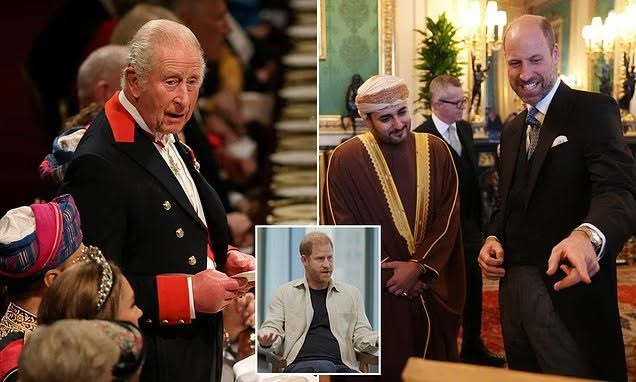
The British royal family continues to attract global attention as King Charles III navigates the responsibilities of the Crown while his two sons, Prince William and Prince Harry, follow increasingly different paths. Against the backdrop of ongoing public interest in the royal family’s future, two themes have become especially compelling: William’s growing role as heir to the throne and Harry’s expressed desire to repair strained family relationships.
For royal watchers, the contrast raises important questions about the future of the House of Windsor. William is preparing for the responsibilities that will eventually come with kingship, while Harry has spoken publicly about the importance of reconciliation and the possibility of rebuilding family connections.
Although the brothers’ relationship remains a subject of intense speculation, their individual journeys reveal different approaches to duty, privacy, and family life. King Charles, meanwhile, must balance his responsibilities as monarch with his role as a father, a challenge made more complicated by the public attention surrounding his family.
The prospect of reconciliation has generated considerable interest, but any suggestion of an imminent family reunion should be treated cautiously unless confirmed by the people involved. What is clear is that the royal family’s relationships remain closely connected to broader questions about tradition, responsibility, and the changing meaning of monarchy in the modern world.
King Charles and Prince William’s Evolving Relationship
As Britain’s monarch, King Charles has spent decades preparing for the responsibilities of the Crown. His accession in September 2022 marked the beginning of a new chapter for the monarchy, with Prince William moving closer to the center of royal life as the Prince of Wales.
The relationship between father and son has evolved alongside their changing roles. Charles has long been associated with environmental advocacy, charitable work, and the preservation of royal traditions. William has increasingly developed his own public identity, focusing on issues such as homelessness, mental health, and environmental protection.
The two generations share several priorities, particularly the belief that the monarchy must demonstrate its relevance through public service. However, William’s approach also reflects the expectations of a younger generation that wants institutions to communicate clearly and respond to contemporary challenges.
When King Charles praises his eldest son, such recognition carries significance beyond a personal family exchange. William is the heir apparent, and his growing responsibilities provide a glimpse of the monarchy’s future direction.
Nevertheless, specific claims about private conversations or unusually emotional praise should not be treated as established fact without reliable confirmation. The broader picture is that Charles and William have increasingly visible roles in the same institution, and their ability to work together will be important to the monarchy’s long-term stability.
Prince William Steps Further Into His Future Role as King
Prince William’s position has changed considerably since his early years as a young royal. Once best known internationally as the elder son of Princess Diana, he is now a senior working member of the royal family with responsibilities that extend across charitable initiatives, official visits, and constitutional preparation.
His work increasingly reflects a desire to address problems that affect ordinary people. Through the Homewards initiative, launched in 2023, William has supported efforts to demonstrate that homelessness can be prevented and reduced through cooperation between communities, charities, businesses, and public services.
Environmental protection is another major focus. The Earthshot Prize, which William launched in 2020, recognizes efforts to develop solutions to environmental challenges, including restoring nature, protecting oceans, and reducing waste.
These initiatives allow William to build a public profile based on practical projects rather than royal ceremony alone. They also demonstrate how he may seek to shape the monarchy when he eventually succeeds his father.
His approach is particularly important as the royal family faces expectations of accountability, financial restraint, and a clear sense of purpose. William must preserve the institution’s historical significance while ensuring that its work remains meaningful to people whose lives differ greatly from those of the royal family.
King Charles’s support for his heir, whether expressed publicly or through the responsibilities entrusted to him, is therefore central to the monarchy’s transition between generations.
Prince Harry Calls for Reconciliation With His Family
While William’s royal role continues to expand, Prince Harry has pursued a different life since stepping back from senior royal duties in 2020.
Harry and his wife, Meghan, Duchess of Sussex, subsequently established their home in California and developed independent professional and charitable projects. Their decision transformed the public conversation about the monarchy, raising questions about the boundaries between private life, royal service, and public accountability.
The relationship between Harry and the rest of his family has been the subject of extensive attention, particularly following interviews, documentary projects, and Harry’s memoir, Spare. His public accounts of family tensions have made reconciliation a difficult and emotionally charged subject.
Harry has nevertheless expressed a desire to improve relations with his family. His statements about reconciliation have suggested that, despite past disagreements, he does not consider family relationships unimportant.
The challenge is that reconciliation requires more than a public declaration of goodwill. It generally involves trust, honest communication, and a willingness to address disagreements without allowing them to define every future interaction.
For the royal family, the process is especially complicated because private conversations can become subjects of international headlines. Any attempt to rebuild relationships may therefore require a degree of privacy that is difficult to maintain when every development attracts public speculation.
Although Harry’s calls for reconciliation have encouraged hopes of a future rapprochement, they do not establish that a formal agreement has been reached or that all disagreements have been resolved.
Why the Royal Rift Remains So Difficult to Resolve
The tensions involving Harry, William, and other members of the royal family cannot be reduced to a single disagreement.
The brothers have followed different paths, and their decisions have been shaped by personal experiences, professional ambitions, family responsibilities, and differing relationships with the media.
Harry has spoken about the pressures associated with growing up in the royal family and his concerns about media intrusion. William, meanwhile, continues to carry the responsibilities of a future monarch, a role that requires him to protect the institution’s continuity and maintain public confidence.
These differences may influence how the brothers understand their obligations to one another and to the wider family.
Public discussion can also make private reconciliation more difficult. Reports about alleged conversations, unnamed sources, and possible meetings can create expectations that the individuals involved may never have agreed to meet.
For this reason, it is important to distinguish between confirmed statements and speculation about what family members may be thinking or planning.
A genuine improvement in relations might not begin with a grand public event. It could involve small, private steps that gradually create space for trust to return.
Whether such progress occurs remains a matter for the family itself, rather than something that can be reliably predicted from headlines alone.
King Charles Faces the Challenge of Being Both Monarch and Father
For King Charles, the situation presents a deeply personal challenge alongside his public responsibilities.
The Crown demands consistency, discretion, and a commitment to the institution. Family life, however, can involve emotional disagreements that do not fit neatly into official schedules or constitutional expectations.
Charles must also consider the wider implications of public family tensions for the monarchy. While disagreements between relatives are common, disputes involving the King and his sons can become questions about the institution’s image, unity, and future.
At the same time, the King’s role as a father is distinct from his constitutional position. Any attempt to repair family relationships would need to account for personal feelings and boundaries that cannot be resolved through official royal duties alone.
The relationship between Charles and Harry has been particularly difficult to assess from the outside. Public statements provide some insight, but they cannot reveal every private conversation or explain the full range of feelings involved.
It would therefore be premature to conclude that Charles has chosen one son over the other or that any reported praise for William represents a rejection of Harry.
A father can recognize one child’s responsibilities while still caring about another child’s future. The complexity of family relationships should not be overlooked simply because the people involved occupy prominent public positions.
Could William and Harry Find a Way Forward?
The possibility of reconciliation between William and Harry continues to attract interest because their relationship represents more than a personal disagreement. The brothers are also central figures in the story of the modern monarchy.
William’s future is closely tied to the institution, while Harry has established a life outside its senior working structure. Their different circumstances mean that rebuilding a relationship would not necessarily require them to make identical choices or return to the same professional environment.
A sustainable reconciliation could instead involve accepting those differences while establishing clearer boundaries and rebuilding personal trust.
Such a process would likely require patience. Family disagreements that have unfolded over several years cannot always be resolved through a single meeting or public statement.
It would also require both sides to determine which issues can be discussed privately and which matters need to remain separate from their public responsibilities.
For now, there is no reason to assume that a particular timetable exists for a reunion. The most meaningful sign of progress would be reliable confirmation from the people involved, rather than anonymous predictions about what might happen next.
Nevertheless, Harry’s expressed interest in reconciliation leaves open the possibility that relationships can evolve, even after prolonged periods of disagreement.
The Future of the House of Windsor
The royal family’s future will depend partly on how successfully it balances tradition with the realities of modern public life.
King Charles has spent his reign working to establish his own approach to monarchy, while William continues to prepare for a role that will eventually place him at the institution’s center. Their work on charitable causes, environmental initiatives, and public engagements offers a sense of the priorities that may shape the next chapter.
Harry’s position outside the senior working royal structure adds another dimension to that story. His relationship with his family remains personally significant, but it also reflects wider questions about how members of the royal family can define their identities beyond inherited titles and expectations.
The monarchy does not need every family member to perform the same role for it to continue. However, the public interest in the brothers demonstrates how strongly personal relationships can influence perceptions of the institution.
If reconciliation becomes possible, it may offer a reminder that family bonds can survive profound disagreements. If the relationship remains distant, the royal family will still need to find ways to manage its public responsibilities while respecting individual boundaries.
A Royal Family at a Turning Point
King Charles’s relationship with Prince William and Prince Harry’s calls for reconciliation highlight two important dimensions of the modern monarchy: the continuity of royal duty and the enduring importance of family.
William’s growing responsibilities point toward the future, while Harry’s public statements keep attention on the possibility of healing relationships strained by years of disagreement.
It is tempting to interpret every royal appearance or reported comment as evidence of a major shift. Yet the reality is likely to be more complicated, with private feelings and conversations that outsiders cannot fully understand.
For now, the clearest conclusion is that the royal family continues to navigate a period of transition. King Charles must lead the monarchy while managing personal relationships, William must prepare for the throne, and Harry must decide what reconciliation could mean within the life he has built outside the institution.
Whether the brothers eventually rebuild their relationship remains uncertain. But the continuing discussion surrounding their family demonstrates why the story of the House of Windsor remains so compelling: behind the titles, ceremonies, and public expectations are people facing many of the same questions about loyalty, forgiveness, and the possibility of moving forward.