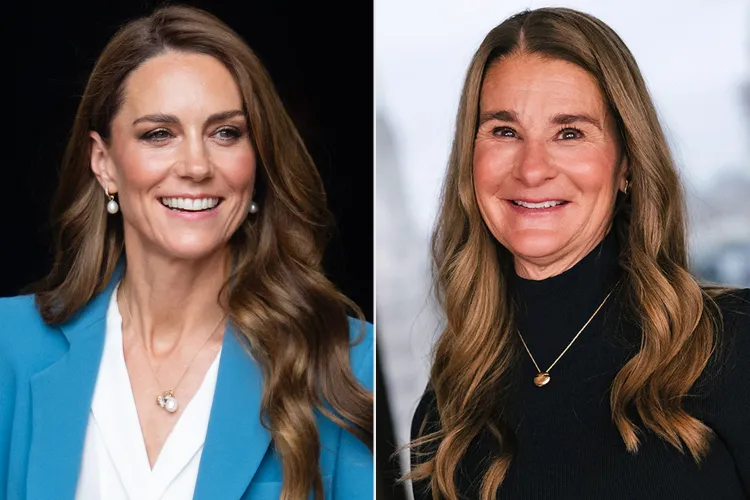
Kate Middleton, the Princess of Wales, has long used her royal platform to draw attention to issues affecting families, children, and communities. Now, a reported low-key meeting in London with philanthropist Melinda French Gates has sparked interest in the shared priorities that could connect two influential women from very different backgrounds.
The reported encounter highlights a potential point of common ground between the Princess of Wales’s work on early childhood development and French Gates’s longstanding commitment to improving the lives of women and families around the world. Although their professional paths differ, both have used their public influence to encourage conversations about the conditions that allow people to thrive.
The suggestion that the two women are working together around a “shared belief” is particularly intriguing because their respective initiatives have increasingly focused on the importance of supporting people during formative stages of life. For Catherine, that mission has become a defining part of her public work. For French Gates, advancing opportunities for women and strengthening families have been central themes throughout her philanthropic career.
However, the exact details and outcomes of the reported London meeting should not be assumed without further confirmation. The encounter nevertheless provides an opportunity to examine the causes that have shaped both women’s work and why their interests may overlap.
Kate Middleton’s Focus on Early Childhood Development
The Princess of Wales has spent years developing a public role centered on the importance of the early years of life. Through her work, she has highlighted how children’s experiences during infancy and early childhood can influence their emotional development, relationships, and long-term well-being.
In 2021, Catherine launched The Royal Foundation Centre for Early Childhood, an initiative designed to increase awareness of the importance of the first five years of life. The centre promotes research, collaboration, and public engagement around the factors that help children develop healthy emotional foundations.
The initiative reflects a broader understanding that childhood development is influenced by more than education or access to basic services. Relationships with parents and caregivers, the emotional environment at home, and the support available to families can all play important roles.
Catherine has repeatedly emphasized the value of helping people understand these connections. Her work encourages a wider conversation about how parents, professionals, communities, and institutions can support children from the beginning of their lives.
Rather than treating early childhood as an issue affecting only individual families, the Princess has sought to position it as a matter with implications for society as a whole.
That long-term approach has become an important part of her public identity. It also creates potential common ground with philanthropists and organizations interested in family well-being, social development, and improving opportunities for future generations.
Melinda French Gates’s Mission to Support Women and Families
Melinda French Gates has spent decades working to expand opportunities for women and girls. Through her philanthropic work, she has supported initiatives involving women’s health, education, economic participation, and access to resources that can help people make decisions about their futures.
Her experience includes many years of leadership at the Bill & Melinda Gates Foundation, which she co-chaired with her former husband, Microsoft co-founder Bill Gates. In 2024, she announced her departure from the foundation and began a new chapter in her philanthropic work.
Through Pivotal Ventures, the organization she founded, French Gates has focused on advancing social progress, with particular attention to women and families. Her work has included supporting organizations and initiatives intended to address barriers that limit women’s opportunities.
One of the recurring themes in her philanthropy is the idea that individuals cannot fully participate in society when essential needs remain unmet. Access to health care, economic resources, and meaningful support can influence whether women are able to pursue education, careers, and personal ambitions.
These issues can also affect children and families more broadly. When caregivers have access to resources and support, they may be better positioned to provide stable environments for the next generation.
That connection between individual opportunity and family well-being offers a natural point of comparison with Catherine’s emphasis on early childhood development.
Still, overlapping interests do not automatically mean that the two women have established a formal partnership. Any specific collaboration would need to be confirmed through reliable information about its aims and activities.
What Their ‘Shared Belief’ Could Represent
The phrase “shared belief” suggests a common philosophy rather than necessarily a single project. At the heart of both women’s work is an interest in how early experiences, family circumstances, and access to support can shape people’s lives.
For Catherine, the focus has been particularly clear: the emotional and social foundations established in childhood matter well beyond the early years themselves.
For French Gates, the emphasis has often been on removing barriers that prevent women and girls from accessing opportunities and resources. Although that work covers a broad range of issues, the well-being of families can be an important part of the wider picture.
These perspectives can intersect in several ways. Supporting parents, improving access to resources, and raising awareness of family needs may contribute to environments in which children and adults have a better chance to thrive.
A shared interest in those questions could create opportunities for discussion between leaders working in different sectors. Royal initiatives, philanthropic organizations, researchers, and community groups may each bring different forms of influence and expertise to complex social challenges.
However, it would be premature to conclude that the reported meeting produced a specific program, funding commitment, or formal agreement. Without verified details, the strongest conclusion is that the two women’s established areas of interest provide meaningful context for why a meeting between them would attract attention.
Why an Under-the-Radar Meeting Matters
Royal meetings frequently take place away from the public spotlight. Private discussions can allow participants to explore ideas, exchange experiences, and consider potential areas of cooperation without the pressure of immediately announcing a public initiative.
A low-key meeting can also reflect the practical nature of work that develops over time. Large social projects often begin with conversations among people who share an interest in a particular problem. Before a program can be announced, participants may need to understand one another’s priorities, assess existing research, and identify where their efforts could make a useful contribution.
If Catherine and French Gates did meet privately in London, the significance would depend on the substance of their conversation and whether it led to further engagement.
It is also important not to overinterpret the absence of a major public announcement. A private meeting does not necessarily indicate a secret project or a forthcoming partnership. It may simply provide an opportunity for professional discussion.
Nevertheless, the reported encounter has drawn attention because both women have established reputations in areas that affect families and future generations. Their individual influence gives their conversations potential significance, even when the details remain private.
Catherine’s Approach to Long-Term Social Change
The Princess of Wales’s work on early childhood has increasingly emphasized the importance of relationships and emotional well-being. Her approach encourages people to look beyond immediate outcomes and consider how the conditions of early life can affect individuals over many years.
This perspective challenges the idea that childhood development is solely the responsibility of parents. Families are central, but they operate within wider environments shaped by workplaces, communities, public services, and social expectations.
Supporting children therefore requires attention to the circumstances surrounding their caregivers as well as the children themselves.
Catherine’s initiative has sought to bring together experts and organizations to help improve public understanding of these connections. The emphasis is on encouraging a cultural shift in how society values the early years and the people responsible for nurturing young children.
The approach is long-term by design. Changing attitudes, strengthening professional practice, and building public awareness cannot happen overnight.
A conversation with an experienced philanthropist such as French Gates could be relevant to that broader landscape, particularly where family support and social opportunity intersect. However, any direct connection between their work should be described only when supported by confirmed details.
French Gates and the Power of Philanthropy
French Gates has used philanthropy to support efforts aimed at changing the conditions that shape women’s lives. Her work has drawn attention to issues that can be overlooked in public debates, including the importance of investing in women, supporting caregivers, and expanding access to opportunities.
Philanthropy can play a distinctive role in addressing such challenges. Private funding may help organizations test new approaches, support research, or expand programs that might otherwise struggle to secure resources.
Yet lasting social change generally requires more than money. It can depend on effective leadership, collaboration with affected communities, evidence-based decision-making, and sustained commitment over time.
French Gates’s career has placed her in conversations with leaders from business, government, public health, and civil society. Those connections can help bring attention to problems that require coordinated responses.
The Princess of Wales operates from a different institutional position, with a royal platform that can help draw public attention to particular causes. A philanthropist and a member of the British royal family may therefore contribute different strengths to conversations about social well-being.
That does not mean their approaches are identical. Their priorities, responsibilities, and methods remain distinct, and any meaningful collaboration would need to reflect those differences.
Why Early Childhood and Women’s Opportunity Are Connected
At first glance, early childhood development and women’s economic opportunity may appear to be separate subjects. In practice, they can be closely connected.
Parents and caregivers often need access to reliable information, health services, supportive relationships, and practical resources to help children thrive. When women face barriers to education, employment, health care, or financial independence, those challenges can also affect the choices available to their families.
Similarly, policies and community support that help caregivers can influence whether parents are able to balance family responsibilities with other parts of their lives.
These connections do not mean that women should be defined primarily by their roles as mothers or caregivers. Rather, they underline the importance of recognizing the full range of circumstances that shape people’s opportunities.
Catherine’s focus on children’s emotional foundations and French Gates’s work on women’s advancement approach these broader questions from different directions. Both encourage attention to the conditions that enable people to develop, participate, and build more secure futures.
That shared concern could help explain public interest in a reported conversation between them, even if the details of any discussion remain unknown.
What Comes Next for Kate Middleton and Melinda French Gates?
The reported London meeting has raised questions about whether Catherine and French Gates might explore areas of common interest in the future. At present, however, the available headline alone does not establish the nature of their discussion or confirm a formal partnership.
Any future announcement would need to clarify what the collaboration involves, which organizations might participate, and what outcomes the participants hope to achieve.
For the Princess of Wales, early childhood development remains an established focus of her public work. For French Gates, supporting women and girls continues to be a major theme of her philanthropic activities.
Those priorities provide a strong basis for understanding why the two women might exchange ideas. Whether that conversation develops into a specific initiative remains a separate question.
In the meantime, their respective careers illustrate how public figures can use different platforms to draw attention to issues that affect families and communities.
A Potential Meeting of Shared Values
Kate Middleton and Melinda French Gates come from different worlds, but their work reflects a common interest in creating conditions that allow people to flourish. Catherine has focused on the foundations of childhood development, while French Gates has devoted much of her philanthropic career to advancing opportunities for women and girls.
The reported low-key London meeting has therefore generated curiosity about the possibility of shared goals. Yet the most responsible interpretation is also the simplest: their established interests overlap in meaningful ways, while the exact details and outcomes of the reported encounter require confirmation.
Whether or not a formal partnership emerges, both women’s work highlights the importance of looking beyond individual achievements to the wider conditions that shape people’s lives.
For Catherine, that means encouraging society to take the early years seriously. For French Gates, it means supporting women and girls as they pursue greater opportunity and independence.
If their paths continue to intersect, their shared interest in families, development, and social progress could provide a foundation for further discussion. Until more details are confirmed, the reported meeting remains a potentially interesting encounter between two influential women whose work has brought attention to the importance of investing in people and future generations.