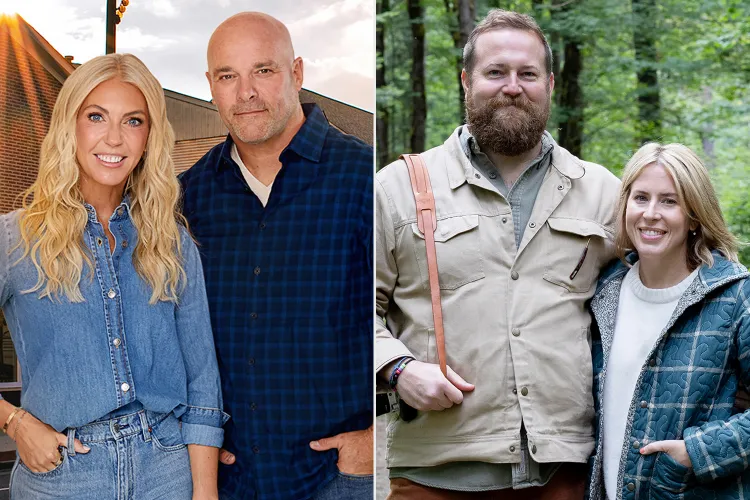
The next chapter of Home Town Takeover is bringing a fresh perspective to the beloved home renovation franchise, as its Canadian hosts prepare to take on a mission that goes far beyond transforming houses. With a new setting, local communities, and a renewed focus on the power of restoration, Home Town Takeover Canada is stepping into a legacy built by Erin and Ben Napier—one rooted in small-town pride, meaningful connections, and the belief that revitalizing a community starts with the people who call it home.
For the new hosts, following in the footsteps of the popular American renovation duo is both an exciting opportunity and a serious responsibility. Erin and Ben have helped establish a distinctive approach to home improvement television, one that combines design expertise with personal storytelling and a deep appreciation for local history. Their work has shown audiences that a successful renovation can do more than refresh a building: it can help a neighborhood rediscover its identity and encourage residents to imagine a brighter future.
Now, the Canadian edition has the opportunity to carry those ideas into a different cultural landscape while developing a character of its own. Rather than simply reproducing the original series, the new hosts must find ways to honor its spirit while celebrating the unique qualities of Canadian communities.
A New Chapter for the Home Town Takeover Franchise
The Home Town Takeover concept stands apart from many traditional home renovation programs because its ambitions extend beyond a single property. Instead of focusing exclusively on one homeowner’s wish list, the series explores how coordinated improvements can make a wider difference to a town.
That broader mission has become an important part of the show’s identity. Renovating a storefront, refreshing a community gathering place, or helping a family restore a meaningful home can contribute to a larger story about local pride and economic possibility. Each project offers an opportunity to highlight the people, traditions, and personal histories that give a town its character.
With Home Town Takeover Canada, the franchise can explore those same themes through communities shaped by Canada’s own regional identities, architectural traditions, and local histories.
For the new hosts, that means understanding the places they visit before deciding how to transform them. The goal is not simply to make buildings look better on camera. It is to recognize what already makes a community special and use thoughtful design to help those qualities shine.
That approach also creates an opportunity for Canadian audiences to see their towns represented through a renovation series that values both practical improvements and emotional connections.
Why Erin and Ben Napier’s Legacy Matters
Erin and Ben Napier have become closely associated with a style of renovation television that balances craftsmanship with warmth. Their work on Home Town and Home Town Takeover has emphasized the importance of preserving local character, listening to homeowners, and approaching projects with respect for the stories behind the structures.
Erin’s design sensibility often draws attention to color, texture, vintage details, and the personal touches that make a house feel distinctive. Ben’s woodworking and construction skills bring a hands-on dimension to the renovation process. Together, they have developed an on-screen partnership that combines creative ideas with an appreciation for traditional craftsmanship.
Yet their influence extends beyond the finished rooms and restored exteriors. The emotional heart of their programming lies in the relationships formed along the way.
Viewers are invited to learn why a particular house matters to its owners, what a local business means to its neighborhood, and how a seemingly modest improvement can make a meaningful difference in someone’s life. These personal stories have helped make the franchise about more than design trends or dramatic before-and-after reveals.
For the hosts of Home Town Takeover Canada, that legacy provides a valuable example of how to approach the work. It also raises expectations. Audiences familiar with Erin and Ben may be looking for the same sincerity, community spirit, and attention to detail that made the original series appealing.
Carrying that legacy forward does not necessarily mean copying the Napiers’ style. Instead, it means understanding the values behind it and expressing those values in an authentic Canadian context.
The Meaning Behind a ‘Real Responsibility’
The new hosts’ sense of responsibility reflects a challenge that comes with joining an established television franchise. When a program has already built a loyal audience, a new edition must respect what viewers love while demonstrating why its own perspective deserves attention.
That challenge becomes even more significant when a show’s premise involves real communities and the people who live in them.
A renovation can be visually impressive, but the most meaningful results often depend on whether a project reflects the needs and priorities of its residents. A refreshed business must still serve its customers. A redesigned public space should remain useful to the people who gather there. And a restored home should reflect the personality and practical needs of the family who lives inside it.
These considerations make community-centered renovation different from a purely cosmetic makeover.
For the Canadian hosts, the responsibility is therefore twofold: to deliver compelling television and to approach each community’s story with care. The camera may capture the transformation, but residents must live with the results long after filming ends.
That distinction is central to the franchise’s broader appeal. The most memorable renovations are not necessarily the most expensive or dramatic. They are the ones that make people feel understood and give them renewed confidence in a place they already love.
Celebrating Canada’s Small-Town Character
Canada offers a wide variety of communities, from historic towns with preserved main streets to places shaped by agriculture, industry, tourism, and changing local economies. Each has its own architectural details, traditions, and challenges.
A Canadian version of Home Town Takeover has the potential to explore this diversity through its renovation projects. Older commercial buildings may offer opportunities to preserve original features while adapting spaces for modern use. Family homes may need practical updates that respect their history. Community spaces may benefit from designs that encourage residents to spend more time together.
The most successful projects will likely be those that begin with listening.
Residents understand their towns in ways that outsiders cannot immediately see. They know which buildings carry sentimental value, which businesses bring people together, and which places have become important gathering points over generations. Their perspectives can help guide renovations that feel appropriate rather than imposed.
That collaborative approach also creates compelling storytelling. Every town has people whose efforts rarely receive national attention: business owners who keep a main street active, volunteers who maintain community spaces, and families who continue traditions while adapting to changing circumstances.
By bringing these stories into the spotlight, Home Town Takeover Canada can demonstrate that revitalization is not simply about new paint, improved lighting, or attractive interiors. It is also about recognizing the people who have invested their time and energy in their communities.
Balancing Familiar Traditions With a Canadian Identity
One of the central questions surrounding any new edition of a successful television series is how it can feel both familiar and fresh.
For Home Town Takeover Canada, Erin and Ben Napier’s influence offers a clear foundation. The emphasis on community, craftsmanship, and personal stories gives the franchise a recognizable emotional center. However, the Canadian hosts have an opportunity to shape their own visual language and storytelling approach.
Canadian architecture, local materials, climate, and regional design traditions can all influence how renovation projects take shape. A home in one region may require different solutions from a property elsewhere in the country. Likewise, the history of a town can determine which original features deserve preservation and which changes would make a building more useful today.
The challenge is to allow those differences to guide the work without losing the warmth that audiences associate with the franchise.
A successful Canadian edition should not feel like a replica of the American original. It should feel like a natural extension of the same philosophy, adapted to the people and places featured on screen.
That balance may ultimately become one of the show’s greatest strengths. The franchise can retain its commitment to meaningful transformations while introducing viewers to communities and design stories that have their own distinct identities.
Why Community Stories Matter More Than Ever
Home renovation television has long offered the satisfaction of seeing an outdated room become a welcoming living space. Community-focused programs add another layer by showing how individual projects can connect to a larger story about belonging.
Small towns often face difficult questions about how to preserve their character while responding to changing needs. Historic buildings may require investment, local businesses may need renewed visibility, and public spaces may need to evolve to serve new generations.
Television cannot solve every challenge a community faces, and a renovation alone cannot guarantee long-term economic growth. Still, a well-considered project can draw attention to local assets, encourage residents to take pride in their surroundings, and inspire conversations about what comes next.
That is where the spirit of Home Town Takeover becomes especially meaningful. By focusing on real people and the places they cherish, the series can make renovation feel like part of a wider conversation about community resilience.
For its Canadian hosts, the opportunity is to tell those stories honestly, acknowledging both the excitement of transformation and the work required to sustain it.
What Viewers Can Expect From the New Hosts
The appeal of Home Town Takeover Canada will depend on more than beautiful final reveals. Viewers will want to see how the hosts approach unfamiliar projects, collaborate with residents, and respond to the challenges that inevitably arise during renovation.
They may also be interested in how the new team interprets the franchise’s familiar values. Will the series emphasize historic preservation, creative design solutions, community businesses, or the personal stories behind individual projects? The strongest version of the show can make room for all of these elements while allowing each town to shape its own narrative.
The hosts will also have to establish a rapport with audiences. Erin and Ben’s partnership has become an important part of the original franchise’s identity, but a Canadian edition needs relationships and personalities that feel genuine in their own right.
Rather than trying to recreate an existing dynamic, the new hosts can build trust by showing their curiosity, sharing their expertise, and treating residents as partners in the renovation process.
Their willingness to embrace that responsibility may be just as important as their design skills. Community projects require flexibility, patience, and an understanding that the people who live in a town should remain central to its transformation.
A Legacy Built on More Than Renovations
The arrival of Home Town Takeover Canada represents an opportunity to expand a franchise whose strongest stories are about people as much as places.
Erin and Ben Napier have helped establish the idea that thoughtful design can celebrate local identity and make communities feel seen. Their legacy is not simply a collection of attractive renovations. It is an approach to storytelling that connects craftsmanship with personal history and emphasizes the value of investing in the places people call home.
For the Canadian hosts, carrying that legacy forward means honoring those principles while discovering what they can become in a new setting.
The task is undoubtedly a meaningful one. Expectations come with an established franchise, and the responsibility becomes even greater when real residents, businesses, and community landmarks are involved. But the opportunity is equally significant: to show how creativity, collaboration, and respect for local character can help tell a different kind of renovation story.
Ultimately, Home Town Takeover Canada has the potential to stand on its own by embracing the spirit of the original while celebrating the communities that make Canada distinctive. If the new hosts can combine thoughtful design with genuine human connections, they may demonstrate that the most lasting transformations are not measured only by what changes on the outside.
They are measured by how a place makes its people feel—and by the pride that remains long after the cameras have moved on.