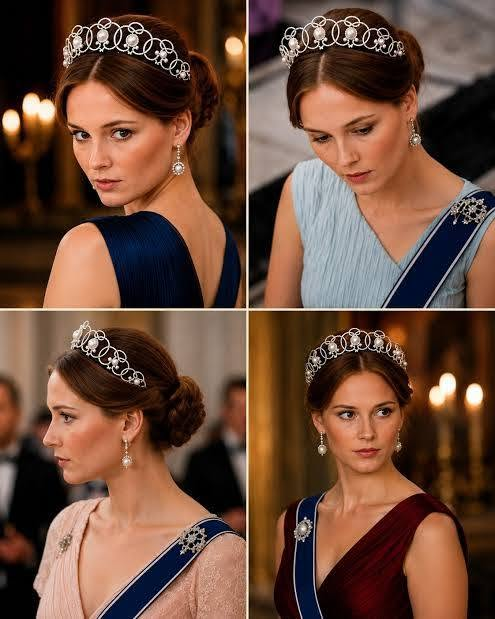
Crown Princess Ingrid Alexandra of Norway captured royal watchers’ attention with a dazzling tiara moment that highlighted her evolving role within the Norwegian royal family. As one of Europe’s most closely watched young royals, Ingrid Alexandra has increasingly stepped into the spotlight, balancing the traditions of the monarchy with the expectations placed on a new generation of future leaders.
A first major royal gala as heir represents more than an opportunity to wear an extraordinary gown and sparkling jewelry. Such occasions offer a young royal the chance to demonstrate confidence, honor national traditions, and become more familiar to the public in a role that will shape her future.
The reported appearance in a new tiara has added another layer of fascination to Ingrid Alexandra’s royal journey. For royal fashion enthusiasts, a tiara is never simply an accessory. It can represent family history, national identity, continuity, and the personal style of the person wearing it.
However, the precise details of the reported gala and whether the tiara was genuinely new to Ingrid Alexandra require confirmation. What is clear is that interest in the Norwegian princess reflects a broader fascination with the next generation of European royalty and the ways young heirs are preparing for lives of public service.
Crown Princess Ingrid Alexandra’s Growing Royal Role
Born on January 21, 2004, Princess Ingrid Alexandra is the elder child of Crown Prince Haakon and Crown Princess Mette-Marit of Norway. She stands second in the Norwegian line of succession after her father, making her the future queen of Norway if she eventually succeeds to the throne.
Her position carries considerable historical significance. Ingrid Alexandra is expected to become Norway’s first queen regnant in centuries, following the current constitutional order and the reigns of Norway’s modern kings. Her future role therefore represents an important milestone for the Norwegian monarchy.
Although she has grown up in the public eye, Ingrid Alexandra’s royal responsibilities have developed gradually. Her childhood included selected public appearances, national celebrations, and events marking important moments in Norwegian history. As she has grown older, she has taken on additional experiences designed to prepare her for future duties.
Her education and military service have also attracted public interest. In 2023, she began her studies at the University of Sydney in Australia, marking a period of life away from Norway. She later returned to undertake military service, another significant step in her preparation for adulthood and her future position.
These experiences demonstrate that her development as a royal is not limited to ceremonies and public appearances. Education, personal independence, and an understanding of Norwegian society are also important parts of her preparation.
A major royal gala, therefore, can be viewed as one element of a much broader journey toward future leadership.
Why a Tiara Can Be So Significant for a Young Royal
Few pieces of jewelry are as closely associated with royalty as the tiara. For centuries, tiaras have appeared at formal banquets, state occasions, royal weddings, and diplomatic celebrations, often becoming some of the most recognizable elements of a royal wardrobe.
Their significance extends beyond their beauty. Many royal tiaras are treasured family heirlooms that have passed between generations. Others are associated with particular royal houses, historical events, or important personal milestones.
When a young royal wears a tiara at a major formal occasion, the choice can attract attention because it connects an individual to a much longer history.
Royal jewelry collections often contain pieces that are rarely seen in public. A tiara may be reserved for especially important occasions, making each appearance an opportunity for fashion historians and royal enthusiasts to study its design and provenance.
For Ingrid Alexandra, any confirmed first appearance in a particular tiara would naturally prompt questions about the piece’s origins, whether it belongs to the Norwegian royal family’s collection, and whether it carries a special connection to her family.
Nevertheless, not every tiara appearance represents a formal transition in royal status. Jewelry choices can reflect practical considerations, personal taste, available pieces, and the dress code of an event.
Without an official explanation, it would be unwise to assign a specific symbolic meaning to a tiara simply because a young royal wears it.
Norway’s Royal Family and Its Rich Traditions
The Norwegian royal family occupies a distinctive position in the country’s constitutional system. Norway is a constitutional monarchy, meaning the monarch serves as head of state while political authority is exercised through the country’s democratic institutions.
King Harald V has been Norway’s monarch since 1991, with Queen Sonja serving alongside him. Crown Prince Haakon is the heir apparent, and Ingrid Alexandra is next in line after her father.
The family participates in national ceremonies, diplomatic events, charitable initiatives, and engagements that highlight Norwegian culture and society. These responsibilities help maintain the monarchy’s public role while recognizing the work of organizations and communities across the country.
Formal galas and state banquets are among the most visible parts of this work. They provide opportunities to welcome international guests, recognize important achievements, and strengthen diplomatic relationships.
The clothing worn at these events can also communicate respect for tradition. Evening gowns, formal uniforms, decorations, and royal jewelry contribute to the ceremonial atmosphere.
For a younger member of the family, participating in these occasions offers experience in the conventions and expectations associated with royal life. It also allows the public to become more familiar with the person who may one day assume a much greater constitutional role.
Ingrid Alexandra’s growing visibility is therefore part of the Norwegian monarchy’s gradual preparation for the future.
A Modern Princess With Her Own Identity
While tradition remains important, Ingrid Alexandra belongs to a generation of royals whose lives differ considerably from those of their predecessors.
Young European royals increasingly balance public duties with education, professional interests, military service, and personal experiences outside the palace. They are expected to understand the historical responsibilities of their positions while developing an authentic connection with contemporary society.
Ingrid Alexandra’s time studying in Australia attracted attention partly because it offered her the opportunity to experience life beyond Norway. Living abroad can provide valuable perspective, encouraging independence and exposing students to different cultures and ways of thinking.
Her subsequent military service also reflected an established Norwegian tradition of royal participation in national service. Such experiences can help future public figures develop discipline, teamwork, and an understanding of institutions that serve the country.
These parts of her life offer a contrast to the glamorous imagery associated with a tiara and a formal gala. Together, however, they help create a fuller picture of a young woman preparing for a demanding future.
A royal appearance can showcase elegance, but the responsibilities of an heir extend far beyond clothing and ceremony.
The Influence of Royal Fashion on Public Interest
Royal fashion has long been a subject of fascination, with audiences examining everything from designers and colors to jewelry and accessories.
A tiara can become the centerpiece of that conversation because it combines craftsmanship with historical significance. Unlike many contemporary fashion accessories, a royal tiara may carry decades or even centuries of associations.
The appearance of a new piece can inspire questions about its design, the gemstones it contains, and whether it has previously been worn by another member of the family. When the wearer is a young heir, interest may be even greater because the moment can be interpreted as part of her growing public identity.
However, the most interesting royal fashion stories often emerge when visual details are considered alongside the person’s broader responsibilities.
Ingrid Alexandra’s future role makes her appearances particularly noteworthy. As she takes part in more official events, her clothing choices may gradually develop into a recognizable personal style, just as they have for other European princesses.
That does not mean every outfit needs to be treated as a political statement. Sometimes the choice reflects the requirements of an event or the simple desire to wear something appropriate and beautiful.
The fascination lies in watching a young royal develop her own approach while remaining connected to the traditions of her family.
How Ingrid Alexandra’s Future Compares With Other European Heirs
Across Europe, younger royals are gradually preparing to assume more prominent roles in their respective monarchies. Their experiences differ according to national traditions, constitutional arrangements, and the expectations placed on each family.
Some future heirs have already undertaken extensive official duties, while others are still balancing education and personal development with occasional public appearances.
Ingrid Alexandra’s position is distinctive because she is expected to become Norway’s first queen regnant in the modern era of the country’s monarchy. Her eventual reign would mark a historic development for Norway and could make her a particularly important figure in the future of European royalty.
Her public appearances are therefore likely to attract interest not only from Norwegians but also from international royal watchers.
At the same time, her journey should not be viewed solely through comparisons with other heirs. Each royal family has its own history, and each future monarch develops at a different pace.
Ingrid Alexandra’s path will be shaped by her education, experiences, family responsibilities, and the constitutional role she is expected to undertake.
A gala appearance may provide a memorable photograph, but it is only one small part of that larger process.
Why a First Royal Gala Can Become a Milestone
Formal royal events often serve as markers in a young royal’s public development. They provide opportunities to participate in ceremonies that bring together members of the royal family, government representatives, diplomats, and distinguished guests.
For an heir, such occasions can also help establish confidence in settings where etiquette, protocol, and public expectations are especially important.
A first major gala associated with an expanded royal role can be memorable because it represents a visible step toward greater responsibility. The occasion allows audiences to see the individual not only as a member of the royal family but also as someone preparing for a future leadership position.
The clothing and jewelry naturally contribute to the image, but the broader significance lies in participation and experience.
If Ingrid Alexandra’s reported gala appearance and tiara choice are confirmed, the moment may become another example of how a young royal gradually becomes more familiar with the ceremonial aspects of her future role.
It would also offer a chance to appreciate Norway’s royal traditions while recognizing that the monarchy’s next generation is growing up in a very different world from the one experienced by previous generations.
A New Chapter for Norway’s Future Queen
Crown Princess Ingrid Alexandra’s growing public profile reflects the gradual evolution of the Norwegian royal family. Her education, military experience, and participation in official events are all part of a journey that will eventually prepare her for responsibilities on a historic scale.
The reported appearance in a new tiara at a royal gala has attracted attention because it brings together the glamour of royal fashion and the significance of her future position. Yet the precise details of the event and the jewelry should be confirmed before any particular interpretation is presented as fact.
What remains undeniable is the public interest in seeing Ingrid Alexandra develop her own identity within a centuries-old institution.
For royal enthusiasts, a tiara can symbolize heritage, continuity, and the enduring appeal of monarchy. For Norway, the princess represents the next generation of a constitutional institution that continues to evolve alongside the country.
Ultimately, Ingrid Alexandra’s future will be defined not by a single gala or a sparkling accessory, but by the responsibilities she undertakes and the way she serves the Norwegian people.
If the reported tiara moment is confirmed, it will provide another striking image in her ongoing royal journey. More importantly, it will remind audiences that behind the elegance of royal ceremonies is a young woman preparing for a role that may one day make history.