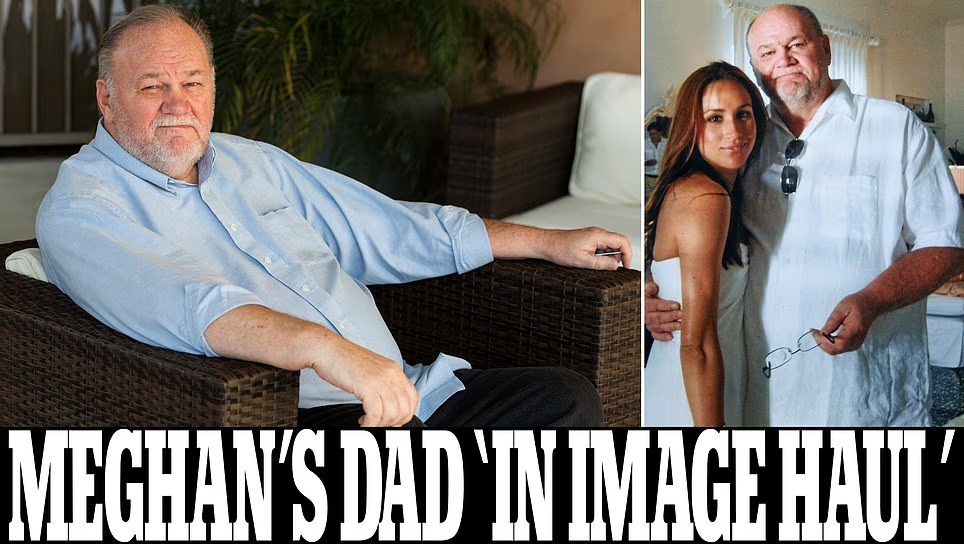
The relationship between Meghan Markle and her father, Thomas Markle, has been the subject of intense public attention for years. Their estrangement, the private correspondence reportedly connected to their dispute, and the continuing questions surrounding their family relationship have repeatedly drawn headlines on both sides of the Atlantic.
Recent claims involving an alleged image, suspected abusive material, and a search for a letter said to have played a role in the breakdown of their relationship raise particularly sensitive questions. Such claims require careful scrutiny, especially when they involve potentially criminal conduct, sexual imagery, or allegations that could seriously affect the reputations of identifiable people.
Without independently verified evidence establishing the reported image, its context, and the circumstances surrounding any investigation, it would be irresponsible to present the claims as proven facts. The distinction between an allegation, an investigative lead, and a confirmed finding is essential when discussing a story of this nature.
Nevertheless, the wider questions surrounding the Markle family remain significant: What can be established about the long-running estrangement between Meghan and her father? Why has their correspondence attracted so much attention? And how should the public evaluate sensational claims involving private family disputes?
Thomas Markle and Meghan Markle’s Estranged Relationship
Thomas Markle, a former television lighting director, became widely known through his relationship with his daughter, Meghan, who later married Prince Harry and became the Duchess of Sussex.
Before Meghan’s marriage into the British royal family, she and her father had a relationship that existed largely outside the international spotlight. That changed dramatically as public interest in Meghan grew and preparations for her wedding became a major news event.
Their relationship subsequently deteriorated, with disagreements and competing accounts of their private communications becoming part of an increasingly public dispute. Media coverage frequently focused on interviews, family statements, and the emotional consequences of their separation.
For Meghan, the breakdown of the relationship has been a deeply personal matter played out before a global audience. For Thomas Markle, public attention has also made his relationship with his daughter a recurring subject of discussion.
However, public reporting about a family dispute does not automatically establish the truth of every claim made about the people involved. Private relationships are complicated, and outside observers rarely have access to the complete history of conversations, disagreements, and personal decisions that shape them.
Understanding that limitation is especially important when a story moves beyond family conflict and begins to involve allegations of serious misconduct.
Why Claims About an Alleged Image Require Careful Verification
Claims involving sexual images and suspected abusive material are inherently serious. Their significance depends on details that cannot responsibly be inferred from a headline alone, including whether an image exists, whether its authenticity has been established, how the people depicted can be identified, and whether any unlawful activity has been confirmed.
The description of someone as appearing underage is not, by itself, proof of that person’s actual age or evidence that a criminal offence has occurred. At the same time, material that genuinely depicts child sexual abuse must be treated as a serious safeguarding and law-enforcement matter.
These distinctions are not merely technical. They affect the accuracy of reporting, the rights and safety of potentially vulnerable people, and the reputation of anyone accused of wrongdoing.
In the absence of reliable confirmation, it is not appropriate to identify an alleged image as authentic or attribute criminal conduct to Thomas Markle. Nor should readers be encouraged to seek out, download, or circulate potentially abusive imagery.
Responsible journalism focuses on verified facts, the status of any official inquiry, and information that can be reported without exposing vulnerable individuals or amplifying unsubstantiated accusations.
The Reported Search for a Letter Connected to Meghan
The reported search for a letter said to have contributed to Meghan’s estrangement from her father introduces another important aspect of the story: the role of private correspondence in public family disputes.
Letters can carry considerable emotional significance, particularly when a relationship has broken down. They may contain attempts at reconciliation, expressions of hurt, explanations of past disagreements, or boundaries intended to protect personal well-being.
In Meghan and Thomas Markle’s case, their correspondence has previously attracted public attention. A letter reportedly written by Meghan to her father became a major subject of media discussion, illustrating how private communications can become part of a much larger debate about family loyalty, privacy, and public image.
However, the existence of previously reported correspondence does not establish that a particular letter is currently missing, that police are searching for it, or that it is connected to an alleged criminal investigation. Those specific claims require independent confirmation from reliable reporting or official statements.
If authorities are investigating a matter involving potentially unlawful material, any request for documents or other evidence would need to be understood within the context of the actual investigation. Without verified information about the circumstances, the relationship between an alleged image and a letter remains uncertain.
It is therefore important not to conflate separate allegations simply because they involve members of the same family.
Scotland Yard and the Importance of Official Confirmation
Scotland Yard is commonly used as a name for the Metropolitan Police Service in London. References to the police can lend a story an immediate sense of authority, but the mention of a law-enforcement agency does not independently prove that an investigation exists or that a particular allegation has been substantiated.
When a report attributes investigative activity to police, readers should look for clear confirmation of the relevant facts. This may include an official statement, a documented legal proceeding, or reporting from reputable news organizations that explains how the information was established.
It is also important to distinguish between different stages of a potential investigation. Receiving information, assessing a report, examining digital evidence, and establishing that an offence has occurred are not equivalent actions.
Even where an investigation is confirmed, its existence does not establish the guilt of a person who may be mentioned in connection with it. Any conclusion about criminal responsibility must depend on evidence and the applicable legal process.
In a story involving sensitive sexual allegations, this distinction is particularly important because inaccurate reporting can cause serious harm to both alleged victims and people who have been accused without sufficient evidence.
Meghan Markle, Privacy, and the Cost of Public Family Conflict
Meghan Markle’s relationship with her father has unfolded against the backdrop of intense media scrutiny. Since her marriage to Prince Harry, questions about her family have frequently been discussed alongside wider debates about the royal family, celebrity culture, and the limits of public curiosity.
The situation illustrates the difficulty of maintaining personal boundaries when a family member becomes internationally famous. Conversations that might otherwise remain private can become the subject of headlines, interviews, commentary, and speculation.
For people involved in a family estrangement, repeated public attention can make reconciliation more difficult. It can also create pressure to respond to allegations or defend personal decisions in front of an audience that does not know the complete circumstances.
Meghan’s reasons for maintaining distance from her father should not be reduced to a single explanation unless supported by reliable evidence. Family relationships can change over time for many reasons, and outsiders should avoid assuming that a reported letter or a sensational allegation explains the entire history.
The same principle applies to Thomas Markle. Any claims about his conduct should be evaluated through evidence rather than assumptions based on his relationship with his daughter or his prominence in the media.
The Dangers of Sensational Headlines and Online Speculation
Stories combining celebrity names, sexual allegations, and police activity can spread rapidly online. Strong language may attract attention before readers have an opportunity to determine whether the underlying information is accurate.
This creates a particular risk when the claims involve alleged sexual abuse or individuals who may be underage. Repeating an unverified allegation as fact can mislead audiences, damage reputations, and potentially expose vulnerable people to unwanted attention.
Online speculation can also blur the distinction between separate events. A reported family letter, an alleged image, and a possible police inquiry may be presented together in a way that implies a proven connection, even when that connection has not been established.
Readers can assess such reporting more carefully by asking several basic questions: Is there an identifiable and reliable source? Has the relevant authority confirmed the alleged investigation? Does the report distinguish between what is alleged and what is proven? Are the conclusions supported by evidence rather than inference?
These questions are useful far beyond the Markle family story. They help audiences navigate celebrity news while recognizing that the people involved retain rights to privacy, fair treatment, and due process.
What Readers Should Understand About the Claims
At present, the central issue is the difference between the allegations described in the headline and information that can be independently established. Without reliable confirmation of the alleged image, its provenance, the nature of any suspected material, and the reported police search, the claims should not be treated as confirmed findings.
The same caution applies to any suggestion that a specific letter explains Meghan’s estrangement from her father or is directly connected to an alleged criminal matter. Those are separate questions that require separate evidence.
A responsible account should avoid speculation about the identities, ages, or circumstances of people depicted in alleged sexual imagery. It should also avoid presenting accusations as proof of criminal conduct.
This approach does not mean dismissing serious allegations. It means treating them with the care they deserve, particularly when potential victims, criminal investigations, and the reputations of real people may be involved.
Conclusion: Separating Verified Facts From Allegations
The continuing attention surrounding Thomas Markle and Meghan Markle reflects the enduring public fascination with their estranged relationship. The reported claims involving an alleged image and a letter said to have influenced their separation add another sensitive dimension to an already complicated family story.
However, the seriousness of an allegation makes verification more important, not less. Claims involving potentially abusive sexual material, police activity, and private correspondence should be examined individually and supported by reliable evidence before conclusions are drawn.
Until the specific claims are independently established, they should remain allegations rather than be presented as confirmed facts. The public can remain interested in the broader story while recognizing the limits of what is known.
Ultimately, responsible reporting requires more than repeating a dramatic headline. It requires accuracy, restraint, respect for privacy, and a clear distinction between suspicion and proof. Those principles are essential whenever celebrity news intersects with allegations of serious wrongdoing and deeply personal family relationships.