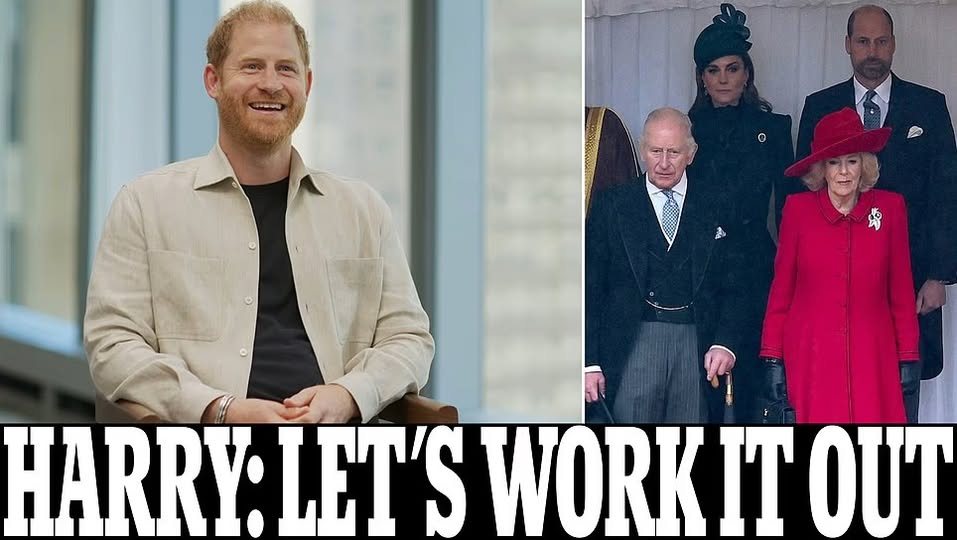
Prince Harry’s relationship with the British royal family remains one of the most closely watched personal stories in modern royal history. Despite stepping back from his official royal duties in 2020, the Duke of Sussex continues to attract international attention whenever he speaks about family, reconciliation, privacy, and his complicated relationship with the institution in which he grew up.
The idea that Prince Harry wants to heal the royal rift has once again sparked conversation about whether a genuine reconciliation with King Charles III, Prince William, and the wider royal family could be possible. Yet the discussion is far from straightforward. While the desire for peace may sound encouraging, Harry’s public comments about his family have repeatedly raised questions about trust, timing, and what reconciliation would actually require.
For royal watchers, the central question is no longer simply whether Harry wants to repair the relationship. It is whether the people involved are prepared to take the difficult steps necessary to rebuild it.
Prince Harry’s Hopes for Reconciliation Put the Royal Family Back in the Spotlight
Prince Harry has spent much of the past several years navigating a life dramatically different from the one he once knew as a senior working royal. After relocating to California with Meghan, Duchess of Sussex, he began building a new chapter focused on family life, independent projects, and a greater degree of personal freedom.
However, leaving royal duties behind did not mean leaving the royal family out of public discussion.
Harry’s interviews, public appearances, and personal reflections have continued to draw attention to unresolved tensions surrounding his departure. His experiences have become part of a broader conversation about family loyalty, institutional expectations, and the challenges of maintaining private relationships under constant media scrutiny.
The possibility of reconciliation is particularly significant because Harry’s family relationships are not merely personal matters. They are closely connected to the future of the monarchy, the public image of the House of Windsor, and the ongoing interest surrounding the next generation of British royals.
When the Duke of Sussex expresses a desire for peace, many people naturally wonder whether that signals a meaningful change in direction.
Yet reconciliation is rarely achieved through a single statement. It usually requires consistent communication, mutual understanding, and a willingness to address past disagreements without turning every conversation into another public debate.
Why Prince Harry’s Latest Remarks Have Raised Eyebrows
The reaction to Harry’s comments reflects a familiar dilemma: how can someone seek reconciliation while also speaking openly about the experiences that contributed to a family breakdown?
For supporters, there is nothing contradictory about wanting to repair a relationship while acknowledging the pain that damaged it. They argue that honest conversations are often necessary before trust can be restored.
Others take a more skeptical view. They question whether public discussion of private family disagreements makes it easier for relatives to reconnect or creates additional obstacles that are difficult to overcome.
The tension between those perspectives helps explain why even apparently hopeful remarks from Harry can generate renewed debate.
The precise context of any particular recent statement matters, and interpretations should be considered carefully rather than treating speculation as established fact. Nevertheless, the broader issue remains clear: Harry’s public relationship with the monarchy has created a situation in which words are examined closely, sometimes long after the original conversation has ended.
For a family accustomed to managing its public image through carefully controlled statements, the Duke’s more personal communication style presents a different challenge.
The question is whether that difference can eventually become a bridge toward understanding or will continue to deepen the distance between the Sussexes and the rest of the royal family.
King Charles and Prince Harry: A Father and Son Facing a Difficult Path
Among the relationships attracting the greatest attention is the one between Prince Harry and King Charles III.
Their connection carries a significance that extends beyond royal titles and official responsibilities. At its heart, it is a father-son relationship shaped by grief, changing expectations, public scrutiny, and years of complicated family history.
For Harry, the death of his mother, Princess Diana, when he was a child remains an important part of his personal story. Growing up in the public eye also meant experiencing family life under circumstances few people can fully understand.
For Charles, balancing his responsibilities as monarch with his relationships as a father presents a different set of pressures. The demands of the Crown, public expectations, and the need to preserve the institution’s stability can make personal disagreements especially difficult to manage.
A reconciliation between father and son would not necessarily resolve every disagreement surrounding Harry’s departure. However, even a modest improvement in communication could carry considerable emotional significance.
The challenge is that rebuilding trust requires more than expressions of affection or hopeful public remarks. Both sides would need to feel that their concerns can be discussed honestly and that private conversations will not automatically become the subject of another international news cycle.
Whether that process can happen away from public attention may prove just as important as the willingness to begin it.
Prince William and Harry’s Estrangement Remains a Major Question
If the relationship between Harry and King Charles represents one possible route toward reconciliation, the situation involving Prince William presents another complicated dimension.
The brothers once shared experiences that few others could understand. They grew up within the same extraordinary institution, experienced the loss of their mother together, and spent years navigating the expectations associated with being the sons of the future king.
Their adult lives, however, have taken markedly different directions.
William has continued his role as heir to the throne, undertaking official duties and preparing for the responsibilities that may eventually define his reign. Harry has chosen a more independent life in the United States, where he and Meghan have pursued projects outside the traditional royal framework.
Those different paths do not automatically make reconciliation impossible. Families can maintain meaningful relationships even when members disagree about careers, priorities, and personal decisions.
Nevertheless, the brothers’ relationship is particularly sensitive because their disagreements have become part of a highly publicized narrative.
For a genuine reunion to take place, both would likely need room to communicate without feeling compelled to defend their positions before an audience. That could mean establishing boundaries around what remains private and allowing the relationship to develop without immediate expectations of a dramatic public breakthrough.
Royal fans may hope for a warm reunion, but repairing a strained sibling relationship can take considerable time, especially when years of disagreements have been discussed publicly.
Meghan Markle’s Role in the Wider Family Dynamic
Meghan Markle also remains central to discussions about the royal rift.
Since marrying Harry in 2018, the Duchess of Sussex has experienced intense public scrutiny. Her relationship with the royal institution became a major subject of international discussion, particularly after the couple announced their decision to step back from senior royal duties.
For Harry, protecting his wife and children has been a recurring theme in his explanations of the choices he has made. For observers, that commitment has become inseparable from the wider question of whether the Sussexes could ever establish a more comfortable relationship with the royal family.
Any lasting reconciliation would need to consider Meghan and the couple’s children, rather than treating Harry’s relationship with his relatives as an isolated issue.
That does not mean every family member must share the same perspective on past events. It does mean that rebuilding relationships would require respect for the Sussexes’ boundaries, alongside consideration of the responsibilities and concerns of the wider royal family.
The situation also highlights a broader reality: when two people marry, family disagreements rarely affect only the original individuals involved. Partners and children can become part of the emotional consequences, making any potential resolution more complicated.
A sustainable path forward would therefore need to prioritize mutual respect over public pressure to recreate the royal family’s earlier appearance of unity.
Can Privacy Help Heal the Royal Rift?
One of the greatest obstacles to reconciliation may be the extraordinary attention surrounding the royal family.
Ordinary families can often work through difficult disagreements in private. They can have uncomfortable conversations, make mistakes, apologize, and gradually rebuild trust without millions of people debating their intentions.
The Sussexes and the wider royal family have not enjoyed that luxury.
Every reported interaction can generate speculation. Every public statement can be interpreted as a message directed toward another family member. Even the absence of a statement may be treated as evidence of continuing tension.
This environment creates pressure for quick answers when genuine reconciliation may require patience.
A private conversation between Harry and his relatives could be more meaningful than a series of public declarations. Similarly, small, consistent gestures of goodwill might accomplish more than a highly publicized reunion designed to satisfy outside expectations.
Privacy would not erase the past, but it could create space for family members to discuss difficult subjects without immediately facing public judgment.
It could also help distinguish genuine progress from the appearance of progress.
Ultimately, the most meaningful evidence of reconciliation would likely be found in sustained changes in communication and behavior rather than a single headline-making moment.
Why Royal Fans Remain Divided Over Harry’s Future
Public opinion about Prince Harry is far from uniform.
Some observers admire his willingness to speak about personal struggles and challenge expectations associated with royal life. They see his desire for reconciliation as a hopeful sign that family connections may remain important despite years of conflict.
Others believe the repeated public discussion of family disagreements has made it harder for the monarchy and the Sussexes to move forward. From that perspective, meaningful progress would require a stronger commitment to discretion and fewer public debates about private relationships.
There are also people who take a more cautious position, recognizing that outsiders cannot fully understand the details of a complicated family dispute.
That caution is important. Headlines often encourage audiences to choose sides, but family relationships rarely fit neatly into a story with one entirely right person and one entirely wrong person.
Harry’s experiences, the royal family’s institutional responsibilities, and the emotional needs of individual relatives can all be relevant without necessarily producing one universally accepted interpretation.
The strongest indication of progress may therefore be whether the people involved can move beyond competing public narratives and begin establishing a more constructive relationship on their own terms.
What Happens Next for Prince Harry and the Royal Family?
The future of the royal rift remains uncertain, and there is no reason to assume that reconciliation will happen quickly.
A renewed relationship would likely require patience, clear boundaries, and a willingness to acknowledge that different family members may remember or interpret past events differently.
For King Charles, any improvement in his relationship with Harry could represent an opportunity to strengthen an important family connection. For Prince William, the process may involve different considerations shaped by his position as heir and his responsibilities to his own family.
For Harry and Meghan, the challenge would be finding a way to maintain their independence while determining whether a healthier relationship with the royal family is possible.
None of these questions can be resolved by public speculation alone.
What matters most is whether the individuals involved are willing to communicate honestly, respect each other’s boundaries, and make decisions based on long-term trust rather than immediate public reaction.
If Harry’s comments reflect a genuine desire to move forward, the next stage will depend on what happens beyond the headlines.
Final Thoughts: Hope for Peace, but Trust Must Come First
Prince Harry’s reported desire to heal the royal rift has renewed attention on one of the British monarchy’s most personal and persistent challenges.
The possibility of reconciliation offers a hopeful narrative, but it also raises legitimate questions about how trust can be rebuilt after years of public disagreement. Words expressing a desire for peace may open the door, yet lasting progress depends on actions, consistency, and the willingness of everyone involved to participate.
The relationship between Harry, King Charles, Prince William, and the wider royal family is shaped by both personal emotions and extraordinary public responsibilities. That combination makes any resolution more complicated than a simple reunion or an encouraging statement.
For now, royal watchers will continue to examine every development for signs that the family may be moving toward a more peaceful future.
But perhaps the most important question is not whether the royal family can return to the way things were before. It is whether its members can build a different kind of relationship—one that allows room for honesty, independence, privacy, and mutual respect.
If that becomes possible, the result could be more meaningful than a temporary end to the headlines. It could represent the beginning of a more sustainable peace for a family whose private struggles have played out on a very public stage.