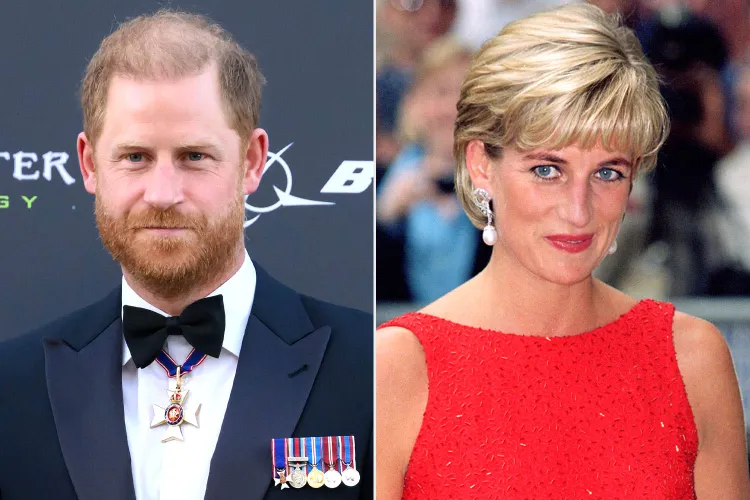
Prince Harry has spoken openly over the years about the profound influence his late mother, Princess Diana, continues to have on his life. Although Diana died in 1997, when Harry was just 12 years old, her memory remains an important part of his identity, his approach to fatherhood, and his understanding of the challenges that come with living in the public eye.
A headline suggesting that Prince Harry sometimes asks Princess Diana questions and receives a response has captured attention because it touches on one of the most personal aspects of his story: the enduring bond between a son and a mother he lost too soon. The idea raises questions about grief, memory, spirituality, and the ways people maintain emotional connections with loved ones who have passed away.
The precise context of the reported statement is important, however. Without a verified recording or transcript establishing Harry’s exact words, it would be inappropriate to assume that he described a literal supernatural conversation. His reflections are best considered within the broader context of his well-documented grief and the continuing significance of Diana’s legacy.
For Harry, remembering his mother is not simply about looking back. It is also about understanding the past, navigating the present, and deciding what kind of future he wants to create for his own family.
Prince Harry’s Enduring Connection to Princess Diana
Princess Diana remains one of the most influential figures in modern royal history. Known around the world for her charitable work, emotional openness, and connection with ordinary people, she became a global icon whose life was followed intensely by the media.
For her sons, however, Diana was much more than a public figure. She was their mother, the person who offered affection, guidance, humor, and moments of normal family life despite the extraordinary circumstances surrounding their upbringing.
Harry has repeatedly reflected on how difficult it was to lose her at such a young age. Her death in a Paris car crash in August 1997 changed the lives of Prince William and Prince Harry forever. Both boys had to grow up while the world continued to discuss their mother’s life, her marriage, and the circumstances surrounding her death.
That combination of private grief and public attention created a uniquely difficult situation. Harry was mourning a parent while becoming part of an institution that attracted constant scrutiny.
As an adult, he has spoken about the emotional consequences of that experience and the importance of addressing feelings that may remain unresolved for years. His willingness to discuss grief has also encouraged wider conversations about the emotional lives of men, particularly those raised in environments where vulnerability may be difficult to express.
The continuing attention surrounding Diana reflects not only her historical significance but also the public’s interest in how her sons have carried her memory into adulthood.
Why Harry’s Reflections About His Mother Resonate
Stories about Prince Harry and Princess Diana often generate powerful reactions because they connect royal history with an experience shared by millions of people: losing someone deeply loved and searching for ways to maintain that connection.
Grief does not necessarily disappear as time passes. Instead, it can change shape. A person who initially experiences overwhelming sadness may eventually find that memories bring comfort, inspiration, or a renewed sense of closeness.
For some people, that connection takes the form of looking at photographs, revisiting meaningful places, or remembering advice their loved one once gave them. Others may speak aloud to the person they have lost, write letters they never send, or imagine what that person might say about a difficult decision.
These experiences can be deeply personal. They do not all carry the same meaning, and people may interpret them through their own beliefs about spirituality, memory, or the continuing presence of loved ones.
If Harry’s reported comments refer to asking his mother questions and feeling that he receives a response, understanding the context is essential. Such language might describe a spiritual belief, an intuitive feeling, a memory of Diana’s advice, or a more metaphorical way of explaining how her influence continues to guide him.
Without his exact words, there is no reliable basis for choosing one interpretation over another.
What is clear from Harry’s public reflections over the years is that Diana’s memory continues to occupy an important place in his emotional world.
Princess Diana’s Influence on Harry’s Life
Diana’s influence can be seen in many aspects of Harry’s public identity, particularly his interest in mental health, compassion, and supporting people who experience difficult circumstances.
During her lifetime, Diana challenged expectations about how members of the royal family should interact with the public. Her visits to hospitals, engagement with people living with serious illnesses, and efforts to reduce the stigma surrounding vulnerable communities helped reshape public perceptions of royal charity.
She was widely admired for approaching people with warmth and treating their experiences as worthy of attention. Her work demonstrated that public influence could be used to encourage empathy rather than simply reinforce status.
Harry has pursued charitable initiatives that reflect similar themes. Through his work involving veterans, mental health, and support for vulnerable communities, he has helped keep conversations about emotional well-being in the public eye.
This does not mean that his choices are identical to his mother’s or that every project can be directly attributed to her influence. Rather, Diana’s example forms part of the family history and personal experience that helped shape his outlook.
Her legacy is especially relevant when considering Harry’s willingness to discuss painful experiences. For a public figure whose childhood unfolded under extraordinary scrutiny, acknowledging emotional struggles can be both personally meaningful and socially significant.
How Grief Can Continue Across a Lifetime
One reason stories about Harry’s relationship with Diana remain compelling is that they challenge the assumption that grief follows a predictable timetable.
Losing a parent during childhood can affect how a person understands family, security, identity, and major life transitions. Feelings may return at unexpected moments, including weddings, the birth of children, career changes, and anniversaries.
A person may reach adulthood and still wonder what a lost parent would think about a decision or how that parent might respond to a new chapter in life.
These questions are a natural part of maintaining an emotional connection. They can also help people understand their own values by revisiting the lessons and memories associated with someone important to them.
For Harry, significant milestones have occurred without Diana’s physical presence. She was not there to watch him become a husband or meet his children, and he has had to navigate fatherhood without being able to seek her advice directly.
It is understandable that such moments might prompt thoughts about what Diana would have said or how she might have responded.
Imagining a loved one’s perspective can be a way of preserving the relationship’s emotional meaning. It allows people to carry forward the qualities they admired, even when the person themselves is no longer present.
The important distinction is that private interpretations of these experiences belong to the individual. Outsiders should not assume what a person means when describing a continuing connection with someone who has died.
Prince Harry’s Experience of Fatherhood Without Diana
Fatherhood has given Harry another perspective on the loss he experienced as a child. As the father of Prince Archie and Princess Lilibet, he now occupies a role that his own mother once held.
That experience may naturally encourage reflection on childhood, family relationships, and the memories a parent hopes to create for their children.
Many people who lose a parent early in life find that becoming a parent themselves brings renewed emotions. They may think about the experiences their children will have, the guidance they want to provide, and the moments they wish their own parents could have witnessed.
For someone who grew up in the public eye, these questions can become even more complicated. Harry has spoken publicly about the importance of protecting his family and creating a different environment for his children from the one he experienced.
His decisions regarding privacy and family life have been the subject of extensive debate. Supporters often see them as an attempt to establish healthier boundaries, while critics may question the choices he has made and the consequences they have created.
Regardless of differing opinions, the broader issue is relatable: parents often reflect on their own childhoods when deciding what they want to pass on to the next generation.
Diana’s memory can remain part of that process, serving as a reminder of the affection, experiences, and family traditions Harry wants to preserve.
The Public’s Fascination With Diana’s Legacy
More than two decades after her death, Princess Diana continues to inspire documentaries, books, television programs, and conversations about the British monarchy.
Her enduring popularity comes from several sources. She lived through a period of major change within the royal family, became an international humanitarian figure, and developed a public image that combined glamour with emotional accessibility.
Her relationship with her sons adds another deeply human dimension to that history. While the public remembers Diana as a princess and charitable campaigner, Harry and William remember a parent whose absence shaped their lives.
This difference between public memory and private experience helps explain why stories about Harry’s reflections can attract so much interest. Audiences may know many details about Diana’s public life, yet they remain curious about the ways her children remember her personally.
However, fascination should not remove the need for accuracy. Headlines about spirituality, grief, or private family experiences can easily invite interpretations that go beyond what someone actually said.
The most respectful approach is to distinguish confirmed statements from speculation and allow Harry’s own words to provide the foundation for any discussion of his beliefs.
A Mother’s Memory That Continues to Matter
The idea that Prince Harry sometimes asks Princess Diana questions and receives a response touches on a powerful human experience: the desire to maintain a relationship with someone whose physical presence is gone.
For some, that connection is spiritual. For others, it exists through memory, internal conversations, and the values a loved one passed on. There is no single way to understand grief, and people often find meaning through deeply personal experiences.
The exact meaning of Harry’s reported statement should not be assumed without reliable confirmation of its context. Nevertheless, his long-standing reflections on his mother demonstrate that Diana remains an important part of his story.
Her influence reaches beyond royal history and public fascination. It lives in the memories her sons carry, the causes she championed, and the questions they may still wish they could ask her.
For Harry, the loss of his mother is not simply a chapter that ended in childhood. It is an experience that continues to shape how he understands family, responsibility, and the future he wants for his children.
Ultimately, the enduring bond between Prince Harry and Princess Diana reminds us that love does not necessarily end when a life does. Memories can remain sources of comfort and guidance for decades, helping people navigate new challenges while keeping the people they have lost close to their hearts.