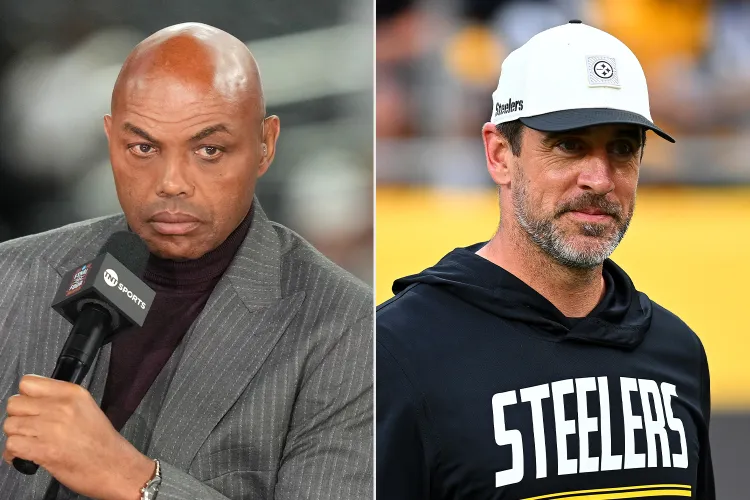
The worlds of sports, celebrity relationships, and live television often collide in unexpected ways, creating conversations that extend far beyond the playing field. A headline suggesting that Charles Barkley took an on-air dig at Aaron Rodgers over comments about his former partners captures exactly the kind of controversy that attracts attention: two outspoken sports personalities, a potentially uncomfortable exchange, and a debate about what public figures should say when reflecting on their personal lives.
The phrase, “I can’t wait to have all my children home,” adds another layer of intrigue, raising questions about family, privacy, and the challenges of balancing a demanding public career with personal relationships. However, the precise context of this quotation and the alleged exchange between Barkley and Rodgers needs to be independently verified before either can be treated as an established fact.
Even without assuming every detail in the headline is confirmed, the subject touches on a compelling question in modern sports culture: when an athlete approaches retirement, should the spotlight remain on career achievements, or does the public have a right to examine the personal stories that accompany the journey?
Charles Barkley and Aaron Rodgers: Two Personalities Who Generate Headlines
Charles Barkley has spent decades building a reputation as one of the most recognizable and outspoken figures in American sports. A former NBA superstar who became a prominent basketball analyst, Barkley is known for his candid opinions, quick wit, and willingness to challenge conventional thinking.
His broadcasting style often combines humor with blunt commentary. Rather than presenting every issue in carefully polished language, Barkley frequently approaches sports discussions with the conversational energy of someone speaking directly to friends. That style has helped make him a popular television personality, while also ensuring that his remarks can become talking points long after a broadcast ends.
Aaron Rodgers, meanwhile, has established himself as one of the most discussed quarterbacks of his generation. His career has featured extraordinary accomplishments, intense media scrutiny, and a public persona that regularly attracts attention beyond football.
Rodgers has also experienced sustained interest in his private life. His relationships, personal views, and occasional disagreements with commentators have frequently become subjects of public discussion.
When two personalities with such different sporting backgrounds become connected through a controversial headline, the result is naturally intriguing. Barkley represents the outspoken analyst willing to challenge people in the public eye, while Rodgers represents the high-profile athlete whose words can attract widespread attention.
Still, an entertaining headline is not the same as a verified account. Without a confirmed broadcast recording or reliable transcript, the exact words, timing, and circumstances of the alleged exchange should not be presented as established facts.
Why Retirement Can Become More Than a Sports Story
Retirement is one of the most significant turning points in an athlete’s life. For professional football players, the decision can involve years of physical sacrifice, financial planning, family considerations, and uncertainty about what comes next.
When a famous athlete begins discussing retirement, the conversation often expands beyond statistics and trophies. Fans want to understand the person behind the uniform, including the relationships, experiences, and decisions that shaped the athlete’s career.
This transition can create an unusual media environment. Every interview may be interpreted as a final statement, every disagreement can become part of a supposed legacy, and every personal revelation can generate another round of headlines.
For Rodgers, whose career has attracted considerable attention both on and off the field, retirement-related discussions would naturally invite questions about how he wants his professional story remembered.
Yet there is a meaningful difference between reflecting on personal experiences and publicly criticizing former partners. The former can provide insight into an athlete’s development; the latter can raise questions about privacy, fairness, and whether a personal dispute belongs in the public conversation.
That distinction helps explain why a headline connecting Barkley, Rodgers, and former relationships could generate interest. It combines the emotional significance of retirement with the highly relatable subject of how people discuss their past relationships.
The Debate Over Calling Out Former Partners
Public conversations about former relationships are rarely straightforward. When ordinary people discuss an ex-partner, the audience may consist of a few friends or family members. When celebrities do the same, their comments can reach millions of people and become permanent parts of their public image.
The imbalance can be particularly pronounced when one person has a major platform and the other has not chosen to participate in the discussion.
Some audiences believe public figures should be allowed to speak honestly about their experiences. From this perspective, an athlete does not lose the right to discuss personal history simply because millions of people recognize his name.
Others argue that public criticism of former partners can easily become one-sided. A short interview may reveal only one person’s interpretation of a complicated relationship, leaving little room for context or a response from the other person.
Neither perspective automatically resolves every situation. The details matter, including what was said, whether private information was disclosed, and whether the comments were intended as personal reflection or public provocation.
This is why any alleged remarks by Rodgers about his former partners should be evaluated using the actual statements and their surrounding context rather than assumptions drawn from a headline.
The same principle applies to Barkley. If he publicly criticized Rodgers, the precise wording would matter in determining whether his comments were serious criticism, playful teasing, or a broader observation about celebrity culture.
Until the exchange is verified, it would be premature to assign a definitive motive to either man.
Charles Barkley’s Straight-Talking Broadcasting Style
Part of Barkley’s appeal is that he rarely seems interested in making every discussion comfortable. His public persona is built around direct opinions, lively exchanges, and a willingness to question the behavior of prominent athletes.
That approach can make sports television feel spontaneous. Viewers may tune in for basketball analysis but remain engaged because the conversation unexpectedly shifts toward personality, accountability, or the culture surrounding professional sports.
Barkley’s commentary also reflects a broader tradition in sports broadcasting. Analysts are not simply expected to describe what happened during a game. They are often asked to interpret decisions, challenge public statements, and explain how an athlete’s behavior might influence a legacy.
However, effective commentary depends on a clear distinction between opinion and fact. A sharp joke or critical observation can be entertaining, but the audience still needs accurate context to understand what prompted it.
If Barkley did address Rodgers’ comments about former partners, the exchange would be most meaningful when considered alongside the original remarks and the broader conversation about retirement. Without that information, it is difficult to determine exactly what was criticized or why.
The Meaning Behind ‘I Can’t Wait to Have All My Children Home’
The quotation featured at the beginning of the headline introduces a different emotional theme: the importance of family and the desire to bring loved ones together.
Family life can be especially complicated for people whose careers require extensive travel, long working hours, and constant public attention. Professional athletes may spend substantial portions of the year away from home, while broadcasters frequently travel for games, interviews, and major sporting events.
For parents, these demands can make ordinary family moments feel particularly valuable. Time together, shared meals, holidays, and the return of children to the family home can offer a welcome contrast to the pressure of professional life.
Nevertheless, the quotation should not automatically be attributed to Barkley or Rodgers without confirmation of who said it and what situation it described. Its placement alongside a story about retirement and former relationships may suggest a connection, but a headline alone cannot establish one.
This distinction matters because celebrity coverage can sometimes combine separate themes in ways that encourage readers to assume a direct relationship between them. Responsible reporting should establish whether the quotation belongs to the same interview, a separate family story, or an unrelated discussion.
The emotional appeal of the words remains understandable, but their precise significance depends on the original context.
Why Sports Fans Are Interested in Athletes’ Personal Lives
Sports fandom has changed considerably in the age of social media and nonstop entertainment coverage. Fans can now follow athletes through interviews, podcasts, documentaries, and personal updates in addition to watching them compete.
This constant access has created a more complicated relationship between athletes and their audiences. Supporters often feel that they understand a player’s personality, values, and private experiences, even when their knowledge comes primarily from carefully selected public appearances.
As a result, an athlete’s personal comments can sometimes generate as much discussion as a major sporting performance.
Rodgers is an example of a quarterback whose public identity has attracted attention beyond football. Barkley has similarly become a recognizable media personality whose commentary can travel well outside basketball coverage.
When a headline brings these two figures into the same conversation, it taps into an audience interested in more than wins and losses. Readers may want to know who challenged whom, what prompted the criticism, and whether the disagreement reveals something about the expectations placed on famous athletes.
The challenge for responsible coverage is to distinguish genuine developments from speculation. A compelling story should provide verified information, explain the relevant background, and avoid turning uncertain claims into established events.
Legacy, Accountability, and the Next Chapter
For athletes approaching the end of their playing careers, legacy is about more than records. It includes the influence they had on teammates, the moments that defined their careers, and the way they conducted themselves under pressure.
Rodgers’ football legacy will ultimately be measured through his accomplishments on the field, his impact on the teams he represented, and his place in the history of the quarterback position. Public discussions about his personal life may influence how some people perceive him, but they are only one part of a much larger story.
For Barkley, the legacy question is different. His reputation as a basketball great has been complemented by his work as a commentator, where his opinions have helped shape conversations about athletes, teams, and the business of sports.
Both men demonstrate how public figures can develop identities that extend far beyond their original professions. That visibility creates opportunities, but it also brings additional scrutiny.
The most productive conversations about celebrity disagreements recognize that public figures can be criticized while still being entitled to fair treatment. Accountability should be based on what someone actually said or did, not on an unverified interpretation of a headline.
Final Thoughts: A Headline That Raises Bigger Questions
The headline connecting Charles Barkley, Aaron Rodgers, retirement, and former relationships brings together several themes that consistently attract public attention: outspoken sports commentary, personal accountability, celebrity privacy, and the emotional transition away from a demanding career.
Barkley’s reputation for candid analysis makes the possibility of a pointed comment an intriguing subject, while Rodgers’ high profile ensures that retirement-related discussions can reach audiences far beyond football.
But the exact on-air exchange, the alleged remarks about former partners, and the family quotation require confirmation before a definitive account can be written about what happened.
Ultimately, the broader discussion is worth having. Retirement offers athletes an opportunity to reflect on their careers, but it also invites questions about how they want to be remembered. When personal relationships enter that conversation, honesty must be balanced with context, respect, and fairness.
For fans, the most interesting story may not be whether one sports personality took a dig at another. It may be what these conversations reveal about fame itself: in an era when nearly every public statement can become a headline, the line between professional legacy and private life has never been more closely examined.