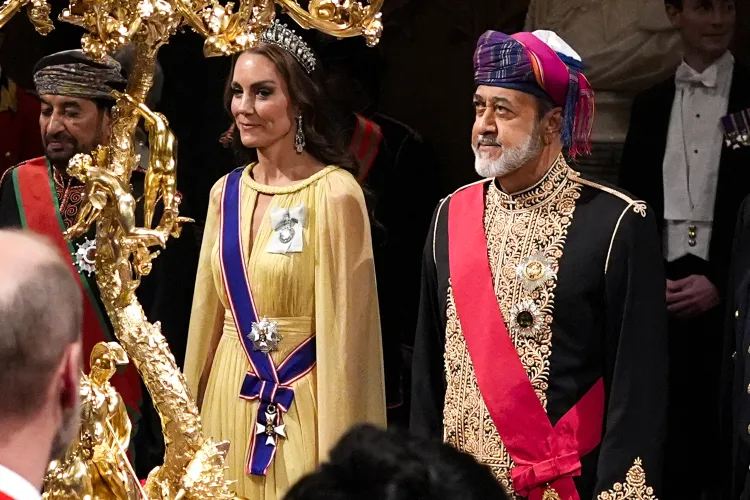
Kate Middleton has long been admired for her elegant fashion choices, particularly during formal royal engagements where every detail of her appearance attracts attention. From carefully tailored coats to dramatic evening gowns, the Princess of Wales has developed a distinctive style that balances timeless sophistication with modern glamour. However, even the most carefully planned royal appearance can come with an unexpected moment, as a flowing gown and a chair can occasionally prove to be an awkward combination during a formal dinner.
A state banquet is one of the most prestigious occasions on the royal calendar, bringing together members of the British royal family, visiting dignitaries, and distinguished guests for an evening of diplomacy and celebration. With elaborate table settings, formal seating arrangements, and floor-length gowns, these events require guests to navigate an environment where elegance and practicality do not always go hand in hand.
The attention surrounding Kate’s evening wear highlights a familiar challenge for anyone who loves formal fashion: a beautiful gown can look spectacular while presenting a few practical difficulties. Long hemlines, voluminous skirts, and delicate fabrics may require extra care when sitting down, standing up, or moving around a crowded dining room.
Although a gown catching beneath a chair may seem like a small mishap, such moments can attract considerable attention when they involve a member of the royal family. They also offer a reminder that behind the polished photographs and carefully choreographed ceremonies, even the most glamorous occasions involve ordinary practical challenges.
Kate Middleton’s Elegant Style Takes Center Stage
The Princess of Wales has become one of the most recognizable figures in contemporary royal fashion. Her wardrobe frequently combines traditional British design with contemporary silhouettes, creating outfits that feel appropriate for official engagements while remaining visually distinctive.
For major evening events, Kate often favors sophisticated gowns that emphasize clean lines, graceful movement, and refined detailing. Depending on the occasion, her formal wardrobe may include rich jewel tones, delicate embroidery, structured bodices, or flowing skirts that create a dramatic silhouette.
These choices reflect the particular demands of royal dressing. An outfit must suit the formality of the event, complement the setting, and allow the wearer to participate comfortably in a long evening of official duties.
State banquets are especially important occasions for formal fashion. Guests typically dress according to established protocols, and the clothing worn by senior members of the royal family often becomes a major focus of public interest.
Kate’s fashion choices are regularly discussed because they combine traditional expectations with a contemporary sense of style. Her outfits demonstrate how classic evening wear can remain relevant without relying on excessive embellishment or dramatic trends.
Yet the same design features that make a gown striking can also create practical challenges. A floor-length skirt may trail beautifully as its wearer walks, but it can become trapped beneath a chair leg or folded awkwardly when the wearer sits down.
This is one of the small compromises that can accompany elaborate formal dressing.
Why Flowing Evening Gowns Can Be Difficult to Manage
A flowing gown creates movement and elegance through its length, fabric, and silhouette. Depending on its construction, the skirt may extend well beyond the wearer’s feet or spread around the body when seated.
While these features can make an evening gown look spectacular, they also require careful handling.
When someone sits down at a formal dinner, the fabric must fall naturally around the chair without becoming trapped beneath the seat or caught against the legs. A full skirt may shift backward as the wearer moves, while a long hemline can become tangled beneath the chair if there is not enough space.
The challenge becomes more noticeable during state banquets, where guests may remain seated for extended periods and where the table arrangement leaves limited room for movement.
Heavy fabrics can add another complication. Although they often create a luxurious appearance, they may be more difficult to reposition discreetly than lightweight materials.
Even a relatively simple movement, such as pulling a chair closer to the table, can affect the way a gown falls.
For this reason, formal dressing involves more than selecting a beautiful design. The wearer must also consider how the garment behaves while walking, sitting, standing, and interacting with other guests.
A flowing gown can be an excellent choice for a grand occasion, but its length and volume require a little extra attention.
Inside the Tradition of a Royal State Banquet
State banquets occupy a special place in the British monarchy’s ceremonial calendar. These formal occasions are organized to honor visiting heads of state and strengthen diplomatic relationships between the United Kingdom and other countries.
The events typically take place in an elaborate setting, with carefully arranged tables, formal service, and strict expectations regarding dress and etiquette.
Members of the royal family play an important role in welcoming guests and participating in the evening’s proceedings. The atmosphere is designed to communicate respect, hospitality, and the significance of the diplomatic relationship being celebrated.
For guests, the experience involves a combination of ceremony and social interaction. They may need to follow formal seating arrangements, participate in speeches, and observe established dining customs.
These requirements help explain why clothing choices matter so much.
A gown must look appropriate in an exceptionally formal environment, but it should also allow its wearer to remain comfortable throughout a lengthy event. Shoes, jewelry, hairstyles, and accessories all contribute to the overall appearance, while the construction of the dress can influence how easily someone moves.
Royal fashion is therefore not simply about creating an attractive photograph. It also involves dressing for a specific occasion with its own traditions, expectations, and practical limitations.
The result is a delicate balance between visual impact and functionality.
Kate Middleton’s Approach to Timeless Evening Fashion
One reason Kate’s wardrobe receives so much attention is its emphasis on timeless design. Rather than relying exclusively on short-lived trends, she frequently wears silhouettes that remain relevant across different seasons and occasions.
Classic evening gowns are particularly suited to this approach. A carefully chosen color, elegant neckline, and graceful skirt can create a memorable look without requiring elaborate decorative elements.
The Princess of Wales also demonstrates how accessories can influence the character of an outfit. Jewelry, evening bags, and formal footwear can complement a gown while helping establish an appropriate level of formality.
For a state banquet, these details are especially significant because the event brings together fashion, diplomacy, and royal tradition.
A flowing skirt can provide a sense of movement, while a fitted bodice creates structure. The contrast between these elements gives many formal gowns their distinctive shape.
However, elegance does not necessarily depend on the amount of fabric involved. A streamlined gown with a carefully proportioned hemline can be just as striking as a more voluminous design.
The most successful formal outfits combine a flattering silhouette with materials and construction that work well for the occasion.
For anyone drawing inspiration from Kate’s style, this is a useful lesson: choosing the right shape and fit can be just as important as choosing the right color.
When Royal Fashion Meets Everyday Practicality
The fascination with a gown catching beneath a chair reflects something familiar to many people who wear long dresses for weddings, formal dinners, or special celebrations.
Even an outfit that looks perfect while standing in front of a mirror may behave differently once the wearer begins moving.
A long skirt can become caught under a chair, a train may need to be repositioned, or delicate fabric may shift in an unexpected direction. These situations are not necessarily signs of poor design. They are simply part of wearing clothing that prioritizes a particular silhouette.
There are several ways to make formal dressing more manageable.
First, consider the length of the gown. A hemline that reaches the floor can look elegant, but it should not create unnecessary difficulty when walking or sitting.
Second, pay attention to the fabric. Lightweight materials may drape beautifully, while heavier fabrics can offer structure but require more effort to adjust.
Third, practice sitting down and standing up while wearing the dress before the event. This can help identify potential problems with the hemline, skirt volume, or placement of a train.
Finally, remember that comfort matters. A formal outfit should allow the wearer to participate in the occasion without constantly worrying about whether the fabric is in the right place.
These considerations apply whether someone is attending a royal banquet or a family celebration.
Why Small Royal Moments Attract So Much Attention
Royal appearances often receive extensive coverage because they combine public ceremony with a glimpse of the people behind the institution.
Photographs of state banquets capture not only the clothing worn by royal guests but also the interactions, expressions, and small moments that unfold throughout the evening.
A minor wardrobe inconvenience can therefore become a talking point, especially when it contrasts with the otherwise carefully controlled atmosphere of the occasion.
The public is accustomed to seeing members of the royal family in highly polished settings. Their appearances are usually planned with considerable attention to detail, from formal dress requirements to seating arrangements and ceremonial schedules.
An unexpected moment can make the event feel more relatable.
However, it is important to distinguish between a confirmed incident and a general observation about formal clothing. Without independently verified details about a particular banquet, the fact that a gown can catch beneath a chair should not be treated as proof of a specific mishap.
The broader fashion lesson remains relevant regardless: even the most elegant outfits can present practical challenges when worn in real-life settings.
For Kate Middleton, whose formal appearances regularly attract attention, the interest in her clothing illustrates how closely royal fashion is connected to public perceptions of elegance, confidence, and composure.
How to Recreate Kate Middleton’s Sophisticated Evening Style
You do not need a royal invitation to incorporate elements of Kate’s formal style into your own wardrobe.
The key is to focus on timeless pieces, flattering proportions, and accessories that complement rather than overwhelm an outfit.
Choose a Classic Silhouette
A floor-length gown can create an elegant appearance, but the shape should suit your preferences and the occasion. A gently flowing skirt offers movement, while a more structured design can create a cleaner silhouette.
Consider how the dress looks when both standing and seated before making a final decision.
Embrace Rich, Versatile Colors
Deep blue, emerald green, burgundy, and classic black are popular choices for formal evening wear because they offer visual depth without relying on complicated patterns.
A single-color gown can also make accessories easier to coordinate.
Keep Accessories Balanced
Statement jewelry can add interest to a simple gown, while understated earrings and a small evening bag can complement a more elaborate design.
The goal is to create a cohesive outfit rather than compete with the dress.
Prioritize Comfortable Footwear
Formal shoes should complement the gown while allowing you to walk and stand comfortably. Consider heel height, fit, and the amount of time you will spend on your feet.
If a dress has a particularly long hemline, footwear becomes even more important.
Check the Fit Before the Event
Try sitting, standing, and walking in the complete outfit. Make sure the hemline does not drag excessively and that the skirt can fall naturally around a chair.
These small preparations can help prevent avoidable wardrobe problems and allow you to enjoy the occasion.
The Bottom Line
Kate Middleton’s formal fashion choices continue to inspire interest because they combine classic elegance with a modern understanding of royal style. A flowing evening gown can make a powerful impression at a state banquet, but its length and volume may also create practical challenges when sitting or moving around a formal dining room.
The possibility of fabric catching beneath a chair highlights the less glamorous side of elaborate evening wear, reminding us that even carefully selected outfits must work in real-life situations.
For anyone hoping to recreate the Princess of Wales’s sophisticated aesthetic, the most valuable lesson is to balance beauty with practicality. Choose a silhouette that suits the occasion, select comfortable materials and footwear, and ensure the gown moves naturally when you sit down or stand up.
Ultimately, great formal style is not just about how an outfit looks in photographs. It is also about feeling comfortable and confident throughout the event.
And while a flowing gown may occasionally require a little extra attention, that small inconvenience is part of the reality of wearing elegant clothing for a memorable evening.