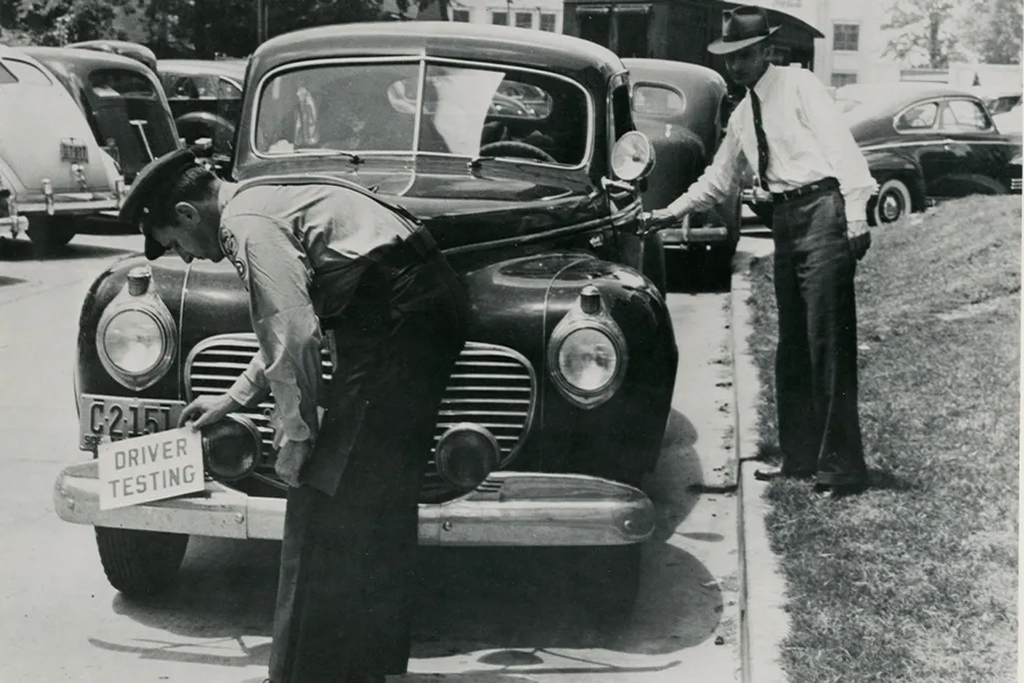
What was once a simple paper card has evolved with the technology of the times, going from protecting our roads to playing a role in national security.
For generations, a driver’s license served one primary purpose: proving that a person had permission to operate a motor vehicle. It was a practical document issued after an individual demonstrated the knowledge and skills needed to drive safely. Small enough to fit inside a wallet, the license contained basic identifying information and a photograph, allowing police officers and other authorities to verify a driver’s credentials.
Today, however, the humble driver’s license has become much more than proof of driving ability. Advances in technology, growing concerns about identity theft, and changing national security requirements have transformed it into an important form of identification. In many places, it can be used to verify a person’s identity at airports, access certain government facilities, and complete everyday transactions that have little to do with driving.
This transformation reflects a broader change in modern society. As physical identification becomes increasingly connected to digital systems, a document originally designed to keep roads safe now helps determine how people establish who they are. The driver’s license has evolved alongside technology, revealing how governments balance convenience, public safety, privacy, and security.
The Early Purpose of the Driver’s License
The earliest driver’s licenses emerged as automobiles became more common in the late 19th and early 20th centuries. When motor vehicles first appeared on public roads, driving was a relatively new activity, and rules governing who could operate a car varied considerably between jurisdictions.
As automobile ownership increased, governments began introducing licensing requirements to improve road safety and establish accountability. Authorities needed a way to identify drivers, confirm their qualifications, and ensure that people operating increasingly powerful vehicles understood basic traffic rules.
One early example came in France, where Louis Lépine, the police chief of Paris, introduced a requirement in 1893 for people operating motor vehicles in the city to demonstrate their ability to drive. Other places gradually developed their own licensing systems.
In the United States, New York became an early adopter of driver licensing requirements. In 1903, the state required chauffeurs to obtain licenses, although general licensing rules for ordinary motorists developed later and differed from state to state.
Early licenses were often simple documents. Their appearance and the information they contained depended on local regulations and the technology available at the time. The central objective remained straightforward: establish that a person was legally permitted to drive.
Over time, licensing systems became more standardized. Written examinations, practical driving tests, renewal requirements, and records of traffic violations helped authorities assess drivers and enforce road safety laws.
The license gradually became a familiar part of everyday life. For most motorists, it represented independence, mobility, and the legal privilege of getting behind the wheel.
From Paper Cards to Modern Identification
As identification technology advanced, driver’s licenses changed in both appearance and function.
Early documents were often printed on paper or other relatively simple materials. Although these cards could establish a driver’s identity and authorization, they were vulnerable to wear, damage, alteration, and forgery.
Manufacturers and government agencies gradually introduced more durable materials and security features. Plastic cards became widespread, while photographs, signatures, expiration dates, and standardized layouts made documents easier to inspect.
Later generations of licenses incorporated increasingly sophisticated protections. Depending on the jurisdiction, these could include holograms, specialized printing, ultraviolet features, microprinting, barcodes, and machine-readable information.
These changes served two related purposes. First, they helped officials determine whether a license was genuine. Second, they made it more difficult for someone to alter a document or create a convincing counterfeit.
The photograph also became an important feature. Rather than relying solely on a name or written description, officials could compare the person presenting the license with the image on the card.
As identification became more important in banking, travel, employment, and other activities, the driver’s license gained value beyond its original role. It was convenient, widely recognized, and issued through established government systems.
For many people, it became the identification document they carried most often, even when they were not driving.
Why a Driver’s License Became More Than Proof of Driving
The modern driver’s license occupies a unique position because it combines personal information with an official government-issued credential.
Depending on the jurisdiction, a license may display a person’s name, photograph, date of birth, address, signature, license number, and restrictions on driving privileges. These details help authorities distinguish one individual from another and determine whether the person meets specific legal requirements.
That information is useful in situations unrelated to road travel. A license may be accepted when opening certain accounts, verifying age, checking into accommodations, or completing other transactions that require identity confirmation.
However, acceptance is not universal. Different organizations have different identification policies, and some transactions require additional documents or more rigorous verification.
The license’s expanding role also creates a practical concern: a document designed to identify a driver can reveal personal information whenever it is presented. Its usefulness depends partly on the trust people place in the government agency that issues it and the organizations that accept it.
As society has become more dependent on identity verification, the license has increasingly functioned as a bridge between an individual and the systems that govern access to services.
The REAL ID Act and the National Security Connection
One of the most significant developments in the United States was the passage of the REAL ID Act in 2005.
The law followed recommendations made after the September 11, 2001, terrorist attacks and established federal standards for state-issued driver’s licenses and identification cards used for certain official purposes.
The legislation sought to improve the reliability of identity documents by setting requirements related to application procedures, identity verification, and the information states must validate when issuing compliant credentials.
For travelers, the change became particularly visible through airport security. Under federal rules, adults generally need an acceptable form of identification to pass through Transportation Security Administration checkpoints. A REAL ID-compliant driver’s license or another accepted document can satisfy that requirement.
The implementation of REAL ID took years and involved changes to state systems, documentation procedures, and card designs. Enforcement began on May 7, 2025, following multiple delays.
The law illustrates how an ordinary state-issued document became connected to national security policy. A driver’s license is still issued primarily under state authority, but its acceptance for certain federal purposes depends on whether it meets the applicable standards.
This does not mean that every driver’s license grants access to secure locations or that every license contains the same information. Rather, the credential has acquired an additional role in systems designed to establish identity more consistently.
For many Americans, the shift made the connection between identification and security visible in an everyday setting: preparing for a flight.
Digital Driver’s Licenses: The Next Stage of Evolution
The transformation of the driver’s license is continuing as governments explore digital identification.
A mobile driver’s license, often called an mDL, is a digital version of a physical credential that can be stored on a compatible smartphone or other approved device. Depending on the system, it may allow a person to present selected identity information electronically instead of handing over a physical card.
Digital credentials can offer practical advantages. They may make identity checks faster, reduce the need to carry a physical wallet, and allow verification systems to confirm certain details electronically.
Some systems are also designed to let users share only the information needed for a particular transaction. For example, proving that someone is old enough to enter a venue may not require disclosing the person’s full address.
However, the capabilities of digital licenses vary by location and provider. Not every jurisdiction offers them, and not every business, government office, or airport accepts them. Travelers should still carry an accepted physical identification document when required.
Digital credentials also introduce new questions. What happens if a phone is lost, stolen, damaged, or out of battery? How can users be confident that a digital credential is authentic? What information is collected during a verification, and who can retain it?
These questions demonstrate that technological progress does not automatically eliminate risk. It changes the nature of the safeguards needed to protect personal information and prevent identity fraud.
Privacy, Data Security, and the Information We Carry
As the driver’s license has become more useful, the information associated with it has also become more valuable.
A physical license can reveal a person’s full name, date of birth, photograph, and other identifying details. If a copy falls into the wrong hands, those details may contribute to identity theft, fraudulent applications, or other forms of misuse.
Digital identification systems can introduce additional privacy considerations, particularly when verification involves connected devices, software platforms, or third-party services.
The risks depend on how a system is designed and operated. Some systems minimize the information disclosed during a transaction, while others may require more extensive data processing. Strong security measures, clear privacy rules, and limited data retention can help reduce exposure.
There is also an important distinction between possessing identification and having permission to access a particular service. A driver’s license may confirm identity, but it does not automatically establish eligibility for every activity or guarantee that a transaction will be approved.
For individuals, a sensible approach is to protect both physical and digital credentials. Avoid sharing images of a license unnecessarily, use official applications when available, and understand what information a verification process requires.
For governments and organizations, the challenge is to improve reliability without collecting more personal information than necessary.
What the Driver’s License Says About Modern Society
The evolution of the driver’s license reflects a larger shift in how identity works.
In the past, the document mainly connected a person to a specific legal privilege: the right to drive. Today, it can help establish identity across transportation, commerce, government services, and other areas of everyday life.
That broader role offers convenience, but it also gives identification systems greater influence over people’s experiences. When access to services depends on verifying identity, the reliability and accessibility of those systems become important public concerns.
Not everyone has the same access to technology, stable documentation, or the services required to obtain a license. People who do not drive may need alternative forms of identification, and digital systems must account for individuals who lack compatible devices or reliable internet access.
An effective identification system therefore needs to balance security with inclusion. It should help prevent fraud without creating unnecessary barriers for people who have legitimate reasons to establish who they are.
The driver’s license may have begun as a practical response to the growing number of automobiles, but its modern role reflects the demands of a society increasingly organized around verified identity.
Conclusion: A Small Card With a Much Bigger Role
The driver’s license has traveled a long way from its early purpose as proof that someone could legally operate a motor vehicle. Over more than a century, it has evolved through changes in printing, materials, security technology, government regulation, and digital innovation.
Today, the document can serve as an everyday identity credential and, in the United States, may help satisfy federal identification requirements for air travel when it meets REAL ID standards or is otherwise accepted.
Its evolution also raises important questions about privacy, accessibility, fraud prevention, and the relationship between personal identity and government systems.
As digital licenses become more common, the balance between convenience and security will remain central. The goal is not simply to create a more advanced card or smartphone credential, but to build identification systems that are reliable, accessible, and respectful of personal information.
The driver’s license still tells authorities whether a person is authorized to drive. Increasingly, it also helps answer a much broader question: how can someone prove who they are in a world where identity matters almost everywhere?