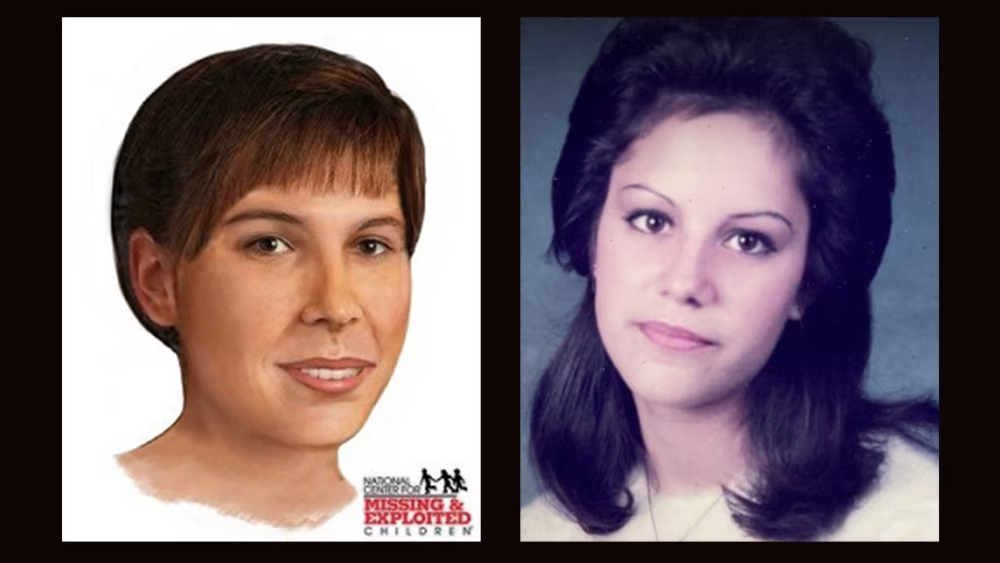
The 21-year-old vanished on Halloween night in 1989. Her remains were found in Placer County, California, in early 1990.
For more than three decades, a young woman whose remains were discovered in Placer County, California, remained unidentified. Known to investigators as Placer County Jane Doe, she represented one of the many unresolved cases in which a person’s identity was lost while the circumstances surrounding their death remained a mystery.
In 2026, authorities identified the woman as Wendy Abrams-Nishikai, a 21-year-old mother who disappeared on Halloween night in 1989. The identification brought an end to one part of the case, finally restoring a name to a woman whose remains had gone unidentified for decades. Yet it also renewed attention to the questions that have lingered since her disappearance: What happened to Wendy, how did she end up in Placer County, and who might have information that could help investigators understand her final days?
For Wendy’s loved ones, the identification represents an important breakthrough after years of uncertainty. For investigators, however, identifying her is only one step toward understanding what happened. Authorities remain committed to examining the available evidence and pursuing information that could help clarify the circumstances surrounding her death.
The case illustrates both the promise of modern forensic science and the difficult work that remains when a victim’s identity is established long after the original investigation began.
Who Was Wendy Abrams-Nishikai?
Wendy Abrams-Nishikai was 21 years old when she disappeared in 1989. She was a young mother whose life was cut short under circumstances that remained unexplained for decades.
Her disappearance on Halloween night marked the beginning of a long period of uncertainty for those who knew her. At an age when many people are beginning to establish their adult lives, Wendy suddenly vanished, leaving questions about where she had gone and whether she would ever be found.
The passage of time made those questions increasingly difficult to answer. As years turned into decades, investigators were left with an unidentified woman whose remains had been recovered in Northern California but whose name and personal history were not known.
Cases involving unidentified remains can be particularly painful for families. Without confirmation of what happened, relatives may spend years wondering whether a missing loved one is alive, whether they have been located under another identity, or whether an unknown death could be connected to someone they have been searching for.
Wendy’s identification has now provided a crucial answer to one of those questions. The woman known as Placer County Jane Doe was not an unidentified stranger without a known history. She was Wendy Abrams-Nishikai, a young woman who had disappeared from the lives of those who knew her.
Although public information about her life remains limited, the identification restores an essential part of her story. It also places her disappearance and the discovery of her remains within the context of a real person whose family and loved ones deserved answers.
Wendy Disappeared on Halloween Night in 1989
October 31, 1989, was the last known date associated with Wendy’s disappearance. Halloween is usually remembered as a night of costumes, celebrations, and neighborhood activities, but for Wendy’s loved ones, that date became connected to an absence that lasted for decades.
The circumstances surrounding her disappearance remain central to the investigation. Establishing where she was last seen, who she may have encountered, and what happened in the hours and days that followed could help investigators reconstruct the events leading to her death.
However, the available information does not establish a complete timeline of Wendy’s final movements. Without verified details about her last known location, activities, and contacts, it would be misleading to suggest a specific explanation for why she disappeared.
The passage of time can make missing-person investigations especially challenging. Witnesses may move away, memories can fade, and records that once seemed ordinary may become difficult to locate. People who knew the missing person may also be unaware that a discovery made in another location could be connected to their case.
In Wendy’s case, the identification of her remains has linked a missing-person investigation dating to 1989 with the discovery of an unidentified person in Placer County in early 1990.
That connection is significant, but it does not by itself explain what happened between her disappearance and the recovery of her remains. Investigators must still examine the available evidence to determine whether a more complete account can be established.
The Discovery of Placer County Jane Doe in 1990
In early 1990, authorities discovered human remains in Placer County, California. At the time, investigators were unable to establish the woman’s identity, and the case became known as Placer County Jane Doe.
The designation “Jane Doe” is commonly used in the United States when authorities are unable to identify a female victim. It allows investigators to document a case and refer to the individual while continuing efforts to determine who she was.
An unidentified person may have no readily available identification, or investigators may lack the information needed to connect the remains to a missing-person report. In cases involving remains that have been exposed to the elements or recovered long after death, traditional identification methods may also be limited.
For decades, Placer County Jane Doe remained separated from the name and personal history that belonged to her. Investigators had recovered her remains, but the most basic question—who was she?—remained unanswered.
The discovery’s location in Placer County provided an important starting point for the investigation, but it did not necessarily reveal where the woman had lived before her death or how she came to be there.
The identification of Wendy Abrams-Nishikai in 2026 changed that picture. By establishing the victim’s identity, authorities could connect the remains to a person reported missing in 1989 and revisit the case with a clearer understanding of whom they were seeking to account for.
Yet the discovery and identification are separate from determining the cause and circumstances of death. Even after a victim is named, investigators may still need to establish how the person died, where the relevant events occurred, and whether another individual was involved.
How Was the Long-Unidentified Woman Finally Identified?
The identification of long-unidentified remains can involve a combination of forensic science, investigative records, and information supplied by relatives or members of the public.
Depending on the condition of the remains and the evidence available, investigators may use DNA analysis, dental records, fingerprints, anthropological examinations, and comparisons with missing-person databases. Each method has limitations, and not every case preserves the evidence needed for every type of analysis.
In recent years, advances in DNA technology have created new opportunities to revisit cases that once appeared impossible to solve. Genetic material recovered from remains may sometimes be compared with samples from relatives or used in investigative genetic genealogy, a process that can help researchers identify possible family connections.
Such work can generate leads, but it requires careful verification. Investigators must establish that a proposed identification is supported by reliable evidence and that the information corresponds to the individual being investigated.
The identification of Wendy Abrams-Nishikai demonstrates the importance of continuing to examine unresolved cases, even when many years have passed. A case that remained open for decades can sometimes move forward when new technology, additional records, or renewed investigative attention becomes available.
However, without a confirmed public account of the specific methods used to identify Wendy, it would be premature to attribute the breakthrough to a particular DNA technique or investigative procedure.
What is clear is that the identification has connected a woman whose remains were discovered in 1990 with a missing person whose disappearance dates to Halloween night 1989.
That connection offers a foundation for further investigation and gives authorities a more direct path toward seeking answers about her death.
Why Authorities Are Continuing the Investigation
Identifying Wendy is a major development, but it does not automatically resolve the circumstances surrounding her death.
Investigators may need to review the original case files, examine available forensic evidence, and reconsider information that could not be fully evaluated when the remains were first discovered. They may also compare the case with missing-person records, historical reports, and other evidence that could help establish Wendy’s movements before her disappearance.
The passage of decades presents obvious obstacles. Physical evidence may have deteriorated, witnesses may no longer be available, and people who once had relevant information may not realize its importance.
Even so, older cases can still produce new leads. A person who was unable or unwilling to speak at the time may later come forward. A record may be rediscovered, or a new forensic examination may reveal information that was previously unavailable.
Authorities’ commitment to finding out what happened to Wendy reflects the continuing responsibility to investigate unexplained deaths and seek accountability where the evidence supports it.
It is important, however, to distinguish between an unresolved death and a proven homicide. Unless investigators have publicly established the circumstances and cause of death, the case should not be described as a murder or attributed to a specific suspect without evidence.
The central objective is to determine what the available facts can establish and to pursue credible leads that may help explain how Wendy died.
The Lasting Impact on Wendy’s Family and Loved Ones
For families of missing people, uncertainty can become a part of everyday life. Holidays, birthdays, and anniversaries may bring renewed questions, while the absence of reliable information can make it difficult to grieve or find closure.
Wendy’s identification provides an answer that was missing for decades: the remains discovered in Placer County belonged to her. That knowledge can help relatives understand what happened to the missing woman they were searching for, even if many questions remain.
But identification does not necessarily provide closure in the fullest sense. Knowing who a victim was is different from understanding how she died or why she disappeared.
For loved ones, the unanswered circumstances can remain deeply painful. They may still want to know where Wendy spent her final hours, how she came to be in Placer County, and whether anyone witnessed something that could help investigators reconstruct the events.
These questions also matter because Wendy was more than a name in a case file. She was a young woman and a mother whose life had meaning beyond the circumstances of her disappearance.
As the investigation continues, remembering her identity and the life she lived is just as important as examining the evidence surrounding her death.
Why Cold Cases Still Matter After Decades
The case of Wendy Abrams-Nishikai highlights why law enforcement agencies continue to investigate deaths and disappearances long after the original events.
Cold cases can remain unresolved for many reasons. Investigators may initially lack sufficient evidence, witnesses may be difficult to locate, or forensic methods available at the time may be unable to establish a person’s identity.
Technology has changed the possibilities for some of these investigations. Improved DNA analysis and more comprehensive databases can allow authorities to revisit evidence that previously produced no clear answer.
But technology alone cannot solve every case. Successful investigations also depend on careful analysis, cooperation between agencies, access to reliable records, and information from people who may have witnessed relevant events.
Public assistance can be particularly valuable in older cases. Someone may remember an unusual encounter, a conversation, or a detail that seemed insignificant at the time. When combined with other evidence, that information could help investigators establish a more complete timeline.
The identification of Wendy also demonstrates the importance of maintaining records of missing people and unidentified remains. Connecting those records can reveal relationships that were not apparent when the cases were first investigated.
Most importantly, cold-case investigations reaffirm that the passage of time does not make an unexplained death less worthy of attention. Families still deserve answers, and authorities can continue seeking the truth even when the original investigation began generations earlier.
How the Public May Be Able to Help
When authorities continue investigating an unidentified death or an unresolved disappearance, credible information from the public can sometimes make a difference.
Anyone who believes they have information relevant to Wendy’s disappearance or the discovery of her remains should contact the appropriate investigating agency through its official channels. Information should be shared with investigators rather than posted as speculation on social media.
People should avoid naming possible suspects or presenting unverified theories as facts. Such claims can harm innocent individuals, complicate investigations, and distract from evidence that could genuinely help establish what happened.
Even information that seems minor may be worth sharing with investigators if it relates to Wendy’s last known movements, her contacts before she disappeared, or circumstances surrounding the discovery in Placer County.
Authorities can assess whether a tip is relevant and determine how it fits with the evidence already available.
The most useful public contribution is accurate information offered responsibly, allowing investigators to evaluate it through the proper process.
Conclusion: Wendy Abrams-Nishikai’s Story Is Not Over
The identification of Placer County Jane Doe as Wendy Abrams-Nishikai has answered a question that remained unresolved for decades. The 21-year-old mother disappeared on Halloween night in 1989, and her remains were discovered in Placer County, California, in early 1990. For years, her identity remained unknown.
The breakthrough in 2026 restored her name to the case and connected her disappearance with the remains found in California. It also renewed attention to the circumstances surrounding her death and the questions that investigators are still working to answer.
Although identifying Wendy is an important step, it is not the same as determining exactly what happened to her. The available evidence must be examined carefully, and any conclusions must be supported by verified facts rather than speculation.
For Wendy’s loved ones, the hope is that the renewed investigation will provide a clearer account of her final days. For authorities, the task is to follow the evidence, pursue credible leads, and determine whether the mystery surrounding her death can finally be resolved.
Decades have passed since Wendy disappeared, but her story still matters. She deserves to be remembered as a person, not simply as an unidentified victim whose case remained open for years.
The search for answers continues, and authorities’ commitment to understanding what happened to Wendy Abrams-Nishikai offers hope that some of the questions left unanswered since 1989 may yet be resolved.