Eighty years ago, five planes vanished during a training run off the Florida coast. A patrol plane sent to search for the men went missing, too, giving rise to a host of conspiracy theories.
On December 5, 1945, five U.S. Navy torpedo bombers took off from Florida on what was supposed to be a routine training mission. The aircraft were expected to practice navigation and bombing procedures before returning to their base. Instead, the flight became one of the most famous aviation mysteries in American history.
The five planes, collectively known as Flight 19, disappeared over the Atlantic Ocean after their crews reportedly encountered navigational difficulties. Fourteen airmen were aboard the aircraft, and none was ever found. As the Navy launched a search operation, another aircraft sent to assist in the rescue effort also vanished, adding another unsettling dimension to the incident.
The disappearance helped transform a stretch of ocean between Florida, Bermuda, and Puerto Rico into the center of an enduring legend: the Bermuda Triangle. Over the decades, writers, researchers, and conspiracy theorists have suggested everything from magnetic anomalies and underwater civilizations to extraterrestrial activity as possible explanations for the missing aircraft.
Yet the historical record presents a more complicated story. Flight 19’s disappearance involved inexperienced navigation under challenging conditions, deteriorating circumstances, and an ocean vast enough to conceal the evidence of a catastrophe. Understanding what happened requires separating the documented events from the extraordinary theories that followed.
What Was Flight 19?
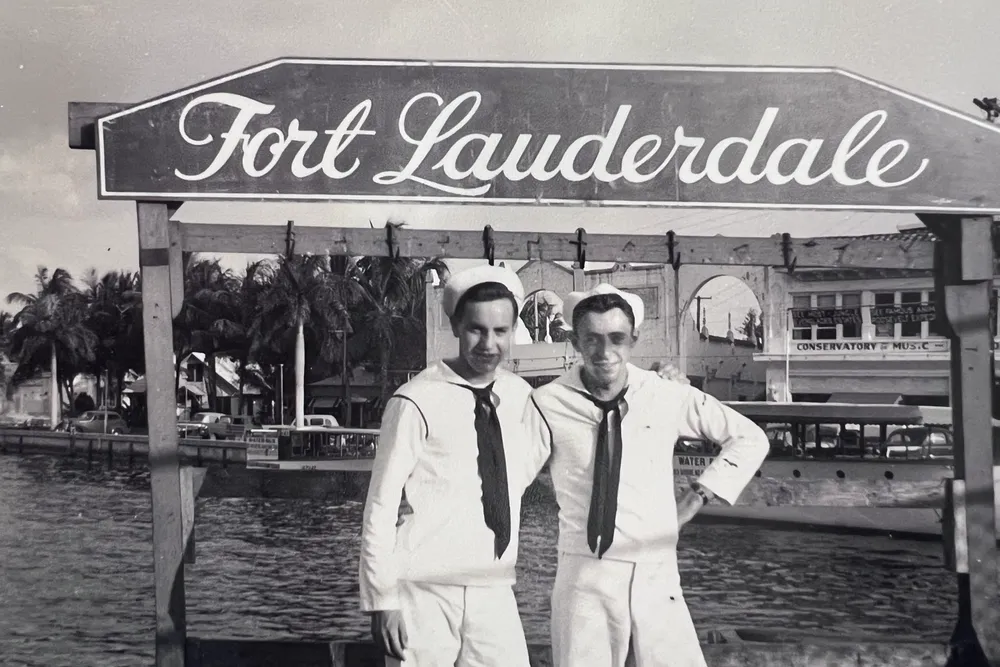
Flight 19 was a group of five Grumman TBM Avenger torpedo bombers operated by the U.S. Navy during the final weeks of World War II. The aircraft were based at Naval Air Station Fort Lauderdale in Florida, where military personnel trained for a range of operational assignments.
The Avenger was a substantial single-engine aircraft designed primarily for torpedo attacks and other military missions. It had a crew of three and was built to operate in demanding conditions, including over open water.
The training mission on December 5, 1945, was intended to help crews practice navigation, bombing, and coordination. The flight was led by Lieutenant Charles C. Taylor, an experienced pilot whose role included guiding the formation through the planned route.
Fourteen men were aboard the five aircraft. Although the mission was routine in concept, it required the crews to navigate over the ocean, where landmarks were limited and mistakes could have serious consequences.
The aircraft departed in the afternoon under conditions that initially appeared suitable for training. The plan involved flying east from Florida, conducting exercises over the Atlantic, and returning to base.
But somewhere during the mission, the flight became disoriented. Communications between the aircraft and their base began to reveal uncertainty about their location, and the situation grew increasingly serious as the crews struggled to establish the correct direction.
The training exercise had become an emergency, and the five aircraft were heading toward an uncertain fate.
The Final Radio Messages From Flight 19
One of the most compelling elements of the Flight 19 story is the radio communication recorded during the mission.
As the afternoon progressed, Taylor reportedly expressed uncertainty about the flight’s position. He believed the aircraft might be over the Florida Keys, even though the circumstances suggested they were elsewhere. His confusion complicated efforts to determine which direction the formation should take.
Navigation over open water was particularly challenging in the 1940s. Pilots relied on instruments, compasses, maps, visual observations, and radio guidance. When visibility deteriorated or familiar landmarks disappeared, identifying a position could become difficult.
Taylor’s uncertainty appears to have influenced the decisions made during the flight. If the formation was farther east over the Atlantic than he believed, attempting to fly in the wrong direction could have carried the aircraft even farther from land.
Radio operators at the base attempted to communicate with the crews and establish their location. However, the available transmissions did not provide a definitive answer about where the aircraft were.
Accounts of the radio exchanges later became central to popular retellings of the mystery. Some versions emphasized dramatic statements attributed to Taylor, including claims that compasses were behaving strangely. But quotations repeated in later books and documentaries are not always consistent with the surviving historical record.
The safest conclusion is that the flight experienced serious navigational uncertainty. Exactly how that confusion developed, and whether other factors contributed, remains difficult to establish because the aircraft and their crews were never recovered.
As daylight faded, the chances of safely returning to Florida diminished. The fuel supply was limited, and the aircraft were operating over a vast expanse of water with few reliable visual references.
The Navy Launches a Search—and Another Plane Disappears
When Flight 19 failed to return, the Navy initiated a major search effort. Aircraft and other resources were dispatched to look for the missing Avengers and their crews.
One of the aircraft involved was a Martin PBM Mariner patrol seaplane carrying a crew of 13. It departed to assist with the search, but it also disappeared.
The loss of the Mariner made an already serious situation even more alarming. A second aircraft had vanished on the same evening, apparently in the same broad region, prompting questions about whether something unusual had occurred over the Atlantic.
However, the two disappearances may not have shared the same immediate cause. The PBM Mariner had a reputation for carrying substantial quantities of fuel, and the aircraft’s design made fuel-vapor hazards a recognized concern. Reports from the period indicated that an explosion was observed in the vicinity of the Mariner, leading investigators to consider the possibility that the patrol plane had exploded.
The exact cause of its loss could not be conclusively established because the aircraft was not recovered. Nevertheless, the possibility of an onboard explosion provides a plausible explanation that does not require an extraordinary phenomenon.
Search operations continued, but neither Flight 19 nor the Mariner’s crew was found. The Navy examined the circumstances and considered navigational problems, weather, fuel limitations, and other potential causes.
The disappearance of two groups of military personnel in one evening became a tragedy that demanded investigation. In later years, however, the incident would increasingly be presented as evidence of something mysterious happening in the Bermuda Triangle.
How Flight 19 Became Connected to the Bermuda Triangle
The Bermuda Triangle is generally described as a loosely defined region of the western North Atlantic between Florida, Bermuda, and Puerto Rico. It has become associated with stories of ships and aircraft that allegedly disappeared under mysterious circumstances.
The region was not universally recognized as a special danger zone in 1945. Its reputation developed over time as writers and journalists connected separate maritime and aviation incidents into a broader narrative.
Flight 19 became one of the most influential cases in that process. The loss of five aircraft, followed by the disappearance of a search plane, created a dramatic story that seemed to invite explanations beyond ordinary aviation accidents.
As the Bermuda Triangle gained attention in popular culture, the Flight 19 incident was repeatedly revisited in books, magazine articles, television programs, and documentaries. Each retelling helped reinforce the association between the missing aircraft and the supposedly mysterious region.
Some accounts emphasized the crews’ reported navigational confusion. Others suggested that compasses had malfunctioned, that unusual forces had interfered with communications, or that the aircraft had entered a strange area where the normal rules of navigation no longer applied.
Yet a key distinction is often overlooked: the fact that an aircraft disappeared without being recovered does not establish that it encountered an unexplained force.
The Atlantic Ocean is enormous, and an aircraft that runs out of fuel over open water can sink with little recoverable evidence. In 1945, search technology was far more limited than it is today. Without modern satellite tracking, precise location systems, or widespread underwater search capabilities, determining the final position of a missing aircraft could be extraordinarily difficult.
Flight 19’s disappearance therefore became a powerful mystery partly because the evidence needed to resolve it was never found.
Could Navigation Errors Explain the Disappearance?
Many explanations for Flight 19 focus on navigational confusion and the decisions made after the formation became uncertain about its position.
In the 1940s, pilots could use magnetic compasses, dead reckoning, maps, radio navigation aids, and visual landmarks. Each method had limitations, particularly over the ocean.
Dead reckoning involves estimating a position based on a known starting point, direction, speed, and elapsed time. Errors can accumulate when winds affect an aircraft’s movement or when the pilot misjudges the heading.
A mistaken belief about one’s location can also create a dangerous chain reaction. If a pilot thinks the aircraft is over one part of the coast, a heading chosen to return to land may actually take the aircraft farther out to sea.
Investigators have suggested that Taylor’s uncertainty about the flight’s position may have contributed to the disaster. Some accounts also raise the possibility that he misunderstood the relationship between the Florida Keys, the Bahamas, and the surrounding Atlantic waters.
Weather and fading daylight could have made the situation worse. Even if an aircraft remained mechanically sound, the combination of navigation errors, declining visibility, and limited fuel could leave its crew with few options.
However, because the aircraft were never located, no single reconstruction can be treated as a definitive account of their final moments. The evidence supports navigational problems as a plausible explanation, but it does not allow every detail to be established with certainty.
The Conspiracy Theories That Followed
The disappearance of Flight 19 has inspired a wide range of theories, many of which became popular because the incident left so many unanswered questions.
One recurring claim involves magnetic anomalies. Supporters of this explanation argue that unusual magnetic forces may have disrupted the aircraft’s compasses and prevented the pilots from finding their way.
However, there is no conclusive evidence that an extraordinary magnetic disturbance caused Flight 19 to disappear. Magnetic compass readings can be affected by known navigational factors, and the available historical record does not establish the presence of a mysterious force.
Other theories suggest that the aircraft entered a time distortion, encountered extraterrestrial activity, or disappeared through some kind of unexplained dimensional phenomenon. These ideas have become part of the Bermuda Triangle’s popular mythology, but they lack reliable evidence.
More conventional explanations remain grounded in the known risks of military aviation. Navigation errors, fuel exhaustion, weather, mechanical problems, and the difficulty of locating aircraft lost at sea can account for many disappearances without requiring supernatural causes.
The absence of wreckage has allowed speculation to flourish. When physical evidence is missing, stories can become increasingly elaborate, especially when they involve dramatic radio messages or details that seem unusual when removed from their historical context.
Flight 19’s enduring appeal lies partly in this uncertainty. The mystery leaves room for imagination, even though the most plausible explanations involve familiar dangers.
Why the Flight 19 Mystery Still Matters Today
More than eight decades after the disappearance, Flight 19 remains a significant episode in the history of naval aviation and the cultural history of the Bermuda Triangle.
The incident illustrates how quickly a routine training mission can become dangerous when navigation, weather, communication, and fuel management combine in unfavorable ways.
It also highlights the importance of reliable navigation procedures and clear decision-making. Pilots operating over open water must be able to assess uncertainty, communicate effectively, and recognize when a planned route may no longer be safe.
From a historical perspective, the case also demonstrates how unresolved events can change meaning over time. In 1945, the disappearance was a military tragedy and a subject of investigation. In later decades, it became a central story in a larger popular narrative about the Bermuda Triangle.
That transformation shows how media coverage and repeated storytelling can turn an unresolved accident into a cultural legend.
Modern aviation benefits from technologies that were unavailable to the crews of Flight 19, including satellite navigation, improved communications, and more sophisticated search-and-rescue systems. These advances have reduced some risks, although flying over remote oceans still presents serious challenges.
The case remains a reminder of both the progress made in aviation safety and the limits of what investigators can determine when an aircraft disappears without a trace.
Conclusion: A Tragedy That Became an Enduring Mystery
The disappearance of Flight 19 on December 5, 1945, remains one of the most famous unsolved events associated with the Bermuda Triangle. Five Navy Avengers vanished during a training mission off Florida, and a Martin PBM Mariner sent to assist in the search also disappeared, taking another 13 airmen with it.
The losses prompted an extensive search and investigation, but neither aircraft group was recovered. Navigational confusion, fuel limitations, and the hazards of flying over open water offer plausible explanations for the disaster, although the precise sequence of events remains uncertain.
Over time, the tragedy became a foundation of Bermuda Triangle mythology. Stories of mysterious magnetic forces, unexplained disappearances, and extraordinary phenomena added layers of speculation to a case already marked by unanswered questions.
Yet the lack of a definitive explanation is not evidence that something supernatural occurred. It reflects the difficulty of investigating an aviation disaster when the aircraft, physical evidence, and witnesses are lost.
Flight 19 deserves to be remembered first as a human tragedy involving 27 airmen who never returned home. Its place in the Bermuda Triangle legend may ensure that the story continues to be told, but understanding its history requires separating documented facts from speculation.
The mystery may never be fully resolved. Nevertheless, the lessons of Flight 19 remain clear: over the open ocean, small navigational errors can have enormous consequences, and when evidence disappears beneath the sea, the search for answers can continue for generations.