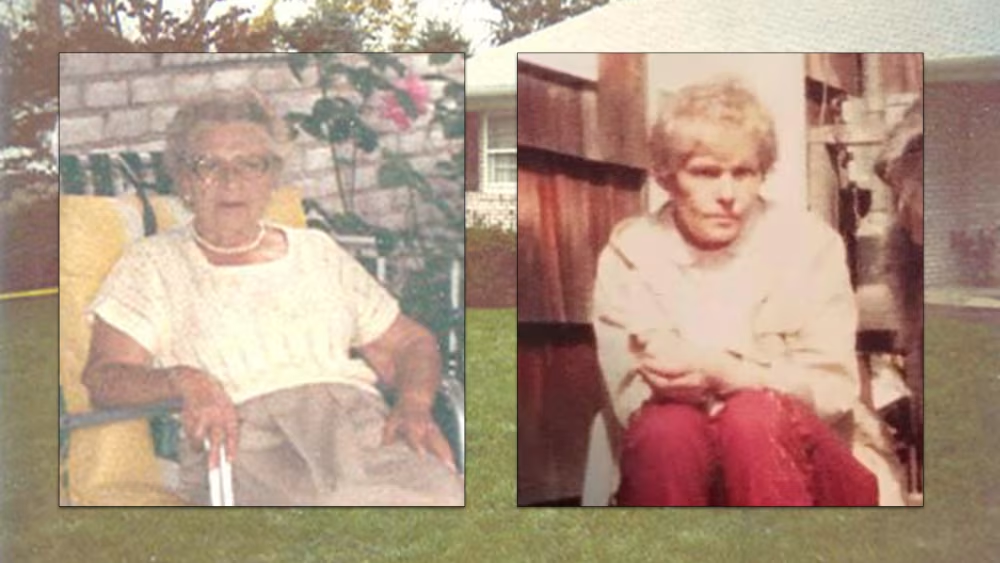
On October 17, 1989, a devastating discovery in Aberdeen, Maryland, turned a family’s period of mourning into an unsolved double-murder investigation. Ann Furst, 83, and her daughter, Helen Larkin, 56, were found brutally killed inside Ann’s home on Maxa Road. The family had already been preparing to say goodbye to Rudolf Furst, Ann’s husband and Helen’s father, who had recently died after battling cancer. Instead of gathering only to grieve his death, relatives were confronted with another tragedy that would leave lasting questions.
Nearly four decades later, the murders of Ann Furst and Helen Larkin remain an open cold case. Investigators believe burglary may have been the motive, but authorities have not publicly identified a suspect. The lack of definitive answers has left relatives and the wider community wondering who entered the home that night, why the two women were attacked, and whether information that could solve the case remains undiscovered.
The case is remembered not only for its violence but also for the circumstances surrounding the deaths. Two women who had recently attended a family gathering to mourn a loved one were killed in a place where they should have felt safe. Their story illustrates the enduring pain of unsolved homicide cases and the importance of preserving evidence, revisiting investigations, and encouraging anyone with relevant information to come forward.
Who Were Ann Furst and Helen Larkin?
Ann Furst was 83 years old and lived in a home on Maxa Road near Aberdeen, in Harford County, Maryland. Her daughter, Helen Larkin, was 56 and lived in Greenwich, Connecticut. Helen had traveled to Maryland following the death of her father, Rudolf Furst, so she could be with her family during a difficult time.
Although public information about their private lives is limited, accounts from relatives and people who knew the family described the women warmly. Helen’s daughter, Maribeth, later remembered her mother as a kind person who worked with young children in daycare settings and had an artistic side.
For their family, Ann and Helen were not simply the victims named in a police report. They were mothers, daughters, relatives, and familiar presences whose absence left a permanent void.
The timing of the murders made the loss particularly painful. Rudolf had died after an illness, and the family had gathered for a wake shortly before the killings. His funeral was scheduled for the following day.
Instead of being able to focus on remembering him and supporting one another, the family suddenly faced the violent deaths of two additional loved ones. The events created a devastating situation in which grief was compounded by shock, unanswered questions, and the knowledge that someone had attacked the women in their own home.
The Night Before the Murders
The events leading up to the killings began with the family’s gathering following Rudolf Furst’s death.
On the evening of Monday, October 16, 1989, relatives and friends attended a wake. Ann and Helen eventually left to return to the family home on Maxa Road. Accounts indicate that they departed at approximately 10 p.m. to 10:30 p.m., with the drive back taking around half an hour.
Friends who had accompanied them reportedly last saw the women alive at approximately 2:30 a.m., according to contemporary reporting. Investigators later worked to establish the timeline and determine when the attack occurred.
After arriving home, Ann went to bed while Helen reportedly remained awake watching television. What happened next remains central to the investigation.
Neighbors later recalled hearing an unusual sound during the night. Some described what they thought might have been a loud bang, a popping noise, or breaking glass. A brick had reportedly been thrown through the home’s back patio door.
These details suggested that someone may have entered the property by force. However, investigators have not publicly established the identity of the person responsible or explained exactly how the events unfolded.
The reported sounds became important because they offered a possible indication of when the crime occurred. Yet a noise heard in the middle of the night does not necessarily reveal who caused it, what happened inside the house, or whether anyone nearby witnessed the perpetrator.
The uncertainty surrounding that night would become one of the defining features of the case.
The Horrifying Discovery on October 17, 1989
The murders came to light on Tuesday morning, October 17, 1989, when members of the family arrived at the home.
Ann and Helen were discovered in a rear bedroom. Both women had suffered fatal head injuries, and investigators determined that they had been bludgeoned to death.
The discovery was especially devastating because relatives had expected to gather for Rudolf’s funeral. Instead, they found themselves facing another sudden and violent loss.
Helen’s daughter, Maribeth, later spoke publicly about the experience of seeing her mother after the killings. Her recollections conveyed the shock of a young woman confronted with a scene that no family should have to experience. Her father quickly took the children away from the immediate area.
For investigators, the scene raised urgent questions. Why had the women been attacked? Had the person responsible entered the home intending to steal something, or had another motive been involved? Was the forced entry connected to the killings, and had the intruder taken anything?
The answers were not immediately clear.
Early reports described the possibility of burglary, but investigators were still determining whether property had been removed. A forced entry can suggest a robbery, yet it does not automatically establish motive. Police needed evidence linking any missing possessions or signs of disturbance to the attack itself.
The brutality of the crime and the lack of an identified perpetrator transformed the case into a long-running mystery for the family and the community.
Was Burglary the Motive?
Investigators have long considered burglary a possible motive in the deaths of Ann Furst and Helen Larkin. The reported damage to the back patio door was one of the important details examined during the investigation.
The Harford County Sheriff’s Office continues to list the case among its unsolved homicides, stating that burglary is the believed motive. However, the department has not publicly identified a suspect.
That distinction is important. A possible motive is not the same as a proven explanation for a crime.
Investigators must determine whether the available evidence supports the theory that someone entered the house to steal property, whether the violence occurred during an attempted burglary, or whether another explanation better fits the facts.
Early accounts indicated that authorities were trying to determine whether anything had been taken. Later reporting also highlighted questions about the weapon used in the attacks. Investigators have stated that the weapon was not recovered at the scene.
Without a confirmed suspect, a recovered weapon, or conclusive evidence explaining the offender’s actions, major aspects of the case remain unresolved.
The possibility of burglary provides a direction for investigation, but it does not answer the most important questions: who was responsible, what brought that person to the home, and why did the attack end in the deaths of both women?
The Investigation and the Missing Answers
In the immediate aftermath of the murders, law enforcement officers worked to reconstruct the events and identify anyone who might have information.
Investigators examined the crime scene, considered the apparent forced entry, interviewed people familiar with the family, and attempted to establish a timeline. Witness accounts about the sounds heard during the night offered possible leads, but they did not produce a publicly confirmed identification of the killer.
The absence of a clearly identified suspect has made the investigation particularly difficult. A case may begin with numerous leads, but as time passes, witnesses move away, memories become less precise, and physical evidence can become harder to interpret.
The public record does not establish every investigative step taken over the decades, so it would be inaccurate to assume that no progress has been made simply because the murders remain unsolved. Cold-case investigations can involve repeated reviews of earlier statements, renewed examination of evidence, and efforts to identify information that may have been overlooked.
At the same time, the lack of a publicly named suspect means that no individual should be blamed based on rumor or speculation. The evidence must support any accusation, and theories circulated online are not substitutes for verified investigative findings.
The most important unanswered questions remain straightforward but difficult: who killed Ann and Helen, what was the motive, and what evidence could finally establish the truth?
How the Murders Affected the Family
The consequences of the crime extended far beyond the house on Maxa Road.
For the surviving relatives, the murders meant losing two family members during an already painful period. The family had been preparing for Rudolf’s funeral and coping with his death. The killings interrupted that process and created a second crisis that would shape their memories of the period.
Helen’s daughter later spoke about her mother and the difficulty of understanding how someone could commit such violence against people she remembered as kind. Her recollections offered a deeply personal perspective on a case that might otherwise be reduced to dates, locations, and investigative details.
For families of homicide victims, an unsolved case can create a distinctive form of grief. There is the immediate pain of losing a loved one, but there is also the continuing uncertainty surrounding the circumstances of the death. Without answers, relatives may be left wondering whether the person responsible remains unidentified and whether a crucial piece of information has yet to emerge.
The passage of time does not erase those questions. Ann and Helen’s relatives have had to live with the fact that the case has remained unresolved through decades of changes in technology, policing, and public awareness.
Keeping their names in the public record is one way to ensure that their lives are not overshadowed entirely by the violence that ended them.
Why Cold Cases Can Remain Unsolved for Decades
The murders of Ann Furst and Helen Larkin illustrate several challenges that can affect long-term homicide investigations.
First, investigators need reliable evidence connecting a person to the crime. Witness statements may establish parts of a timeline without identifying an offender. Physical evidence may be limited, damaged, or difficult to interpret using the techniques available at the time.
Second, the passage of time can complicate witness interviews. People who heard a suspicious noise or noticed something unusual in 1989 may remember the event differently decades later. Some witnesses may have moved, died, or become difficult to locate.
Third, the absence of an identified suspect can make it harder to develop a complete account of the crime. Investigators may have a plausible theory about motive or entry into the home but lack the evidence necessary to prove who committed the murders.
Modern forensic methods have helped solve some historical cases, including investigations that once appeared to have reached a dead end. Depending on what evidence was collected and preserved, contemporary testing and renewed investigative techniques may offer opportunities that were unavailable in 1989.
However, not every cold case contains biological material or other evidence suitable for modern analysis. The possibility of new forensic breakthroughs depends on the specific facts and surviving evidence in each investigation.
The Furst-Larkin case remains a reminder that time can make investigations harder without making answers impossible.
Authorities Continue to Seek Information
The Harford County Sheriff’s Office continues to list the murders of Ann Furst and Helen Larkin as an unsolved cold case. Its public case information states that detectives are still investigating and that no suspects have been identified.
Authorities have encouraged anyone with information about the killings to contact the sheriff’s office. Even details that may initially appear insignificant can sometimes help investigators reassess a timeline, confirm a previous account, or identify a connection that was not apparent at the time.
Anyone who remembers unusual activity near Maxa Road during the night of October 16 into October 17, 1989, or who possesses credible information relevant to the case, may be able to assist the investigation.
Information should be provided directly to law enforcement rather than used to accuse individuals publicly without evidence. In an unsolved murder case, responsible reporting and careful handling of potential leads are essential to protecting both the investigation and the rights of people who may be mentioned.
The continued public listing of the case demonstrates that the deaths have not been forgotten by investigators.
Conclusion: Nearly Four Decades Later, Ann Furst and Helen Larkin Still Deserve Answers
The murders of Ann Furst and Helen Larkin remain among the unresolved tragedies in Harford County, Maryland. On October 17, 1989, the 83-year-old mother and her 56-year-old daughter were found bludgeoned to death in Ann’s home, only hours after the family had gathered following Rudolf Furst’s death.
A damaged back patio door, reports of unusual nighttime noises, and the possibility of burglary became important elements in the investigation. Yet decades later, authorities have not publicly identified a suspect, and the motive has not been conclusively established.
For the surviving family, the case represents more than an unanswered criminal investigation. It is the story of two women whose lives were cut short during a period when their loved ones were already grieving. Their memories deserve to be preserved independently of the violence that took them.
The passage of nearly 37 years has made the case part of Maryland’s cold-case history, but it has not diminished the importance of finding answers. Advances in investigative techniques, renewed attention, or information from someone who has remained silent may yet help clarify what happened.
Until then, the central questions remain: Who entered the home on Maxa Road that night? Why were Ann Furst and Helen Larkin killed? And what information might finally bring the truth to light?
For anyone who knows something about the case, coming forward to the Harford County Sheriff’s Office could help investigators pursue the answers that the family has awaited for decades.