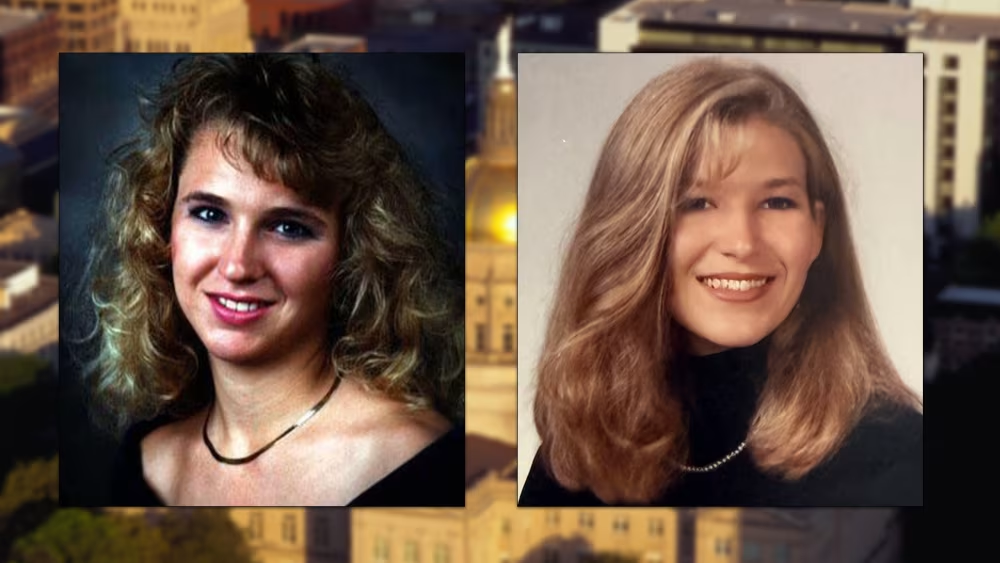
For decades, the families of homicide victims have lived with a painful question: What happened to their loved ones, and will anyone ever be held responsible? In Georgia, a new legislative effort has offered renewed hope to families whose cases have remained unsolved for years, sometimes stretching back generations.
The Coleman-Baker Act, named after the cases of Rhonda Coleman and Tara Baker, was designed to strengthen the investigation of cold cases across the state. By allocating $5 million to the Georgia Bureau of Investigation’s Cold Case Unit, the legislation provided additional resources to revisit investigations that might otherwise struggle to receive the attention, staffing, and specialized analysis they require.
Since the legislation passed, a handful of cold cases have reportedly moved closer to resolution or been solved, reinforcing the importance of sustained investigative work. Those developments have raised a question that continues to haunt Coleman’s loved ones and anyone following the case: Could the same renewed attention finally bring answers in her 1990 homicide?
The answer remains uncertain. Cold cases can be difficult to solve because witnesses may be unavailable, physical evidence may have deteriorated, and memories can fade over time. Yet advances in forensic science, improved investigative techniques, and renewed funding can give investigators opportunities that did not exist when the original crimes occurred.
For Rhonda Coleman, the hope is that the passage of time will not prevent investigators from discovering the truth.
What Is the Coleman-Baker Act?
The Coleman-Baker Act was established to improve Georgia’s ability to investigate unsolved homicides and other qualifying cold cases. Named after Rhonda Coleman and Tara Baker, whose cases illustrate the lasting consequences of unresolved violent crimes, the legislation draws attention to victims whose investigations have remained open without a definitive resolution.
Cold cases frequently present challenges that go beyond the passage of time. Investigators may have exhausted the most obvious leads, original witnesses may have moved away, and evidence collected decades earlier may require new testing or a fresh interpretation.
In some investigations, the original case files contain information that was never fully explored because of technological limitations. In others, investigators must reconstruct events using incomplete records and accounts from people who may remember only fragments of what happened.
The Coleman-Baker Act sought to provide greater support for this work by directing $5 million to the Georgia Bureau of Investigation’s Cold Case Unit.
That funding can help strengthen investigative capacity, including the personnel and specialized resources needed to examine older cases. The precise work undertaken in each investigation depends on the evidence available and the needs of the individual case.
The legislation also serves a symbolic purpose. By placing Coleman’s and Baker’s names in the title, it recognizes the victims and families whose experiences helped bring attention to the challenges of cold-case investigations.
For families who have spent years waiting for answers, the law represents an acknowledgment that an unsolved case should not automatically become a forgotten one.
Why Cold Cases Are So Difficult to Solve
A homicide investigation can become a cold case for many reasons. Sometimes investigators have no clear suspect. In other situations, the evidence points toward several possible explanations without providing enough information to establish what happened.
Time can make these problems more difficult.
Witnesses may die or become unable to provide reliable testimony. People who once lived in an area may relocate, making them harder to locate. Documents can be lost, and the details remembered by friends, neighbors, or relatives may become less precise with every passing year.
Physical evidence can also deteriorate. Biological material may have been stored under conditions that limit later testing, while older forensic methods may not have produced the detailed results investigators can obtain today.
However, time does not always destroy an investigation’s potential. Some evidence can be examined using modern techniques that were unavailable when it was first collected.
Investigators may also reconsider old witness statements, compare records with information from other cases, or identify inconsistencies that were overlooked during the original investigation.
A new investigator may approach a familiar case with different questions. Even a small detail that once seemed unimportant can become meaningful when considered alongside newer evidence.
This is why dedicated cold-case teams can be valuable. Their work allows investigators to return to unresolved crimes with a fresh perspective and, where possible, access to updated forensic resources.
How the $5 Million Investment Could Make a Difference
The allocation of $5 million to the Georgia Bureau of Investigation’s Cold Case Unit represents an investment in the time and expertise required to revisit complex investigations.
Cold-case work can be resource-intensive. Investigators may need to review thousands of pages of records, locate former witnesses, coordinate with local law enforcement agencies, consult forensic specialists, and arrange additional testing.
Each step takes time and can require specialized support.
Additional funding can help an agency prioritize cases, assign personnel, and pursue investigative opportunities that might otherwise be delayed by competing demands. It can also support the careful review of evidence, helping investigators determine which leads remain viable.
The impact of funding, however, should not be measured solely by the number of arrests or convictions that follow. Some investigations produce important new information without immediately identifying a suspect. Others establish that a previously suspected explanation is unlikely, allowing investigators to focus their efforts elsewhere.
A cold case may require years of additional work before a breakthrough occurs. Even with more resources, there is no guarantee that every homicide can be solved.
Nevertheless, dedicated funding can increase the likelihood that cases receive the attention they need. It can give investigators the opportunity to revisit evidence systematically instead of relying only on the resources available during the original investigation.
For Coleman’s case, the central question is whether the evidence that survives from 1990 can now provide answers that were unavailable to investigators at the time.
Rhonda Coleman’s 1990 Homicide Remains a Source of Questions
Rhonda Coleman’s homicide is one of the cases that helped inspire the legislation. Its inclusion in the act’s name ensures that her case remains part of the wider conversation about unsolved killings in Georgia.
For families affected by homicide, an unresolved investigation can create a painful form of uncertainty. The loss itself is devastating, but the absence of a clear account of what happened can make it difficult to find closure.
When a case remains open for decades, relatives may continue to wonder whether investigators have overlooked evidence, whether a witness knows something important, or whether someone who was once questioned might eventually provide new information.
The passage of the Coleman-Baker Act offers a reason to revisit those questions, but it does not mean that a breakthrough in Coleman’s case is guaranteed or imminent.
The publicly available information described in the legislation’s purpose does not, by itself, establish the current status of every investigative lead in her homicide. It would therefore be premature to suggest that investigators have identified a new suspect or discovered decisive evidence unless authorities confirm such developments.
What can be said is that the legislation was intended to strengthen the state’s capacity to examine cases like hers. That support creates an opportunity for renewed attention, especially if surviving evidence can benefit from modern forensic methods or a fresh review.
For those hoping for answers, even the possibility of a new investigative direction can be significant.
Could Modern Forensic Science Help Solve the Case?
Advances in forensic science have transformed some homicide investigations over the past several decades. Techniques that were once unavailable can now help investigators extract more information from certain types of evidence.
DNA analysis is one example. Depending on the quality, quantity, and condition of biological material, modern testing may be able to generate useful information from evidence that could not be analyzed successfully using older methods.
Other investigative tools can also be valuable. Fingerprint comparisons may benefit from improved databases and digital searching. Photographic evidence can sometimes be enhanced, while records from different agencies can be reviewed together to identify connections that were not apparent during the original investigation.
The availability of these techniques does not mean that every old case contains testable evidence. Some investigations have little or no biological material, and evidence that once existed may no longer be available or suitable for analysis.
Even when testing produces a result, investigators must interpret it carefully. A forensic finding may generate a lead without proving who committed a crime or establishing the full sequence of events.
In Coleman’s case, the potential value of modern science depends on what evidence remains, how it has been preserved, and whether additional analysis could answer questions that remain unresolved.
Those decisions are best made by investigators and forensic specialists familiar with the case file.
The Other Half of the Act’s Name: Tara Baker
The Coleman-Baker Act also recognizes Tara Baker, whose homicide represents another example of the long-term impact of an unsolved crime.
Naming legislation after victims can help ensure that their stories remain visible while policymakers address broader problems. In this case, the two names connect individual tragedies to a statewide effort to strengthen cold-case investigations.
The approach also highlights an important reality: no two cold cases are identical. Some may have surviving DNA evidence, while others depend primarily on witness accounts, historical records, or the reconstruction of a timeline.
A successful investigative strategy must reflect those differences. Funding can provide the resources needed to pursue several approaches, but investigators still have to determine which methods are appropriate for each case.
The inclusion of both Coleman and Baker therefore represents more than a symbolic gesture. It directs attention to the continuing needs of families whose cases have remained unresolved and to the work required to move those investigations forward.
Each case deserves to be assessed on its own evidence, without assuming that a breakthrough in one investigation automatically means another will soon follow.
Why Every New Cold-Case Breakthrough Matters
When an old homicide is solved, the result can have consequences far beyond a single arrest. It may give a family a clearer account of what happened, establish responsibility for a violent crime, and demonstrate that investigators can still make progress years after the original event.
A resolution may also encourage people with information to come forward in other cases. Someone who once believed that a detail was too old or too insignificant to matter may reconsider after seeing that an investigation remains active.
At the same time, successful cold-case work requires caution. Investigators must verify evidence, test competing explanations, and ensure that any case brought to court can be supported by the available proof.
The passage of time can make these responsibilities especially important. Memories may be imperfect, records may be incomplete, and people mentioned in old investigations may have died or become unavailable to answer questions.
A reliable resolution must be based on evidence rather than public pressure or the understandable desire of families to see a case closed.
The reported progress in several Georgia cold cases after the Coleman-Baker Act passed offers encouragement, but each investigation will follow its own path. The most meaningful measure of success is whether investigators can establish the facts and pursue justice responsibly.
What Happens Next for Rhonda Coleman’s Case?
The future of Coleman’s investigation depends on the evidence available and the leads investigators can develop. The additional resources associated with the Coleman-Baker Act may help support a renewed review, but the law itself does not determine the outcome of an individual case.
Potential next steps in a cold-case investigation can include examining the original files, reassessing witness statements, reviewing physical evidence, and identifying whether modern forensic analysis could provide useful information.
Investigators may also seek help from members of the public who remember the circumstances surrounding a crime or possess information that was never shared with authorities.
In older cases, even seemingly minor details can become relevant when placed alongside other evidence. A person may remember a conversation, an unusual vehicle, or an event that appeared unimportant at the time but could help clarify a timeline.
Anyone with information about an unsolved homicide should contact the appropriate law enforcement agency rather than attempting to investigate independently.
For Coleman’s loved ones, the central hope is that someone, somewhere, still has information that can help explain what happened in 1990.
Until investigators announce a verified development, it is important to distinguish the possibility of progress from a confirmed breakthrough.
Conclusion: Could the Coleman-Baker Act Finally Bring Answers?
The Coleman-Baker Act represents a significant effort to strengthen Georgia’s response to unsolved homicides. By allocating $5 million to the Georgia Bureau of Investigation’s Cold Case Unit, the legislation provides additional support for investigations that may have remained unresolved for decades.
The law’s namesakes, Rhonda Coleman and Tara Baker, represent the victims and families whose experiences helped draw attention to the need for sustained cold-case work.
Reports of progress in several investigations since the act passed have offered hope that renewed funding and focused attention can make a difference. Yet every case presents its own challenges, and success in one investigation cannot guarantee an immediate resolution in another.
For Rhonda Coleman’s 1990 homicide, the possibility of a breakthrough depends on whether investigators can uncover new leads, reinterpret existing evidence, or use modern techniques to answer questions that have remained unresolved.
There is no confirmed basis to promise that her case will be solved next. But the purpose of the legislation is to give cases like hers a stronger chance of receiving the attention and resources they deserve.
For families who have waited years for answers, that commitment matters. Time may complicate an investigation, but it does not diminish the importance of discovering the truth.
Whether Coleman’s homicide becomes the next case to be resolved remains an open question. The hope is that continued investigative work will eventually bring her family the answers they have sought for decades.