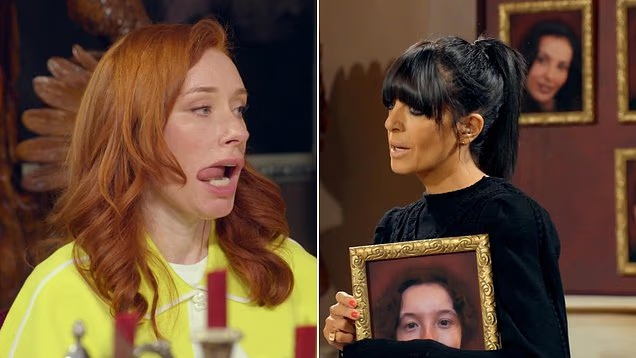
The BBC’s hit reality competition The Traitors has become one of television’s most talked-about programmes, captivating audiences with secret alliances, dramatic accusations, and the constant threat of betrayal. But behind the suspense that makes the show so popular, debates about language, audience sensitivity, and broadcasting standards have raised an intriguing question: how far should television producers go to avoid upsetting viewers?
Reports alleging that BBC executives considered restricting words such as “murder” and “kill” in connection with The Traitors have prompted discussion about the balance between responsible broadcasting and preserving the programme’s distinctive identity. The show revolves around deception and the fictional elimination of contestants, so language associated with death and betrayal is central to its format.
However, the precise circumstances behind any reported proposal matter. Without independently confirmed details about an actual directive, its scope, and the reasons behind it, claims that BBC bosses attempted to impose a complete ban should be treated cautiously rather than accepted as established fact.
The debate nevertheless highlights a wider issue facing television broadcasters. As programmes reach increasingly diverse audiences, producers must consider how their language might affect viewers while ensuring that creative decisions do not undermine the content people have chosen to watch.
Why Words Such as ‘Murder’ and ‘Kill’ Matter on The Traitors
At the heart of The Traitors is a simple but compelling premise. Contestants are divided into two groups: the Faithful, who must identify the hidden Traitors, and the Traitors themselves, who attempt to deceive the others while secretly eliminating players from the competition.
The programme uses murder as a fictional game mechanic. Contestants are not actually harmed; instead, the term describes the removal of a player from the competition through the show’s established rules.
This language has become an important part of the programme’s identity. The word “murder” communicates the seriousness of the Traitors’ secret decisions, while references to “killing” a contestant can convey the strategic consequences of eliminating a rival.
The dramatic vocabulary helps establish the show’s atmosphere. Its imposing castle setting, mysterious soundtrack, candlelit gatherings, and tense confrontations all contribute to the feeling that contestants are participating in an elaborate psychological game.
Replacing familiar terms with softer alternatives could potentially change that atmosphere. A phrase such as “remove a contestant” is technically clear, but it may not carry the same dramatic impact as the show’s established terminology.
At the same time, broadcasters routinely consider whether particular words are appropriate for a programme’s intended audience. The challenge is determining whether a change is genuinely necessary and whether it would improve the viewing experience without confusing audiences.
For a programme whose central premise depends on fictional murder and deception, any discussion about restricting these terms naturally invites questions about how far editorial caution should go.
The BBC’s Responsibility to Consider Audience Sensitivities
The BBC operates in a broadcasting environment where audience expectations, editorial independence, and public-service responsibilities all play important roles.
Television programmes can reach viewers of different ages, backgrounds, and personal experiences. Some may enjoy intense psychological drama, while others may prefer less explicit language or have particular sensitivities around subjects such as death and violence.
Broadcasters therefore need to consider context when deciding how content should be presented. A word used in a fictional competition does not necessarily have the same meaning or impact as the same word used in a graphic drama, a news report, or a documentary about a real tragedy.
The distinction is particularly important for The Traitors. Although the programme uses the language of murder, its eliminations are fictional elements within a structured game. Contestants understand the rules, and viewers are invited to follow the strategic consequences rather than interpret the events as real-world violence.
This context can make the language easier to understand. It also raises a reasonable question about whether changing familiar terminology would offer meaningful protection to viewers or simply weaken the show’s storytelling.
If a broadcaster were considering changes to established language, it would be important to understand the proposal itself. A restriction affecting promotional material aimed at children would be different from a blanket prohibition covering dialogue throughout the main programme.
Without clear information about the circumstances, it would be misleading to assume that any reported discussion amounted to an official BBC policy.
Could Softer Language Change the Identity of The Traitors?
One reason the alleged debate has attracted attention is that The Traitors relies heavily on atmosphere and presentation.
The programme is not simply a competition in which contestants answer questions or complete physical challenges. Its appeal comes from uncertainty, psychological pressure, and the possibility that a seemingly trustworthy player may be concealing a secret.
Language contributes to that experience. Words such as “murder,” “betrayal,” and “traitor” establish the stakes and help distinguish the programme from more conventional reality television.
If those terms were replaced with consistently softer expressions, the show could sound less distinctive. Viewers might still understand the rules, but some of the tension could be lost.
Consider the difference between saying that a player has been “murdered” and saying that they have been “removed from the game.” Both descriptions can communicate the outcome, yet they create different emotional effects.
The first belongs to the show’s established dramatic vocabulary. The second sounds more administrative and less connected to the mysterious world the producers have created.
That does not mean every use of intense language must be preserved in every situation. Television programmes can adapt their presentation for different audiences, and alternative wording may be appropriate in certain contexts.
The important question is whether a change serves a clear editorial purpose. A decision intended to improve accessibility or make a particular version suitable for younger viewers may be reasonable. A broad restriction introduced without a clear explanation could, by contrast, appear unnecessary to audiences familiar with the format.
The Wider Debate Over ‘Woke’ Television Decisions
The language surrounding the reported controversy also reflects a broader cultural debate about television and so-called “woke” decision-making.
Critics of excessive sensitivity argue that broadcasters sometimes risk prioritising the avoidance of complaints over creative freedom. From this perspective, removing ordinary words from a fictional competition could be seen as an unnecessary attempt to make entertainment less challenging or controversial.
Others argue that broadcasters have a responsibility to consider the impact of their output, especially when programmes attract audiences with different needs and expectations. They may view careful language choices as part of responsible editorial practice rather than evidence of censorship.
Both positions raise questions worth considering, but the discussion can become less productive when labels replace examination of the facts.
The word “woke” is often used as a criticism of decisions perceived to be overly cautious or driven by social concerns. However, applying that label to a particular BBC decision requires evidence about what was proposed, who proposed it, and why.
A rumoured restriction is not automatically proof that executives attempted to censor a programme. Equally, the fact that a broadcaster has editorial responsibilities does not mean every possible language restriction would be justified.
The details matter. Was the suggestion a formal policy, an informal discussion, a recommendation for a particular audience, or a misunderstanding of a more limited editorial decision? Each possibility would lead to a different interpretation.
Until those details are established, the broader debate should not be mistaken for confirmation of a specific ban.
Why Television Producers Must Balance Drama and Responsibility
The issue extends beyond The Traitors. Television producers regularly face decisions about how to present difficult subjects while maintaining the tone and purpose of a programme.
Crime dramas must depict criminal behaviour without suggesting that fictional events are real. News programmes need to report violence accurately while avoiding unnecessary sensationalism. Reality competitions must explain their rules clearly while preserving the entertainment value that attracts viewers.
These responsibilities do not always point in the same direction. A dramatic phrase may make a programme more engaging, while a more restrained expression may be suitable for a different audience or broadcast context.
The solution is usually to consider the circumstances rather than apply a single rule to every situation.
For The Traitors, the distinction between fictional elimination and real violence is especially important. The programme’s language is part of a game in which contestants knowingly participate, and the audience understands the central premise.
A sensible editorial approach would consider the intended audience, the surrounding dialogue, the scheduling context, and whether any proposed change addresses a genuine concern.
It would also recognise that viewers have different preferences. Some enjoy the programme precisely because of its theatrical darkness, while others appreciate the social strategy more than its ominous presentation.
Responsible broadcasting does not necessarily require removing every potentially uncomfortable word. It requires making informed decisions about how language functions within a particular programme.
The Importance of Separating Reports From Confirmed Facts
Stories about television censorship can generate strong reactions because they touch on questions of freedom, taste, and institutional responsibility.
However, headlines can sometimes present an alleged discussion as though a final decision has already been made. In this case, the claim that BBC bosses tried to ban “murder” and “kill” needs to be assessed against the available evidence.
There is an important difference between executives considering a suggestion and a broadcaster formally prohibiting particular words. There is also a difference between changing language in one promotional clip and imposing a rule across an entire series.
Establishing what happened would require reliable details about the reported proposal and any response from the BBC or the programme’s production team.
Until such information is available, readers should be cautious about interpreting the allegation as proof of an official censorship policy.
That caution does not prevent people from debating the underlying question. Audiences can reasonably discuss whether a proposed change would improve a programme, whether it would be necessary, and how it might affect the show’s identity.
Indeed, a more precise discussion is likely to be more useful than one based on assumptions about the motivations of unnamed executives.
What the Debate Means for the Future of The Traitors
The popularity of The Traitors demonstrates that audiences continue to respond to suspenseful entertainment built around deception, strategy, and uncertainty.
Its distinctive language and dramatic setting help create a world in which every conversation can carry hidden meaning. The prospect of secret murder missions gives the Traitors their defining role, while the Faithful must interpret clues and decide whom to trust.
Any significant change to that vocabulary would therefore deserve careful consideration. Producers would need to ask whether the alteration improves the experience for viewers or makes the format less clear and distinctive.
At the same time, television is not static. Broadcasters may adjust their presentation for different platforms, audiences, or broadcast circumstances. Such decisions are not necessarily evidence of a wider attempt to censor creative content.
The central issue is whether any proposed change is proportionate, clearly explained, and appropriate to the programme’s purpose.
For now, claims about a ban on the words “murder” and “kill” should not be treated as confirmed policy without stronger evidence. The wider debate, however, highlights the continuing challenge of balancing audience sensitivities with the creative freedom that allows distinctive programmes to flourish.
Conclusion: Can The Traitors Keep Its Edge Without Changing Its Language?
The suggestion that BBC executives considered restricting the words “murder” and “kill” on The Traitors has raised questions about editorial caution, audience sensitivity, and the future of dramatic television.
Those words are closely connected to the programme’s format, helping communicate the stakes of a competition built around secret eliminations and strategic deception. Changing them could affect the show’s distinctive atmosphere, although the consequences would depend on the scope and purpose of any proposed alteration.
The wider discussion also illustrates why accurate reporting matters. An alleged proposal should not automatically be described as an established ban, and the label “woke” does not explain the circumstances behind a decision on its own.
Broadcasters have legitimate reasons to consider their audiences, but creative decisions should also be proportionate and grounded in the needs of the programme.
Ultimately, The Traitors succeeds because it creates suspense, encourages viewers to question appearances, and makes uncertainty part of the entertainment. Whether any language-related proposal was seriously considered or not, the debate highlights a lasting challenge for television: protecting audiences where necessary without unnecessarily stripping a popular programme of the elements that make it compelling.