Today, driving across the United States is easier than ever. A network of modern highways connects major cities, rural communities, industrial centers, and remote regions, allowing millions of Americans to travel thousands of miles with relative convenience. Yet the vast Interstate Highway System that makes these journeys possible grew out of decades of planning, engineering, and political ambition.
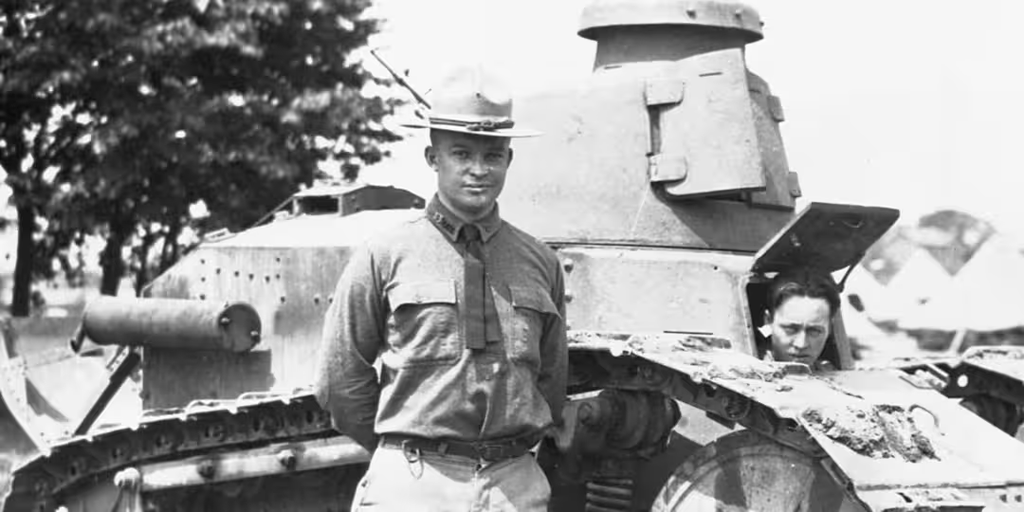
One important chapter in that story began in 1919, when a young U.S. Army officer named Dwight D. Eisenhower joined a military convoy traveling across the country. The journey lasted 62 days and exposed the enormous difficulties of moving people and equipment across an America whose roads were often rough, poorly maintained, and disconnected.
Eisenhower could not have known that he would eventually become president or that the experience would help shape his thinking about national transportation. But the expedition left a lasting impression. Decades later, as president, he championed the creation of a nationwide highway network that transformed American travel, commerce, and national defense.
The connection between Eisenhower’s early road trip and the Interstate Highway System is a story of endurance, technological change, and the power of firsthand experience to influence public policy.
The 1919 Military Convoy That Crossed America
In the summer of 1919, the United States Army organized an ambitious expedition to test the country’s ability to move military vehicles across the nation by road.
The convoy departed from Washington, D.C., on July 7, 1919, and traveled west toward California. Its destination was San Francisco, and its mission went beyond simply reaching the Pacific coast. Military planners wanted to understand how effectively trucks, automobiles, and other vehicles could travel across the country using the existing road network.
At the time, the United States had nothing resembling today’s interconnected interstate highways. Many roads were unpaved, narrow, or poorly maintained. Bridges could be inadequate for heavy vehicles, while steep grades, muddy surfaces, and unreliable maps complicated navigation.
The expedition included approximately 81 motor vehicles and a large group of military personnel. Among the officers participating was a 28-year-old Dwight D. Eisenhower, who had served in the Army during World War I.
The convoy traveled through a variety of landscapes, from established eastern roads to remote stretches of the American West. Its progress depended on weather conditions, the quality of the roads, mechanical reliability, and the ability of the vehicles to overcome obstacles.
The journey ultimately took 62 days, arriving in San Francisco on September 6, 1919.
For the participants, the experience demonstrated how difficult long-distance transportation could be when a nation lacked a reliable system of roads designed for continuous travel.
Why the Journey Was So Difficult
The most striking feature of the 1919 expedition was the contrast between the military’s ambitions and the condition of the country’s transportation infrastructure.
Modern drivers are accustomed to smooth pavement, clear road signs, fuel stations, repair services, and highways designed to handle heavy traffic. In 1919, many of these conveniences were limited or unavailable along long stretches of the route.
Vehicles had to negotiate muddy roads, rough terrain, steep hills, and damaged bridges. In some locations, the convoy struggled through conditions that would be considered unsuitable for ordinary automobile travel today.
Mechanical problems were another constant challenge. Trucks and other vehicles required repairs, and the expedition had to carry equipment and supplies to keep moving. A breakdown could delay not just one vehicle but the entire convoy.
The road conditions also affected speed. Rather than maintaining a steady pace, the participants frequently had to slow down, stop, or find ways around difficult sections.
The journey highlighted a major weakness in the nation’s transportation system: the roads connecting American communities were not necessarily suitable for moving large numbers of vehicles efficiently across long distances.
For military planners, this was more than an inconvenience. In a national emergency, the ability to move troops, supplies, equipment, and vehicles quickly could determine how effectively the country responded.
The convoy provided a practical demonstration of the challenges involved. It also showed how much more useful a coordinated national road network could be than a collection of disconnected local routes.
How Dwight D. Eisenhower Was Influenced by the Expedition
Dwight D. Eisenhower’s participation in the convoy became an important experience in his long military career.
Although the journey did not single-handedly create his later highway policies, it gave him firsthand exposure to the limitations of American roads. He saw how infrastructure could influence the movement of military equipment and how unreliable transportation could slow an operation.
Eisenhower continued his military career after the expedition, eventually becoming one of the most prominent Allied commanders of World War II. His wartime responsibilities required him to think about logistics, planning, communication, and the movement of enormous numbers of personnel and supplies.
During World War II, he also observed aspects of Germany’s autobahn network. Germany’s high-speed road system demonstrated the potential advantages of carefully planned highways connecting major regions.
These experiences helped shape Eisenhower’s broader understanding of transportation infrastructure. A modern road network could serve civilian travelers and businesses while also supporting national defense.
The connection between the 1919 convoy and Eisenhower’s later highway program was therefore cumulative. The expedition provided an early lesson in the problems caused by inadequate roads, while his military career exposed him to the strategic value of coordinated transportation networks.
By the time he entered the White House in 1953, Eisenhower had both personal experience and professional reasons to support a more ambitious national highway plan.
The German Autobahn and the Idea of Modern Highways
Eisenhower’s experience with European transportation helped reinforce his interest in highway development.
Germany’s autobahn system had demonstrated how roads designed for high-speed, long-distance travel could connect cities and support large-scale transportation. Eisenhower recognized that the United States could benefit from a similarly coordinated system, adapted to American geography and transportation needs.
The idea was not entirely new. American engineers, politicians, automobile organizations, and transportation advocates had been discussing improved highways for years. Federal road programs had already supported the development of national routes and better connections between states.
However, creating a comprehensive network required substantial funding, cooperation between federal and state governments, engineering standards, and a clear plan for connecting communities across the country.
Eisenhower’s experience gave him a strong reason to treat highway construction as a national priority rather than merely a local infrastructure issue.
He also understood that the benefits would extend beyond military transportation. Better roads could reduce travel times, improve commercial distribution, support economic growth, and make distant parts of the country more accessible.
The challenge was turning that vision into a program large enough to reshape the nation’s transportation system.
The Federal-Aid Highway Act of 1956
The major breakthrough came during Eisenhower’s presidency.
On June 29, 1956, he signed the Federal-Aid Highway Act, legislation that established the framework for developing what became the Interstate Highway System.
The law authorized an ambitious program of highway construction and created a funding structure that allowed the federal government to support the development of a nationwide network. A federal fuel tax helped finance the system, with revenue directed toward highway construction through the Highway Trust Fund.
The program was designed to connect major cities, improve interstate travel, and create roads capable of supporting modern traffic and national defense requirements.
The scale of the project was extraordinary. Engineers had to plan routes across mountains, deserts, forests, rivers, and densely populated urban areas. Construction required bridges, tunnels, interchanges, drainage systems, and extensive coordination among federal, state, and local authorities.
The Interstate Highway System was not completed overnight. It developed over decades, with individual sections opening as construction progressed.
Although the 1956 law is widely associated with Eisenhower’s leadership, the system was the product of many years of advocacy, engineering, legislation, and public investment. Eisenhower’s influence was important, but he was not the only person responsible for bringing the network into existence.
His presidency helped transform a longstanding transportation ambition into one of the largest infrastructure projects in American history.
How the Interstate Highway System Changed America
The Interstate Highway System fundamentally changed the way Americans traveled and transported goods.
Before its development, long-distance road journeys could involve unpredictable delays, difficult terrain, and complicated routes through towns and cities. Interstate highways made many trips faster and more reliable by providing direct connections between major destinations.
For businesses, the system improved the movement of products between factories, warehouses, ports, and retail centers. Trucks could travel more efficiently across state lines, helping support national distribution networks and the growth of interstate commerce.
The highways also influenced where people lived and worked. As travel became easier, suburban development expanded around many metropolitan areas. Communities that had once been relatively distant from major cities became more accessible to commuters.
Tourism benefited as well. Families could plan longer road trips with greater confidence, while businesses serving travelers developed along major routes.
However, the effects were not uniformly positive. Highway construction sometimes displaced residents, divided established neighborhoods, and contributed to the decline of some downtown commercial districts. In numerous cities, highway projects disproportionately affected Black communities and other historically marginalized neighborhoods.
The Interstate Highway System therefore represents both a major engineering achievement and a complicated chapter in American social and urban history.
Its legacy includes improved mobility and commerce, but also difficult questions about land use, environmental impacts, and the communities that bore the costs of construction.
Why National Defense Was Central to Eisenhower’s Vision
Although the Interstate Highway System became an essential part of everyday civilian life, national defense was a major justification for its development.
Eisenhower believed that a coordinated highway network could help the military move troops, equipment, and supplies across the country during a crisis. Roads built to modern standards would make it easier to transport heavy vehicles and respond to emergencies.
The system also reflected concerns about national resilience during the Cold War. A country with reliable transportation infrastructure could better coordinate resources and maintain connections between important regions.
The military purpose was not the only motivation, but it helped build support for a project that required substantial federal investment.
Eisenhower’s earlier experience with the 1919 convoy made the problem especially tangible. He had witnessed the difficulties of moving a large group of vehicles across a country where roads were not designed for efficient long-distance travel.
Nearly four decades later, the highway program offered a way to address many of those weaknesses on a national scale.
The Lasting Legacy of Eisenhower’s Epic Road Trip
The 1919 military convoy is often remembered as a formative experience in Eisenhower’s thinking about transportation. Its importance lies not in the idea that one journey directly produced the Interstate Highway System, but in how it illustrated the practical consequences of inadequate infrastructure.
Eisenhower later gained experience that reinforced those early lessons, including his wartime responsibilities and his observations of European highways. When he became president, he was positioned to support a national transportation program on a scale that had previously been difficult to achieve.
The Interstate Highway System that followed transformed American life. It connected regions, supported commerce, changed travel habits, and became an essential part of the country’s economic infrastructure.
Today, drivers may barely think about the engineering and political decisions behind the roads they use every day. Yet the system’s origins include the difficult experiences of people who traveled across the country before modern highways existed.
The expedition of 1919 remains a reminder that infrastructure often begins with recognizing a problem firsthand. A slow, exhausting journey across rough roads helped demonstrate what the United States lacked—and what a better-connected nation might achieve.
Conclusion: From a 62-Day Journey to a National Highway Network
Dwight D. Eisenhower’s 62-day military convoy across America in 1919 was far more than an arduous road trip. It was a practical test of the nation’s transportation capabilities and a revealing demonstration of the difficulties created by disconnected, unreliable roads.
The journey helped shape Eisenhower’s understanding of infrastructure, while his later military experience strengthened his belief in the value of a modern highway network. As president, he supported the Federal-Aid Highway Act of 1956, which established the foundation for the Interstate Highway System.
The resulting network reshaped American transportation, commerce, communities, and national defense. Its development involved countless engineers, workers, legislators, and public officials, but Eisenhower’s leadership helped turn the idea into a lasting national project.
The story of the Interstate Highway System shows how a difficult experience can influence a much larger vision. What began as a slow and challenging journey across early twentieth-century America ultimately became part of the foundation of modern American life.