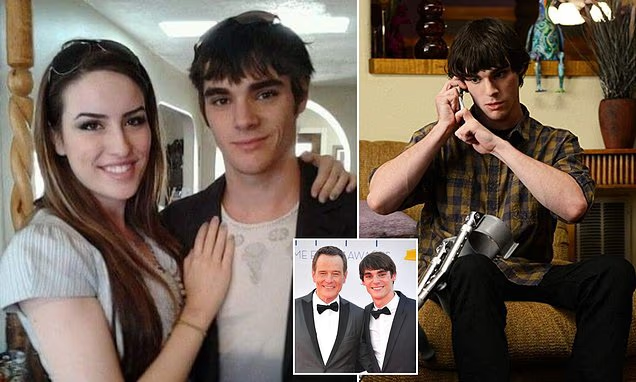
Reports about a celebrity’s memorial service can quickly attract public attention, particularly when a headline describes a grieving relative sharing an emotional tribute. A story claiming that RJ Mitte’s sister broke down at a memorial service in Texas, saying, “He was like a father to me,” would naturally prompt questions from fans about the actor, his family, and the circumstances behind the reported gathering.
However, before such a story can be presented as factual news, its central claims must be verified. As of the information available for this article, the reported memorial service and the quotation attributed to Mitte’s sister have not been independently established. It would therefore be misleading to describe the event as confirmed or to invent details about the family’s private grief.
Mitte is widely recognised for his role as Walter White Jr. in the acclaimed television drama Breaking Bad. His career has brought him international recognition, while his public advocacy has helped raise awareness of disability representation and opportunities for performers with disabilities.
The interest surrounding his name demonstrates how quickly emotionally charged headlines can spread. It also highlights why responsible entertainment reporting must distinguish confirmed information from unverified claims, especially when a story concerns an alleged death and the grief of surviving relatives.
Who Is RJ Mitte?
RJ Mitte is an American actor best known for portraying Walter White Jr., also known as Flynn, in Breaking Bad. The series became one of television’s most influential dramas, following chemistry teacher Walter White as his life changes dramatically after a cancer diagnosis leads him into the illegal drug trade.
Mitte’s character provided an important family perspective within the story. Walter White Jr. is a teenager navigating ordinary challenges while dealing with the increasingly complicated behaviour of his father and the consequences of the family’s changing circumstances.
One distinctive aspect of Mitte’s performance was that he has cerebral palsy, as does the character he portrayed. His casting helped contribute to a more authentic representation of disability on television, challenging assumptions about which performers should be considered for particular roles.
His work on Breaking Bad introduced him to a worldwide audience and helped establish him as an actor associated with both dramatic storytelling and disability advocacy.
Beyond the series, Mitte has pursued other acting opportunities and participated in conversations about accessibility, inclusion, and representation in the entertainment industry. His public profile has consequently extended beyond the character that first made him widely recognisable.
For fans who have followed his career, reports involving his family can therefore feel particularly personal. Nevertheless, the emotional significance of a story does not establish whether its central claims are accurate.
Why the Reported Memorial Story Has Attracted Attention
The headline claiming that Mitte’s sister became emotional during a Texas memorial service centres on a deeply personal statement: “He was like a father to me.”
Such words suggest a relationship defined by affection, guidance, and emotional support. If verified, a tribute of this kind could offer insight into the importance of a family member’s role in someone’s life.
The phrase also carries a familiar emotional meaning. In many families, an older sibling can become a source of stability, encouragement, and practical support. That relationship may sometimes resemble a parental bond, particularly when the siblings have shared difficult experiences or one has taken on additional responsibilities.
Yet it is important not to assume that these circumstances apply to Mitte’s family simply because they appear in a headline. Without reliable confirmation of the memorial, the speaker’s identity, and the quotation’s context, the statement cannot responsibly be attributed to his sister as an established fact.
Entertainment reporting sometimes relies on headlines that emphasise emotional language to encourage attention. Readers may encounter a striking quotation before seeing evidence that the event occurred.
The appropriate response is to establish the basic facts first. Has the actor’s death been confirmed by a reliable representative or family statement? Has a memorial service been independently documented? Is the quotation traceable to a credible interview or eyewitness account?
These questions are especially important when the report could cause distress to relatives, friends, and fans.
The Importance of Family Bonds in Difficult Times
Although the specific memorial report remains unverified, the subject of sibling relationships is one that resonates with many readers.
Brothers and sisters can occupy several roles throughout life. They may be companions during childhood, confidants during adolescence, and sources of practical or emotional support in adulthood. In some families, an older sibling becomes a mentor who helps a younger brother or sister navigate challenges.
Describing someone as “like a father” can express gratitude for that kind of support. It may refer to guidance, protection, encouragement, or the feeling that another person was consistently present when help was needed.
Such relationships are not identical in every family. Some siblings remain close throughout their lives, while others develop different forms of connection as circumstances change. The meaning of a particular relationship is best understood through the experiences of the people involved.
When a genuine loss occurs, family members may choose to share memories publicly, keep their grief private, or combine the two approaches. There is no single correct way to mourn, and public attention can make an already difficult experience more complicated.
For that reason, reporting on an alleged memorial should be handled with care. A relative’s grief should never be invented or presented as a verified quotation merely to make a story more compelling.
RJ Mitte’s Influence on Disability Representation
One of the most significant aspects of Mitte’s public career is his contribution to conversations about disability in entertainment.
Historically, actors with disabilities have faced barriers to employment, limited opportunities, and assumptions about the kinds of characters they can portray. In some productions, disabled characters have been played by non-disabled actors, while performers with disabilities have struggled to access roles that reflect the full range of human experience.
Mitte’s role in Breaking Bad helped bring greater visibility to an actor with cerebral palsy in a major television production. His work demonstrated that a disability need not define every aspect of a character or limit the dramatic possibilities available to a performer.
His advocacy has also helped draw attention to accessibility and the importance of creating opportunities for disabled people across the entertainment industry.
Representation matters because television and film influence how audiences understand people whose experiences may differ from their own. When disabled performers appear in complex, substantial roles, they can challenge stereotypes and encourage more inclusive approaches to casting.
That contribution forms an important part of Mitte’s public legacy as an actor. It can be discussed and appreciated without relying on unverified claims about his personal circumstances.
How Fans Can Respond to Unconfirmed Celebrity Death Reports
When a headline announces an alleged death or memorial service, readers may feel an immediate urge to share the news. Emotional language can make that reaction even stronger, especially when the story includes a relative’s apparent tribute.
However, sharing an unverified report can unintentionally spread misinformation and cause unnecessary distress.
A responsible approach begins with checking reliable sources. Official statements from a family representative, an established publicist, or a verified account may help clarify the situation. Reputable news organisations can also provide context and explain whether a report has been independently confirmed.
Readers should pay particular attention to the difference between a headline and the evidence supporting it. A quotation without a named source, a memorial photograph without context, or a social media post that repeats another unverified claim may not provide sufficient confirmation.
It is also important to consider the date of a report. Older articles can circulate again without clear explanations, while fabricated stories may imitate the style of legitimate entertainment journalism.
If the information cannot be verified, the most responsible decision is to avoid presenting it as fact.
This approach does not diminish genuine grief or the importance of remembering public figures. Instead, it respects the people involved by ensuring that serious claims are reported accurately.
A Career That Deserves More Than a Sensational Headline
Mitte’s career is significant for reasons that extend beyond celebrity attention. His performance in Breaking Bad remains a defining part of his professional identity, and his public advocacy has helped keep disability representation in the wider entertainment conversation.
Those achievements offer substantial subjects for discussion without requiring speculation about his family or personal life.
A meaningful profile of an actor can explore the roles that shaped his career, the challenges of working in a competitive industry, and the broader cultural impact of his performances. It can also consider how performers use their public platforms to support greater inclusion.
Such coverage provides readers with information that remains valuable regardless of whether a dramatic headline proves accurate.
When reporting concerns an alleged death, however, the standard must be especially high. A false report can affect not only the person named in the story but also relatives, friends, colleagues, and audiences who have followed that individual’s work.
The most compelling entertainment journalism is not necessarily the most sensational. It is journalism that combines human interest with accuracy, context, and respect.
Conclusion: Accuracy Matters When a Story Involves Family Grief
The headline claiming that RJ Mitte’s sister broke down at his Texas memorial service, describing him as “like a father,” presents an emotional story about family love and loss. Yet the reported death, memorial, and quotation require independent confirmation before they can be treated as established facts.
Mitte is known for his role in Breaking Bad and for helping raise the profile of disability representation in entertainment. His professional achievements provide a meaningful basis for celebrating his work and examining his influence.
The broader themes suggested by the headline—sibling devotion, family support, and the emotional significance of close relationships—are powerful because they reflect experiences shared by many people. But those themes should not be used to attribute unverified events or statements to a real family.
Until reliable evidence confirms the details, the responsible approach is to distinguish the claim from established information. Doing so protects the integrity of the reporting and respects the privacy of the people who may be affected.
Ultimately, a story about grief deserves more than an attention-grabbing headline. It deserves accuracy, compassion, and a commitment to ensuring that the words attributed to real people reflect what they actually said.