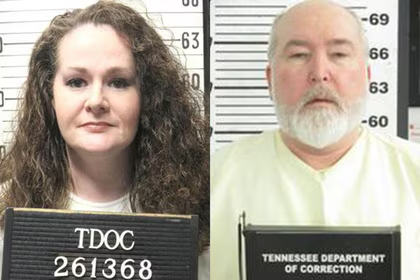
A controversial execution involving convicted killer Christa Pike has renewed scrutiny of lethal injection procedures and raised questions about the future of capital punishment in the United States. The incident has also drawn attention to the case of Gary Wayne Sutton, a Tennessee death-row inmate convicted alongside his uncle, James Dellinger, in connection with the 1992 killing of Tommy Griffin and the subsequent death of Griffin’s sister.
The reported disruption surrounding Pike’s execution has brought renewed focus to the challenges correctional authorities face when carrying out death sentences. Questions about medical protocols, execution procedures, and the possibility of further delays have become particularly significant as officials continue to review how capital punishment is administered.
Sutton’s case is especially disturbing because prosecutors described two killings occurring on consecutive days. Griffin was killed in 1992, and his sister was murdered the following day after she went looking for her missing brother. Sutton and Dellinger were convicted in connection with the crimes, leaving families and communities to deal with the consequences of the violence.
However, the precise relationship between Pike’s reported execution problems and any decision involving Sutton’s scheduled execution requires careful clarification. An incident involving one death-row inmate does not automatically suspend another inmate’s execution nationwide or establish that a particular execution has been formally postponed.
The cases nevertheless raise important questions about the reliability of execution procedures, the legal safeguards surrounding capital punishment, and the continuing debate over whether lethal injection can be administered consistently and humanely.
Christa Pike’s Case and the Controversy Surrounding Lethal Injection
Christa Gail Pike became one of the most widely discussed female death-row prisoners in the United States after her conviction for the 1995 murder of Colleen Slemmer, an 18-year-old fellow student in Tennessee.
Pike was 18 at the time of the crime, which took place in Knoxville. The case attracted national attention because of the brutality described during the investigation and trial, as well as Pike’s age and the circumstances surrounding the killing.
She was convicted of first-degree murder in 1996 and sentenced to death. Her case subsequently became the subject of years of legal proceedings, appeals, and public debate about the death penalty.
Lethal injection is the primary execution method used in many American jurisdictions, but it has repeatedly faced scrutiny. Critics have raised concerns about the drugs used, the training of execution personnel, access to medical expertise, and the difficulty of determining whether an execution will proceed as intended.
A botched or interrupted execution can intensify those concerns. If an execution team cannot establish intravenous access, if the drugs fail to produce the expected effects, or if officials encounter other medical complications, the procedure may need to be paused while authorities assess the situation.
However, claims about a particular execution must be supported by reliable information about what occurred. It is important to distinguish between an execution that has been formally scheduled, one that has begun, and one that has been postponed or interrupted.
Without confirmed details establishing the exact circumstances of Pike’s reported execution, it would be premature to state that a specific medical failure occurred or that it directly caused Sutton’s execution to be suspended.
Who Is Gary Wayne Sutton?
Gary Wayne Sutton is associated with a Tennessee double-murder case dating back to 1992. He was convicted alongside his uncle, James Dellinger, in connection with the killing of Tommy Griffin and the subsequent murder of Griffin’s sister.
According to the account of the crimes, Griffin was killed first. His sister then went looking for him the following day and was also killed.
The sequence of events made the case particularly disturbing. What began as the disappearance of a man developed into a second tragedy when a family member searching for him became a victim herself.
The investigation led authorities to Sutton and Dellinger, who were prosecuted in connection with the killings. Their convictions placed the case among the serious violent-crime prosecutions that have continued to attract attention in discussions about Tennessee’s use of the death penalty.
Details about the defendants’ individual roles, the evidence presented at trial, and the subsequent appeals are essential to understanding the case accurately. The fact that two people were convicted does not mean their actions or legal circumstances were necessarily identical.
Likewise, any current information about Sutton’s execution date, legal status, or possible reprieve must be established through official records. Such details can change as courts consider appeals, authorities review execution protocols, or legal challenges are filed.
The 1992 Killings That Shocked Investigators
The deaths associated with Sutton and Dellinger involved two victims and a sequence of events that added to the gravity of the case.
Tommy Griffin was killed in 1992. The next day, his sister reportedly came looking for him and was also killed. Her search for her brother ended in another act of violence, turning an already serious crime into a double tragedy.
For the victims’ relatives, the killings meant losing two family members in circumstances that were both violent and deeply distressing. The deaths also placed pressure on investigators to establish what had happened and determine whether the same individuals were responsible for both crimes.
Cases involving multiple killings can require investigators to reconstruct events across different locations and time periods. Evidence may include witness statements, physical findings, forensic analysis, and testimony about the relationships between the people involved.
At trial, prosecutors must establish the elements of the charged crimes under the relevant legal standards. The defence, in turn, has the opportunity to challenge the prosecution’s account and present arguments concerning the evidence.
The convictions in Sutton’s case followed that legal process. However, the full history of the case—including any appeals and later rulings—must be considered before drawing conclusions about its current status.
The passage of time does not lessen the importance of the victims’ lives or the consequences their deaths had for their families. It does, however, mean that present-day claims about the case should be checked against the established record.
Why a Problem With One Execution Can Raise Wider Questions
An execution that encounters unexpected difficulties can prompt authorities to examine procedures beyond the individual case.
Lethal injection depends on a carefully controlled process involving trained personnel, medical supplies, and a series of steps intended to produce death. If officials encounter complications, the incident can lead to questions about preparation, training, equipment, and the drugs being used.
The effects may extend beyond the inmate whose execution is affected. Correctional departments may review their protocols, courts may receive new legal challenges, and scheduled executions may be reconsidered if officials determine that additional preparation or review is necessary.
However, any pause involving other inmates depends on the decisions of the relevant authorities. There is no automatic nationwide rule under which a problem during one execution necessarily suspends all other executions.
In Sutton’s case, determining whether an execution was paused because of Pike’s reported experience would require confirmation from the Tennessee Department of Correction, relevant court records, or other authoritative statements.
This distinction matters because execution schedules are governed by specific legal orders and state procedures. A delay can result from a court injunction, a clemency decision, a change in the state’s execution timetable, or an administrative review.
Without confirmation of the official reason for a delay, it would be misleading to attribute it directly to another inmate’s execution.
The Ongoing Debate Over Lethal Injection
Lethal injection was introduced in the United States as an alternative to older execution methods. Supporters argued that it could provide a more controlled and less visibly violent means of carrying out death sentences.
Over time, however, the method has faced significant criticism. Reports of prolonged procedures, difficulties establishing intravenous access, and uncertainty about the effects of execution drugs have raised questions about whether the method reliably achieves its intended purpose.
Another challenge is the changing availability of drugs. Pharmaceutical manufacturers have restricted the use of certain products in executions, leading some states to adopt different drug combinations or alternative protocols.
These changes have generated legal disputes about secrecy, medical standards, and the constitutional prohibition against cruel and unusual punishment. Courts have had to consider claims about the risk of unnecessary suffering alongside the legal authority of states to carry out sentences imposed by the judiciary.
Supporters of capital punishment argue that states must be able to enforce lawful death sentences, particularly in cases involving especially serious crimes. Opponents argue that the risks of error, unequal application, and potential suffering make the death penalty fundamentally problematic.
An interrupted or reportedly botched execution can intensify this disagreement. Yet the facts of each incident remain important, and broad conclusions should not be drawn without reliable documentation of what happened.
What Could Happen Next in Sutton’s Case?
If Sutton’s execution has been formally postponed, the next steps would depend on the official basis for that decision.
A court-ordered stay could require further legal proceedings before a new date is considered. An administrative delay could involve a review of the state’s execution procedures. A clemency decision or other legal development could also affect whether the sentence proceeds.
The distinction between a temporary delay and a permanent change in sentence is significant. A pause does not necessarily mean that a death sentence has been overturned, and a new execution date cannot be assumed without an official announcement.
Sutton’s legal representatives may continue to pursue any available appeals or other remedies, subject to the applicable deadlines and legal requirements. State officials, meanwhile, would need to follow the relevant court orders and execution policies.
For the victims’ relatives, further delay may bring renewed uncertainty. Families affected by homicide often seek a clear resolution, although the legal process can continue for years after a conviction.
Any decision about Sutton’s sentence must nevertheless be based on the law and the facts of his case, rather than assumptions about another inmate’s reported execution difficulties.
Conclusion: Execution Controversy Raises Questions About Justice and Procedure
The reported problems surrounding Christa Pike’s lethal injection have renewed attention to the risks and controversies associated with capital punishment. At the same time, the case of Gary Wayne Sutton recalls the devastating consequences of the 1992 killings of Tommy Griffin and his sister.
Sutton was convicted alongside his uncle, James Dellinger, in connection with the two deaths. The circumstances described in the case are especially troubling because Griffin’s sister was killed the day after her brother, when she went looking for him.
Nevertheless, the claim that Pike’s reported execution difficulties directly caused Sutton’s execution to be paused requires confirmation. Execution schedules are determined through specific legal and administrative decisions, and one case does not automatically dictate what happens in another.
The wider debate over lethal injection remains significant. Questions about medical procedures, the reliability of execution protocols, and the constitutional limits on punishment continue to influence discussions about the death penalty in the United States.
For the families affected by the 1992 killings, the central concern remains justice for the victims. For authorities, any decision about an execution must comply with the law and the relevant procedures.
Until the circumstances of the reported pause are officially clarified, the most responsible conclusion is that the cases highlight serious questions about capital punishment—but the precise connection between Pike’s experience and Sutton’s execution status should not be treated as established fact.