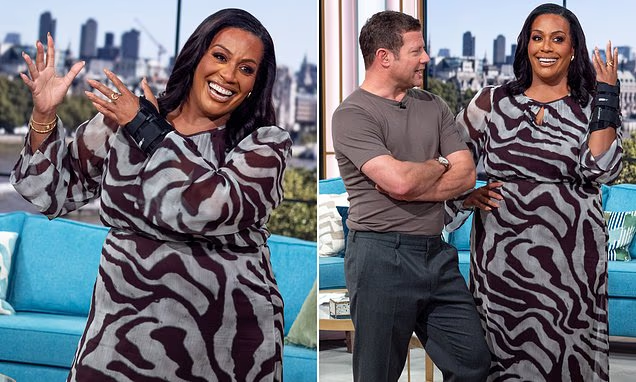
Alison Hammond has attracted attention after appearing with wrist support and revealing that she had suffered a fall, adding another personal health concern to a period that has already included an emotional moment on live television. The popular British presenter, best known for her work on This Morning and The Great British Bake Off, has built a loyal following through her warm personality, infectious laughter, and ability to make guests feel comfortable. News of her fall has therefore prompted concern among viewers who are accustomed to seeing her bring energy and humor to the screen.
The development comes around two weeks after Hammond reportedly experienced a panic attack during a live television appearance. While live broadcasting can be demanding for presenters, unexpected moments can be especially difficult when they occur in front of a large audience. Her recent experiences have drawn attention to the pressures that television personalities can face while balancing demanding schedules with their personal well-being.
Although the appearance of a wrist support naturally raises questions about an injury, it is important not to assume more than has been publicly established. Details about the circumstances of Hammond’s fall, the extent of any injury, and her recovery should be distinguished from speculation. For now, the situation offers an opportunity to consider the importance of taking care of oneself, even for people whose professional lives involve entertaining others.
Alison Hammond Reveals She Suffered a Fall
Alison Hammond’s appearance wearing wrist support has prompted interest because it represents a departure from the cheerful, energetic image many viewers associate with the presenter. Known for her lively interviews and spontaneous reactions, she has become a familiar face on British television over several decades.
The revelation that she had suffered a fall naturally raises questions about how the incident happened and whether she sustained an injury to her wrist. However, without further confirmed details, it would be premature to draw conclusions about the seriousness of the incident or the treatment she may need.
Wrist supports are commonly used for different reasons, including providing stability and comfort after an injury. Their appearance alone does not establish whether someone has a fracture, sprain, or another condition. A proper assessment by a healthcare professional is needed to determine the nature of any injury.
For public figures, even a relatively ordinary health issue can attract considerable attention. A visible support or bandage may prompt questions from viewers who want to know whether their favorite presenter is feeling better. At the same time, wearing a support does not necessarily mean someone must stop working or cancel every professional commitment.
The most important consideration is Hammond’s well-being and whether she has the appropriate medical advice and time to recover. Until more information is confirmed, the circumstances of the fall and its consequences should be treated carefully rather than exaggerated.
The Fall Comes Two Weeks After a Live Television Panic Attack
The timing of Hammond’s reported fall has drawn additional attention because it follows a panic attack that she reportedly experienced during a live television appearance approximately two weeks earlier.
Live television involves a unique combination of preparation, timing, communication, and the need to respond quickly when something unexpected happens. Presenters must often keep conversations moving while working around tight schedules, production instructions, and the demands of a live audience.
When a difficult moment occurs during a broadcast, there may be little opportunity to step away from the cameras immediately. The presenter may need to pause, regain composure, or rely on colleagues to help manage the situation.
A panic attack can be frightening for the person experiencing it. Symptoms may include a racing heartbeat, sweating, trembling, dizziness, breathlessness, and an intense feeling of fear. These symptoms can occur suddenly and may feel overwhelming, even when there is no immediate external danger.
However, the experience varies from person to person, and a single reported panic attack does not automatically indicate a long-term mental health condition.
The connection between Hammond’s reported panic attack and her subsequent fall also remains unclear. The fact that the events occurred within a relatively short period does not establish that one caused the other. Without confirmed medical information, it would be inappropriate to suggest that the fall resulted from stress, exhaustion, or the earlier episode.
What can be said is that the two developments have encouraged viewers to pay closer attention to the presenter’s well-being.
Who Is Alison Hammond?
Alison Hammond has become one of the most recognizable personalities in British entertainment. She first gained widespread public attention after appearing on Big Brother in 2002, where her outgoing personality and humor helped her stand out among the contestants.
Following her reality television appearance, Hammond developed a career as a presenter and television personality. Her natural conversational style made her particularly effective in interviews, where she often creates an atmosphere that encourages guests to relax and speak openly.
Her work on ITV’s This Morning helped establish her as a regular presence in British households. Over the years, she has interviewed actors, musicians, television personalities, and other public figures, often becoming part of the entertainment through her own reactions and playful exchanges.
Hammond has also worked on other programs, including The Great British Bake Off, where she joined the presenting team and brought her trademark warmth to the competition. Her ability to connect with contestants and audiences has helped broaden her appeal beyond daytime television.
Unlike presenters whose public personas are built around formality, Hammond is often praised for being approachable and spontaneous. Her laughter, enthusiasm, and willingness to embrace humorous situations have become defining features of her television style.
That connection helps explain why reports about her health attract attention. Viewers who have watched her for years may feel a sense of familiarity with her, even though they do not know her personally.
The Pressure of Working in Live Television
Hammond’s reported experience also highlights the demanding nature of live broadcasting. While viewers see the finished program, presenting a live show requires concentration, flexibility, and the ability to manage unexpected developments in real time.
Schedules can be tightly controlled, interviews may change direction, and presenters sometimes need to respond immediately to technical problems or surprising comments. They must also remain aware of the audience, their co-presenters, production staff, and the wider tone of the program.
For experienced broadcasters, these demands may become familiar, but familiarity does not eliminate pressure. Even confident presenters can have difficult days, feel overwhelmed, or experience unexpected physical or emotional symptoms.
Television personalities are also public-facing workers. Their performances are watched and discussed by large audiences, and even brief moments can circulate widely online. That visibility can make ordinary human experiences feel much more exposed.
It is important, however, not to assume that every difficult moment on television is caused by workplace pressure. A panic attack can have multiple contributing factors, and the cause of Hammond’s reported experience has not been established by the information available here.
The broader lesson is that professional experience does not make someone immune to stress or health concerns. People who spend their working lives entertaining others still need opportunities to rest, seek help when necessary, and prioritize their own well-being.
What a Wrist Support Can Mean After a Fall
Seeing someone wear wrist support after a fall may lead viewers to wonder whether the person has suffered a serious injury. In reality, the meaning of a wrist support depends on the circumstances and the medical advice given.
A fall can place pressure on the hands and wrists, particularly when someone instinctively reaches out to break the impact. Depending on the force and position of the fall, the result may range from temporary soreness to a more significant injury.
A wrist support may be recommended to limit certain movements, provide comfort, or help protect the area while it recovers. It does not necessarily indicate a fracture, and it cannot reveal the full extent of an injury by itself.
People recovering from wrist injuries may be advised to avoid certain activities, follow medical guidance, or attend further assessments if symptoms persist. The appropriate approach depends on the injury and the individual’s circumstances.
For Hammond, the presence of wrist support is a visible detail, but it should not be treated as a medical diagnosis. Unless she or an authorized representative shares more information, the specific nature of the injury and the expected recovery period remain uncertain.
Respecting that distinction helps prevent unnecessary alarm and allows the presenter to share personal details at her own pace.
Why Fans Are Concerned About Alison Hammond
Public affection for Hammond is closely tied to the personality she brings to television. Her humor and enthusiasm have made her a familiar presence, and viewers often appreciate the way she can turn an ordinary interview into an entertaining exchange.
When a well-known presenter experiences a difficult moment, audiences may respond with concern because it contrasts with the upbeat image they usually see. This reaction is understandable, although it is also important to remember that television only offers a partial view of a person’s life.
Hammond does not need to be cheerful at every moment simply because her job involves entertaining people. Like anyone else, she may experience discomfort, uncertainty, or personal challenges that are not visible during most broadcasts.
A supportive public response can acknowledge the concern without demanding private medical details. Messages wishing her well can be kind, but speculation about the cause of her fall or the meaning of her panic attack may create unnecessary pressure.
The distinction is particularly important when discussing mental health. Panic attacks are real experiences, but they should not become a reason to label someone, assume they are unable to work, or draw conclusions about their overall health.
For a presenter who has spent years making audiences laugh, a little understanding may be more helpful than intense scrutiny.
The Importance of Mental and Physical Well-Being
The combination of a reported panic attack and a subsequent fall has prompted renewed interest in Hammond’s health, but the two events should be considered separately unless reliable information establishes a connection.
Physical injuries can require rest and treatment, while panic attacks may benefit from appropriate support and an assessment of possible triggers. Neither experience should automatically be viewed as a sign of personal weakness.
People sometimes feel pressure to continue working despite discomfort, particularly when others depend on them or when their professional responsibilities are highly visible. Yet taking symptoms seriously and seeking suitable medical advice can help people make informed decisions about their health.
For people who experience panic attacks, a healthcare professional can help assess the symptoms and discuss possible approaches to managing them. New or severe symptoms should not automatically be attributed to anxiety, since some physical conditions can produce similar sensations.
Likewise, someone who has fallen and experiences significant pain, swelling, restricted movement, numbness, or worsening symptoms should seek appropriate medical assessment rather than relying on a support alone.
These general considerations are not a diagnosis of Hammond’s condition. They simply underline why it is important to approach both physical and mental health concerns with care and without assumptions.
What Happens Next for Alison Hammond?
At present, the most responsible approach is to avoid predicting Hammond’s recovery or making assumptions about how her recent experiences will affect her television schedule.
A wrist injury can vary considerably in severity, and the appropriate recovery period depends on its nature. The same principle applies to emotional health: people respond differently to difficult experiences, and there is no single timetable that fits everyone.
Hammond has established herself as a versatile presenter with experience across daytime television and entertainment programming. Her career has included a wide range of formats, and her appeal is rooted in her personality rather than simply in her ability to appear on camera every day.
If she needs time to recover or chooses to share more about her experience, viewers can give her that space. Until further confirmed details emerge, it would be unhelpful to speculate about medical restrictions, missed appearances, or long-term consequences.
The priority should remain her health and the privacy she may wish to maintain around personal matters.
Conclusion: A Reminder That Television Personalities Need Care Too
Alison Hammond’s appearance wearing wrist support after reportedly suffering a fall has attracted attention, particularly because it comes around two weeks after a reported panic attack during a live television appearance.
The developments have prompted concern among viewers who know Hammond for her humor, warmth, and energetic presence on programs such as This Morning and The Great British Bake Off. However, the precise circumstances of the fall, the nature of any wrist injury, and the relationship—if any—between the two events should not be assumed without reliable confirmation.
The story also offers a broader reminder that public figures are people, not simply personalities who appear on screen. A presenter may bring laughter and reassurance to millions of viewers while managing private challenges of their own.
For now, the most appropriate response is to wish Hammond well, respect her privacy, and allow any confirmed information about her recovery to emerge in due course. Her audience can continue to appreciate the work she has shared with them without expecting her to explain every personal difficulty.
Ultimately, the concern surrounding Hammond’s recent experiences reflects the connection she has built with viewers. That connection is best expressed through kindness, patience, and an understanding that everyone deserves time and support when dealing with a health concern.