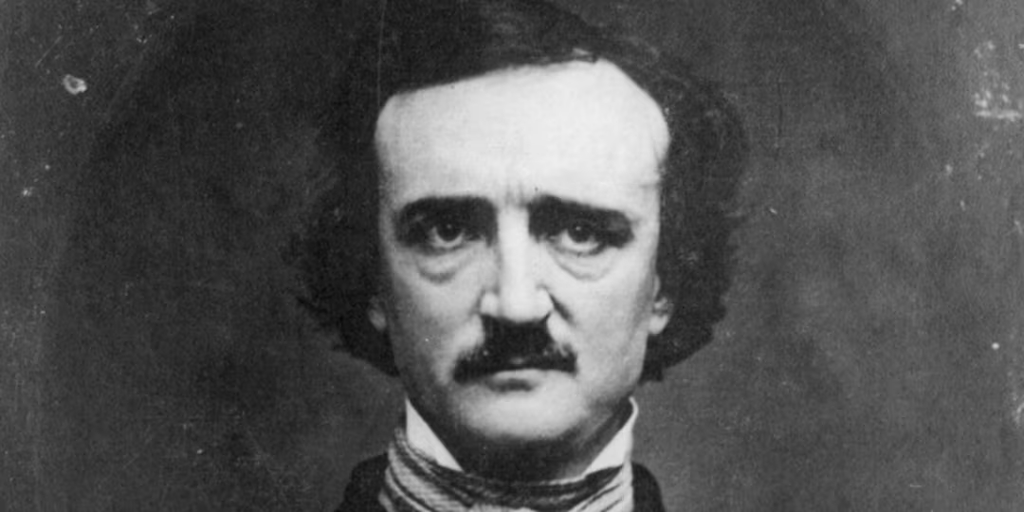
Edgar Allan Poe remains one of the most influential figures in American literature, celebrated for his haunting poems, mysterious stories, and unforgettable contributions to Gothic horror. Best known for works such as The Raven, The Tell-Tale Heart, The Fall of the House of Usher, and The Murders in the Rue Morgue, Poe helped shape the modern detective story while exploring the darkest corners of the human mind.
Although Poe died in 1849, his legacy continues to draw readers, literary enthusiasts, and curious travelers to places connected with his life. From historic homes and museums to university campuses and final resting places, these locations offer a chance to understand the writer beyond the pages of his fiction.
Poe’s life was marked by personal tragedy, financial difficulties, professional ambition, and a restless search for stability. He lived in several American cities, worked as an editor and critic, and developed a literary style that combined psychological suspense with an intense atmosphere of dread.
For travelers interested in literary history, visiting places associated with Poe can be an especially memorable experience. These eight destinations reveal different chapters of his life, from his early years in Virginia to his literary career in Baltimore and his final days.
1. Edgar Allan Poe Museum in Richmond, Virginia
<escape></escape>Richmond, Virginia, holds a special place in Poe’s story. Although he was born in Boston in 1809, Poe spent part of his childhood in Richmond after the death of his parents left him orphaned at a young age.
The Edgar Allan Poe Museum in Richmond offers one of the most comprehensive introductions to his life and work. Located in the city’s historic Shockoe Bottom neighborhood, the museum preserves manuscripts, personal belongings, memorabilia, and other materials connected with the author.
Visitors can explore exhibits documenting Poe’s childhood, literary career, and enduring influence. The museum also provides context for understanding the relationship between his personal experiences and the themes that appear throughout his writing.
Poe’s childhood in Richmond was shaped by his relationship with John and Frances Allan, the wealthy couple who took him into their household. Although John Allan never formally adopted Poe, the family connection influenced the young writer’s education and early opportunities.
The museum helps visitors understand that Poe’s life was not simply a succession of mysterious events. He was also a working writer who struggled to earn a living, build professional relationships, and establish a reputation in a competitive literary world.
For anyone beginning a journey through Poe’s history, the Richmond museum is an ideal starting point. It provides the background needed to appreciate the other places associated with his life.
2. Edgar Allan Poe National Historic Site in Philadelphia, Pennsylvania
Philadelphia was an important chapter in Poe’s literary career. He lived in the city with his wife, Virginia Clemm, and his mother-in-law, Maria Clemm, during the 1840s, a period when he produced some of his most celebrated short stories.
The Edgar Allan Poe National Historic Site preserves a historic house associated with his time in Philadelphia. Although the exact details of his daily life there are not fully documented, the property offers a tangible connection to the period in which he developed many of his ideas about psychological horror and suspense.
Poe’s Philadelphia years were professionally productive. He worked in literary journalism and contributed to magazines while continuing to write fiction and poetry. His stories from this period include works that explore fear, guilt, obsession, and the instability of perception.
The house is especially interesting because it is relatively modest. It offers a contrast with the grand, elaborate settings that readers might imagine when thinking about a famous literary figure.
Poe did not live a life of constant luxury or comfort. Like many writers of his era, he faced financial uncertainty and depended on publishing opportunities that could be unpredictable.
A visit to the historic site helps place his achievements within that practical reality. His literary imagination was extraordinary, but the circumstances surrounding his work were often difficult.
For readers fascinated by Gothic fiction, the Philadelphia site offers an opportunity to reflect on how an ordinary domestic environment can become associated with stories that remain unsettling generations later.
3. Poe’s Grave at Westminster Burial Ground in Baltimore, Maryland
Baltimore is one of the most significant places in Poe’s life, and Westminster Burial Ground is among the most meaningful destinations for admirers of his work.
Poe died in Baltimore on October 7, 1849, at the age of 40. The circumstances surrounding his final illness remain a subject of historical discussion, and the precise cause of his death has never been established with certainty.
He was originally buried at Westminster Burial Ground, where his grave became an important site for literary visitors. A prominent monument was later erected in the cemetery in recognition of his contribution to American literature.
The burial ground is associated with the Westminster Presbyterian Church and contains historic graves dating to the eighteenth and nineteenth centuries. Its atmosphere offers a natural setting for reflecting on Poe’s fascination with mortality, remembrance, and the boundary between life and death.
However, it is important to distinguish the real history of the cemetery from the supernatural atmosphere often associated with Poe’s fiction. The location’s significance comes from its connection to the writer and his enduring literary influence, not from evidence of paranormal activity.
For many visitors, standing near Poe’s grave creates a powerful connection between the author’s life and the themes that define his writing. Death appears throughout his work, but often as a means of exploring grief, memory, obsession, and the fragility of the human mind.
The cemetery is an essential stop for anyone seeking to understand Poe’s place in Baltimore’s cultural history.
4. The Edgar Allan Poe House and Museum in Baltimore, Maryland
Also in Baltimore, the Edgar Allan Poe House and Museum preserves the small residence where Poe lived with his wife, Virginia, and his mother-in-law during the late 1830s.
The modest brick house provides a glimpse into the everyday circumstances of the writer’s life. Its compact rooms and simple layout contrast sharply with the elaborate mansions and ruined estates that appear in some of his most famous stories.
Poe’s Baltimore years were important to his development as a writer. He continued building his reputation through short fiction, poetry, and literary criticism, while navigating the difficulties of supporting himself through writing.
The house also offers a useful perspective on his personal life. Poe’s relationship with Virginia was central to his domestic world, although the couple faced financial pressures and Virginia’s worsening health during their years together.
The museum helps visitors explore the historical setting without assuming that every element of Poe’s fiction was directly inspired by a particular room or event. His writing drew on imagination, literary traditions, personal experiences, and his interest in psychological extremes.
For fans of stories such as The Black Cat and The Tell-Tale Heart, the house provides an opportunity to consider the contrast between the ordinary surroundings of an author’s life and the disturbing worlds he created.
It is one of the most intimate places associated with Poe because it connects visitors with the domestic environment in which he lived and worked.
5. The University of Virginia in Charlottesville, Virginia
The University of Virginia offers another important connection to Poe’s early life. In 1826, he enrolled at the university, which had been founded by Thomas Jefferson only a few years earlier.
Poe studied languages and showed an interest in literature, but his time at the university was brief. Financial problems and difficulties involving his relationship with his foster father, John Allan, contributed to his departure after less than a year.
The university campus provides a way to explore a formative period in Poe’s life, before he became a recognized author and editor.
Visitors interested in architectural and literary history can appreciate the historic grounds and buildings associated with the institution’s early years. The campus reflects the educational ambitions of the early American republic, when higher education was still developing and opportunities were often shaped by wealth and social position.
Poe’s experience illustrates the challenges he faced in trying to pursue an education without reliable financial support. His departure from the university did not end his literary ambitions, but it marked an early turning point in his life.
The campus also offers a useful reminder that famous writers do not always follow a straightforward path toward success. Poe’s education was interrupted, his professional life was unstable, and his reputation grew gradually through years of writing and editorial work.
For literary travelers, the University of Virginia is an opportunity to see the setting of a short but consequential chapter in the life of a writer whose influence would eventually extend around the world.
6. Fordham University and the Poe Cottage in the Bronx, New York
New York City and the surrounding region played an important role in Poe’s later life. One of the most evocative places associated with him is the Poe Cottage, located in the Bronx.
Poe lived in the cottage with Virginia and Maria Clemm during the early 1840s. The small house stood in a rural setting at the time, far removed from the crowded urban environment that now surrounds it.
The cottage is closely associated with a difficult period in Poe’s life. Virginia suffered from tuberculosis, and her illness placed emotional and financial strain on the family. Poe continued writing during these years, producing work that combined formal precision with themes of loss and grief.
The cottage is often discussed in connection with Annabel Lee, one of Poe’s best-known poems. Although the poem’s exact inspiration cannot be reduced to a single place or event, its themes of love and bereavement invite reflection on the personal circumstances surrounding its creation.
The house’s modest size is striking. Rather than a grand literary residence, it is a simple structure that conveys something of the family’s circumstances.
Fordham University, nearby, is also associated with Poe’s time in the Bronx. He maintained connections with the area while living in the cottage, and the university’s history provides additional context for understanding the neighborhood as it existed during the nineteenth century.
Together, the cottage and surrounding area offer a valuable stop for anyone interested in the relationship between Poe’s personal life and his writing.
7. Edgar Allan Poe’s Former Home in the Upper West Side of Manhattan, New York
Poe’s connection with New York City extends beyond the Bronx. He also lived in Manhattan, where he continued working as a writer and editor during the 1840s.
One of the homes associated with his New York years stood in the area that is now part of the Upper West Side. The city has changed dramatically since Poe lived there, and the original residential landscape has been transformed by urban development.
This makes the location different from preserved museums and historic houses. Visitors may not find an intact Poe residence to explore, but walking through the surrounding neighborhood offers a way to imagine the city he knew.
During his time in New York, Poe contributed to the literary culture of a growing American metropolis. Newspapers and magazines were central to public life, and writers often depended on editorial work to support their creative ambitions.
Poe’s professional experiences in the city helped shape his reputation as a critic and storyteller. His work appeared in publications that reached readers beyond a single region, allowing his reputation to grow even when his financial circumstances remained uncertain.
The modern neighborhood provides an interesting contrast with the nineteenth-century environment in which Poe worked. Busy streets, apartment buildings, and commercial spaces have replaced much of the landscape he would have recognized.
For literary enthusiasts, the value of this stop lies in understanding Poe as a writer who participated in the developing culture of American publishing rather than as an isolated figure working entirely outside society.
8. The Poe Toaster Tradition in Baltimore, Maryland
Baltimore offers one final destination connected to Poe’s legacy: the tradition known as the Poe Toaster.
For decades, an unidentified visitor reportedly appeared at Poe’s grave around January 19, the anniversary of his birth. The visitor was said to leave roses and a bottle of cognac at the monument, creating a mysterious ritual that attracted attention from Poe enthusiasts and the media.
The tradition became part of Baltimore’s literary folklore. Its anonymity and quiet repetition seemed to echo the atmosphere of secrecy and uncertainty associated with Poe’s stories.
The identity and motivations of the original visitor were never conclusively established in a way that resolved every question surrounding the ritual. The tradition eventually ceased in its familiar form, but it remains a memorable example of how readers have created their own ways to honor the writer.
The Poe Toaster was not a location in the conventional sense, but the grave and surrounding cemetery remain central to the story. Visitors can reflect on the ritual as part of the broader history of Poe’s cultural influence.
It is worth remembering that the tradition belongs to the history of public fascination with Poe rather than to his own lifetime. The writer died in 1849, long before the ritual became known.
Still, the ceremony demonstrates how literature can inspire customs that extend beyond books and classrooms. Poe’s stories have encouraged generations of readers to seek out mystery, atmosphere, and symbolism, and the Poe Toaster became one of the most unusual expressions of that devotion.
Planning a Literary Journey Through Edgar Allan Poe’s Life
Exploring the places associated with Edgar Allan Poe can be rewarding, but travelers should remember that the destinations are spread across several states. Richmond, Charlottesville, Philadelphia, Baltimore, and New York each represent different chapters of his life.
Some locations preserve historic buildings and museum collections, while others have changed considerably since Poe lived there. Checking current opening hours, access arrangements, and tour availability before traveling is a practical way to make the most of a visit.
It is also useful to approach these places with an understanding of the difference between documented history and literary legend. Poe’s fiction often blurs the boundaries between reality and imagination, but the historical sites connected with his life have their own stories to tell.
Visiting them can deepen an appreciation of his work by revealing the personal, professional, and cultural circumstances in which he wrote. It can also provide a broader understanding of nineteenth-century American literary life, when writers frequently faced uncertain incomes and relied on newspapers and magazines to reach audiences.
Conclusion: Following the Footsteps of a Master of Gothic Horror
From the museums of Richmond and Philadelphia to the historic houses of Baltimore and the Poe Cottage in the Bronx, these eight places reveal the many chapters of Edgar Allan Poe’s life.
Each destination offers a different perspective on the writer who transformed fear, grief, mystery, and psychological tension into enduring literature. Some locations illuminate his childhood and education, while others recall his domestic life, professional struggles, and final days.
Poe’s legacy is not confined to a single city or monument. It lives in the stories that continue to inspire readers, writers, filmmakers, and artists around the world.
Walking in his footsteps offers more than an opportunity to visit historic sites. It allows readers to consider the complicated life behind the Gothic imagination and to see how an author whose work often explored darkness became a lasting figure in American cultural history.
For anyone fascinated by literary history, a journey through Poe’s world is an invitation to discover the real places behind one of literature’s most enduring imaginations.