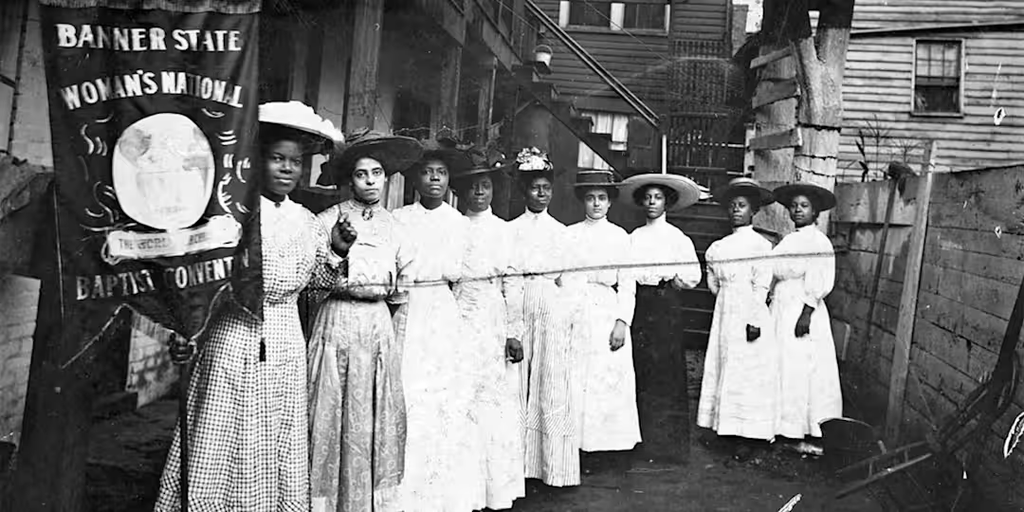
Throughout American history, Black women have challenged unequal pay, workplace discrimination, and the belief that their labor was worth less than that of others. From the Civil War to the civil rights era, women including Harriet Tubman and other determined activists confronted systems that denied them fair compensation, recognition, and economic independence.
Their struggles took place in very different circumstances. During the Civil War, Black women worked as nurses, cooks, laundresses, scouts, and other essential workers while the Union government debated how to compensate them. Decades later, Black women continued to challenge discriminatory wages in domestic service, education, government employment, and other professions.
Although the laws and working conditions changed over time, the underlying issue remained familiar: women who performed valuable work often had to fight to receive the pay and respect they deserved.
The history of these efforts reveals how equal pay became part of the broader struggle for racial and gender equality in the United States. It also highlights the contributions of women whose work was frequently overlooked in traditional accounts of American history.
Harriet Tubman and the Fight for Fair Compensation During the Civil War
Harriet Tubman is widely remembered for escaping slavery and helping other enslaved people reach freedom through the Underground Railroad. During the Civil War, she continued her work for freedom by assisting the Union cause in several capacities, including nursing, scouting, intelligence gathering, and supporting military operations.
Tubman worked in South Carolina and other areas where Union forces were operating. She helped care for formerly enslaved people who had reached Union-controlled territory and used her knowledge of the region to assist military efforts.
Her work was dangerous and physically demanding. She traveled through unfamiliar and often hostile territory, helped gather intelligence, and supported operations that could put her life at risk.
Yet the compensation she received did not necessarily reflect the importance of her contributions.
Like many Black women who served the Union during the war, Tubman encountered a system that did not consistently recognize their labor as equivalent to the work of men or formally enlisted personnel. Military and government employment rules were shaped by racial and gender assumptions, leaving many women in poorly paid or informal positions despite their responsibilities.
Tubman’s experience illustrates an important distinction in the history of equal pay: women were often willing and able to perform essential work, but institutions did not always provide them with the status, salary, or benefits associated with that work.
Her contribution to the Civil War was significant, particularly her involvement in intelligence gathering and the Combahee River Raid in June 1863. During that operation, Union forces destroyed Confederate supplies and helped liberate hundreds of enslaved people.
Tubman’s work demonstrated her courage and skill, but her service did not bring the immediate financial security that might have been expected from such a contribution.
Her story therefore belongs not only to the history of abolition but also to the broader discussion of how Black women’s labor was valued and compensated in nineteenth-century America.
The Unequal Pay System Facing Black Women During the War
The Civil War created new opportunities for Black women to contribute to the Union cause, but it did not eliminate the discrimination they experienced.
Women working for the military could serve as nurses, cooks, laundresses, and other support workers. These positions were necessary to keep soldiers healthy, fed, and supplied. However, the compensation structure often placed women at a disadvantage.
Nursing provides a clear example. Women who cared for sick and wounded soldiers performed work that demanded endurance, practical knowledge, and emotional strength. Yet nursing was not always treated as a profession with consistent pay and formal status.
Black women faced additional barriers because of racial discrimination. They could encounter prejudice from officials and colleagues, while the labor they provided was sometimes considered less valuable than comparable work performed by white workers or men.
The distinction between formally recognized military service and other wartime employment also mattered. A person could make an essential contribution without receiving the same salary, rank, pension rights, or public acknowledgment granted to someone in a more formally recognized position.
Tubman’s wartime experience reflects these wider problems. Although she was known for her leadership and courage, she spent years seeking appropriate recognition and compensation for her government service.
Her efforts reveal that unequal pay was not simply a matter of individual employers making unfair decisions. It was also connected to rules, classifications, and institutions that determined which kinds of work counted as valuable and who qualified for payment.
The Long Struggle to Recognize Harriet Tubman’s Service
After the Civil War, Tubman continued to face financial difficulties. Despite her extraordinary contributions to abolition and the Union war effort, she did not immediately receive the financial recognition many people might associate with her service.
Tubman pursued compensation for her wartime work and eventually received a federal pension. The process, however, took years and involved efforts to establish the nature and extent of her service.
Her experience illustrates how difficult it could be for women who worked outside conventional military roles to secure recognition from the government.
In Tubman’s case, the issue was not simply whether she had served. Her activities were connected to important wartime operations, and her reputation as an abolitionist and humanitarian was already established. The challenge was obtaining official acknowledgment that translated into meaningful financial support.
Tubman’s pursuit of compensation highlights a recurring problem in labor history: when workers do not fit the categories established by an institution, proving their eligibility for fair payment can become an exhausting struggle.
For Black women, these barriers were compounded by racial prejudice and limited access to political influence.
Tubman’s legacy therefore includes more than her efforts to help enslaved people gain freedom. Her experience also reveals the economic challenges faced by women whose work was essential but inadequately recognized.
Black Women’s Labor After Emancipation
The end of slavery did not bring economic equality for Black women.
After the Civil War, many formerly enslaved women sought paid work in domestic service, agriculture, laundry, cooking, and other occupations. Some pursued education or entered teaching and nursing, while others supported families in difficult economic circumstances.
However, the labor market remained shaped by racial discrimination, segregation, and restricted employment opportunities.
Domestic service became one of the largest areas of employment for Black women. Their work included cleaning homes, preparing meals, caring for children, and performing other tasks that made daily life possible for employers.
Despite the importance of these responsibilities, domestic workers frequently received low wages and had limited legal protections. Their employment could also involve long hours, uncertain working conditions, and dependence on individual employers.
The exclusion of many domestic and agricultural workers from early federal labor protections further contributed to economic inequality. Some of these exclusions reflected political compromises that disproportionately affected Black workers, particularly in the South.
For Black women, the consequences were especially severe because racial discrimination and gender expectations narrowed their employment choices.
The struggle for fair pay therefore extended far beyond a single workplace or government agency. It involved the larger question of whether Black women would have access to stable employment, equal compensation, and the ability to support their families independently.
Mary McLeod Bethune and the Fight for Economic Opportunity
Mary McLeod Bethune became one of the most influential Black educators and civil rights leaders of the twentieth century. Although she is best known for founding a school that developed into Bethune-Cookman University, her work also addressed the economic barriers facing Black women.
Bethune believed education was essential to economic independence. She understood that access to schooling and professional training could help Black women pursue better employment opportunities and challenge the limitations imposed by segregation.
In 1904, she established a school for Black girls in Daytona Beach, Florida. The institution began with limited resources but grew through her determination and the support of students, donors, and community members.
Bethune’s educational work helped prepare generations of students for professional and civic life. Her broader advocacy emphasized the importance of employment, economic security, and participation in public affairs.
During the 1930s, she became an adviser to President Franklin D. Roosevelt and helped establish the Federal Council of Negro Affairs, an informal group of Black advisers sometimes known as the Black Cabinet.
Through her work with government officials and civil rights organizations, Bethune advocated for greater opportunities for African Americans and for policies that addressed racial inequality.
Her contribution to the fight for fair pay was connected to a broader strategy: improving access to education, opening professional opportunities, and ensuring that Black women had a voice in decisions affecting their economic lives.
Bethune did not single-handedly eliminate discriminatory wages, but her work helped strengthen the institutions and networks through which Black women pursued greater economic independence.
A. Philip Randolph, Women Workers, and the Push for Fair Employment
The movement for equal pay also depended on labor organizing and campaigns against discrimination in federal employment.
A. Philip Randolph, a prominent labor leader and civil rights activist, organized the Brotherhood of Sleeping Car Porters, a union representing Black railroad workers. His work helped demonstrate the importance of collective action in challenging low wages and discriminatory employment practices.
Although Randolph was a man, the wider labor movement influenced the conditions in which Black women worked and the strategies available to them.
Black women faced distinct challenges in organizing for better wages. Many worked in domestic service or other occupations where employees were isolated from one another, making union organization difficult. Others worked in schools, hospitals, factories, and government offices, where they encountered different forms of discrimination.
Labor organizing helped bring attention to the relationship between racial equality and economic justice. It also showed that fair compensation required more than individual negotiation. Workers often needed collective bargaining, legal protections, and enforcement mechanisms to challenge established practices.
During the 1940s, Randolph’s pressure on the federal government contributed to President Roosevelt’s decision to issue Executive Order 8802 in 1941, which prohibited racial discrimination in defense industries and established the Fair Employment Practice Committee.
The order did not guarantee equal pay in every workplace, nor did it eliminate discrimination. However, it represented an important federal acknowledgment that racial barriers to employment required government action.
For Black women, such measures formed part of a larger effort to gain access to jobs that paid better and offered greater stability.
Pauli Murray and the Legal Challenge to Discrimination
Pauli Murray was a lawyer, writer, and civil rights advocate whose work helped shape later legal challenges to racial and gender discrimination.
Born in 1910, Murray encountered discrimination in education and employment. These experiences helped shape a career devoted to challenging laws and social practices that restricted equal opportunity.
Murray recognized that race and gender could operate together, producing disadvantages that could not always be understood by examining either form of discrimination separately.
This insight became particularly important in debates over workplace equality. Black women could face discrimination because they were Black, because they were women, or because employers treated Black women as a distinct and less valued group.
Murray’s legal scholarship and advocacy helped develop arguments that would later influence civil rights and women’s rights litigation.
During the 1960s, Murray contributed to the intellectual foundations of the movement for sex equality. Her work helped demonstrate that constitutional protections against discrimination could be applied to gender as well as race.
Although Murray was not primarily known as an equal-pay campaigner in the narrow sense, her contributions were important to the legal environment in which workplace discrimination could be challenged.
Her work helped advance a central principle: employment decisions should not be determined by assumptions about a person’s race or sex.
That principle would become increasingly important as civil rights activists pushed for stronger legal protections against unequal treatment in hiring, promotion, and compensation.
The Civil Rights Era and the Equal Pay Act
By the middle of the twentieth century, campaigns for racial justice and women’s equality were increasingly challenging discriminatory employment practices.
Black women participated in civil rights organizations, labor unions, community groups, and campaigns for better access to education and professional careers. Their activism helped expose the economic consequences of segregation and workplace discrimination.
One important legislative milestone came in 1963, when President John F. Kennedy signed the Equal Pay Act. The law prohibited employers covered by the act from paying men and women different wages for equal work performed under similar conditions, subject to the law’s requirements and exceptions.
The law represented progress in addressing sex-based wage discrimination, but it did not automatically eliminate the many forms of inequality experienced by Black women.
The Equal Pay Act focused on sex-based pay differences. Other forms of discrimination, including racial discrimination in hiring, promotion, and compensation, required additional legal protections and enforcement.
The Civil Rights Act of 1964 became another landmark. Title VII prohibited employment discrimination based on race, color, religion, sex, and national origin for covered employers.
Together, these laws provided important tools for challenging discriminatory workplace practices. However, the existence of legal protections did not mean that every worker could easily enforce them.
Workers still faced obstacles such as limited information, fear of retaliation, unequal access to legal assistance, and the difficulty of proving discriminatory treatment.
The history of equal pay therefore involves both legislative progress and the continuing work needed to make legal rights meaningful in everyday employment.
Why Equal Pay Remains an Important Issue
The experiences of Harriet Tubman and later Black women activists show that equal pay has never been only about comparing two salaries.
Fair compensation is connected to access to employment, the recognition of professional skills, opportunities for promotion, workplace protections, and the ability to build financial security.
Tubman’s experience during and after the Civil War revealed the difficulties women could face when their service was not fully recognized by the institutions they supported.
Mary McLeod Bethune demonstrated how education and professional opportunity could help Black women challenge economic restrictions. Pauli Murray contributed legal ideas that strengthened arguments against racial and gender discrimination. Labor organizers and civil rights activists helped build the collective pressure necessary to change workplace policies.
Their work took place in different eras, but their efforts were connected by a common demand: people who perform valuable work should not be denied fair treatment because of their race or gender.
The passage of equal-pay and civil rights legislation marked important progress, yet laws alone could not erase the effects of generations of discrimination.
Understanding this history helps explain why equal pay continues to be discussed in debates about wages, employment practices, professional advancement, and economic opportunity.
The Lasting Legacy of Black Women Who Challenged Wage Discrimination
Harriet Tubman’s struggle for recognition and compensation was part of a much longer history of Black women demanding that their labor be treated fairly.
From the Civil War to the civil rights era, Black women challenged systems that undervalued their work and restricted their opportunities. Some served the Union under dangerous conditions, while others built schools, organized workers, challenged discriminatory laws, or pressed government officials to adopt stronger protections.
Their achievements did not emerge from one coordinated campaign, and they did not all pursue equal pay in exactly the same way. Instead, their experiences reveal the many paths through which Black women fought for economic dignity.
Tubman helped expose the gap between essential service and official recognition. Bethune expanded educational and professional opportunities. Randolph’s labor movement helped strengthen the demand for fair employment, while Murray contributed legal arguments against discrimination based on race and sex.
Together with countless other workers and activists, these figures helped change the national conversation about who deserved fair compensation and equal opportunity.
Their legacy is a reminder that economic justice requires both the recognition of workers’ contributions and the willingness to challenge institutions that treat some people’s labor as less valuable than others.
The history of equal pay in America was shaped by generations of people who refused to accept discrimination as inevitable. Their efforts helped create stronger legal protections and opened opportunities for those who followed.
Although the struggle for workplace equality remains unfinished, the courage and persistence of these Black women continue to illuminate the connection between fair wages, human dignity, and the broader pursuit of equal rights.