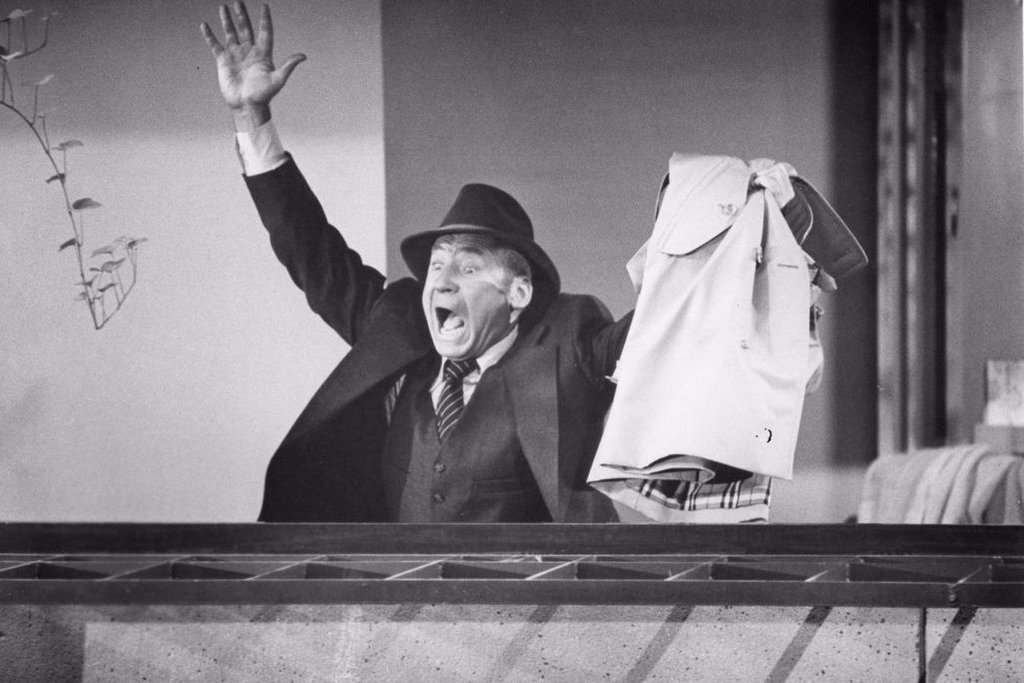
Mel Brooks has spent a lifetime making audiences laugh, but his influence on cinema extends far beyond the jokes, outrageous characters, and unforgettable parodies that made him a comedy legend. As the filmmaker approaches his 100th birthday, a special film program celebrating his extraordinary life and career offers audiences an opportunity to explore another side of his creative world: the movies that inspired him, entertained him, and helped shape his understanding of comedy.
The planned celebration features a selection of 20 films chosen by Brooks for screenings across Los Angeles. Spanning different decades, genres, and filmmaking traditions, the program reflects the breadth of his cinematic interests. Rather than focusing exclusively on comedies, the selections offer a wider view of the films that have influenced his sensibility, from classic Hollywood entertainment to works that demonstrate the power of storytelling, performance, and visual invention.
For generations of moviegoers, Brooks has been synonymous with irreverent humor. His films have sent up Westerns, horror movies, historical epics, and science fiction, often turning familiar conventions into opportunities for unexpected jokes. Yet the filmmaker’s career has always been rooted in a deep appreciation for cinema itself. Understanding the movies he admires can therefore provide valuable insight into the creative instincts behind some of the most recognizable comedies in film history.
As Los Angeles prepares to celebrate his milestone birthday, the program also serves as a tribute to a filmmaker whose work has crossed generations and whose love of movies remains central to his legacy.
Mel Brooks at 100: Celebrating a Century of Comedy
Born Melvin Kaminsky on June 28, 1926, in Brooklyn, New York, Mel Brooks grew up to become one of the most influential comic voices in American entertainment. His career has encompassed stand-up performance, television writing, filmmaking, stage musicals, and producing, establishing him as a creative force whose work reaches well beyond a single medium.
Brooks first developed his skills as a performer and writer during the early years of television. He became part of the celebrated writing team behind Your Show of Shows, working alongside other gifted comedy writers and learning how to construct jokes, build characters, and create comic situations under the pressure of a demanding production schedule.
His television work helped establish the foundation for his later success in film. In 1965, Brooks co-created Get Smart with Buck Henry, a spy comedy that turned the conventions of popular espionage stories into a source of absurd humor. The series demonstrated his talent for identifying familiar entertainment formulas and finding comic possibilities within them.
Brooks moved into feature filmmaking with The Producers in 1967. The film introduced audiences to his distinctive approach to satire, combining theatrical excess with a willingness to challenge conventional ideas about what comedy could address.
The movie eventually became a major cultural touchstone, earning Brooks an Academy Award for Best Original Screenplay and inspiring a successful Broadway musical adaptation decades later.
Reaching the age of 100 represents more than a personal milestone. It offers an opportunity to recognize a career that has helped shape American comedy and influenced generations of writers, actors, directors, and performers.
A program of Brooks’ favorite films makes that celebration especially fitting. Instead of looking only at the movies he created, audiences can explore the larger cinematic tradition that surrounded him and helped nurture his imagination.
Twenty Films Offering a Window Into Brooks’ Cinematic World
The selection of 20 films is particularly intriguing because a filmmaker’s favorite movies can reveal aspects of their personality that are not immediately apparent from their own work.
Brooks is widely associated with parody, but parody depends on familiarity with the material being transformed. To make a successful comic Western, a filmmaker must understand the conventions of Westerns. To satirize horror movies, the filmmaker must recognize what makes them frightening, suspenseful, or emotionally effective in the first place.
Brooks’ own filmography demonstrates this knowledge. Blazing Saddles draws upon the visual language and mythology of the Western, while Young Frankenstein lovingly recreates the atmosphere and stylistic conventions of classic monster movies. Spaceballs takes aim at science fiction and space-adventure storytelling, particularly the grand scale and recognizable tropes of the genre.
A varied selection of favorite films can help audiences see how those influences fit together. Dramatic films may reveal his appreciation for strong storytelling, while musicals can demonstrate the importance of rhythm, timing, and performance. Thrillers, adventures, and classic comedies can each offer different lessons about how filmmakers hold an audience’s attention.
The eclectic nature of the program is therefore an important part of its appeal. A list of favorite movies does not have to function as a ranking of the greatest films ever made. Instead, it can serve as a personal map of artistic interests, memories, and influences.
For viewers, the screenings offer an opportunity to approach familiar cinematic history from a new perspective. A movie that might initially appear unrelated to Brooks’ own work could reveal something about his appreciation for character, dramatic structure, or the mechanics of a well-timed joke.
The program also invites audiences to think about the ways filmmakers learn from one another. Even highly original artists develop their ideas through exposure to earlier works, conversations with colleagues, and repeated encounters with the movies that excite their imaginations.
Why Mel Brooks’ Comedy Has Endured for Generations
Brooks’ enduring popularity comes partly from his willingness to push comedy into unexpected territory. His films often begin with recognizable storytelling conventions before gradually dismantling them through exaggeration, absurdity, and deliberately outrageous situations.
Blazing Saddles, released in 1974 and directed by Brooks, remains one of his best-known films. The Western comedy uses the genre’s familiar images of frontier towns, heroic lawmen, and powerful villains to examine racism and expose the absurdity of prejudice through satire.
The film’s approach was deliberately provocative, and its humor has continued to generate discussion about how comedy can challenge social attitudes. Its legacy reflects Brooks’ willingness to confront uncomfortable subjects through exaggeration rather than treating established conventions as untouchable.
In the same year, Brooks released Young Frankenstein, a parody of classic horror films that also functions as an affectionate tribute to them. Shot in black and white and featuring carefully recreated visual elements associated with earlier monster movies, the film demonstrates that parody can emerge from genuine admiration.
Its humor works because the filmmakers understand the atmosphere and dramatic techniques they are imitating. The characters may behave absurdly, but the film’s commitment to its visual world gives the comedy a distinctive coherence.
Brooks continued exploring genre conventions with Silent Movie in 1976, High Anxiety in 1977, and Spaceballs in 1987. Each film approached a different cinematic tradition, showing his ability to adapt his comic sensibility to changing styles and audiences.
These films also demonstrate that comedy can operate on several levels. A viewer may laugh at a physical gag without recognizing its reference, while a more experienced moviegoer may appreciate the additional joke hidden within a familiar scene or genre convention.
That layered quality has helped Brooks’ work remain relevant across generations. His films reward casual viewing while also offering opportunities for audiences to revisit them and discover details they previously missed.
From Classic Hollywood to Modern Pop Culture
Brooks’ career developed during a period when Hollywood was undergoing major changes. The studio system that had dominated much of the industry’s earlier history was evolving, television was becoming increasingly influential, and filmmakers were experimenting with different forms of storytelling.
Growing up with movies from Hollywood’s golden age gave Brooks an extensive collection of cinematic conventions to draw upon. Classic films helped establish the language of genres such as musicals, Westerns, melodramas, and horror, creating a shared set of references that later filmmakers could celebrate, question, or parody.
His work often treats these traditions as both entertainment and material for comedy. By exaggerating familiar patterns, he encourages audiences to notice how films create expectations and how easily those expectations can be turned upside down.
The favorite-film program offers an opportunity to revisit that broader history. A selection covering multiple decades can show how cinematic techniques evolved and how different generations of directors approached similar storytelling challenges.
It can also reveal the diversity of influences that contribute to a filmmaker’s creative identity. Artists rarely draw inspiration from one genre alone. A director known for comedy may admire a serious drama’s emotional precision, a thriller’s suspense, or a musical’s ability to combine movement and storytelling.
Brooks’ own work illustrates the value of that versatility. His comedy has relied on more than punchlines. It also depends on editing, camera placement, performance style, music, and an understanding of how audiences respond to familiar cinematic images.
For younger filmmakers and movie enthusiasts, the screenings can function as an informal lesson in film history. Watching the movies Brooks admires may help viewers recognize the creative traditions that influenced his work and continue to shape contemporary entertainment.
The Importance of Screening Films on the Big Screen
Presenting a film in a theater offers a different experience from watching it at home. The larger image, shared audience, and focused environment can reveal details that are easy to overlook when a movie is viewed on a smaller screen or amid everyday distractions.
Comedy, in particular, can benefit from a communal setting. A joke may feel different when an entire audience responds at once, and laughter can build as viewers react to one another. The timing of a scene becomes more noticeable when the room is focused on the same moment.
For a filmmaker such as Brooks, whose work often depends on carefully constructed comic rhythms, theatrical screenings are especially appropriate. His films use pauses, sudden changes in tone, visual surprises, and escalating absurdity to create their effects.
Watching those techniques unfold on a big screen can make the craftsmanship behind the humor more apparent.
A curated program also gives audiences a reason to experience older movies in a setting that encourages discussion. Viewers may arrive with different levels of familiarity, allowing longtime fans to revisit beloved works while newcomers encounter them for the first time.
The screenings across Los Angeles place the celebration within a city that has played a central role in the history of American filmmaking. Los Angeles is not merely a backdrop for Hollywood; it is also a community of cinemas, archives, film institutions, performers, writers, and audiences who help preserve and reinterpret the medium’s history.
A birthday celebration built around favorite films therefore becomes more than a private tribute. It creates a shared experience in which audiences can connect with the work that shaped one of cinema’s most distinctive comic voices.
Mel Brooks’ Influence Beyond the Movie Theater
Although Brooks is best known for his feature films, his influence extends into television and live theater.
His early television writing helped establish the fast-paced, collaborative style of comedy that became a defining feature of many American entertainment programs. Working with talented performers and writers taught him how to build jokes around character, rhythm, and unexpected developments.
That experience carried into his movies, where the humor often relies on an ensemble of memorable personalities rather than a single comic performance. His films create worlds in which the absurdity of one character is amplified by the reactions of everyone around them.
Brooks also achieved major success on Broadway. His musical adaptation of The Producers became a celebrated stage production, demonstrating how a film’s comic structure could be reimagined through songs, choreography, and live performance.
The stage version received widespread recognition, including a record-setting number of Tony Awards in 2001. Its success showed that Brooks’ material could thrive in a different artistic format without losing its distinctive comic identity.
His work as a producer has also contributed to his wider legacy. Through projects associated with his name, he has helped bring a variety of stories and performances to audiences, reinforcing his role as a significant figure in entertainment beyond directing.
The planned centennial celebration provides an opportunity to recognize these different aspects of his career. While the 20-film program focuses on movies he admires, the broader context reminds audiences that his creative achievements span several generations and forms of entertainment.
A Century of Laughter, Creativity, and Film Appreciation
A 100th birthday is a rare milestone for any artist, especially one whose work has remained visible in popular culture for so long. Brooks’ career has unfolded across major changes in filmmaking technology, distribution, audience habits, and the relationship between cinema and television.
Yet the central appeal of his work remains recognizable: he encourages audiences to question familiar conventions, embrace absurdity, and find humor in the unexpected.
The selection of 20 favorite films adds a personal dimension to that legacy. Rather than celebrating Brooks only through the movies he directed, the program turns attention toward the wider cinematic landscape that helped shape his taste.
That perspective is valuable because creativity is rarely a solitary achievement. Even artists celebrated for their originality are part of a continuing conversation with the films, performances, and storytelling traditions that came before them.
For Brooks, the movies he admires can be understood as part of that conversation. They provide entertainment, offer examples of cinematic craft, and demonstrate the many ways filmmakers can move audiences through humor, suspense, drama, music, and visual imagination.
The screenings also give audiences an opportunity to celebrate cinema as a communal art form. Each film becomes a meeting point between the filmmaker who created it and the viewers who bring their own experiences to the screening.
As Los Angeles marks Brooks’ centennial, the program offers a fitting tribute to a man who has devoted much of his life to making people laugh while maintaining a deep affection for the medium that made his career possible.
Why Mel Brooks’ Favorite Movies Matter
The question of Mel Brooks’ favorite movies is about more than compiling a list of titles. It invites audiences to explore the influences behind a filmmaker whose work has helped define American screen comedy.
His films demonstrate that parody works best when it emerges from knowledge of and affection for the material being transformed. His career also shows how ideas developed in one medium can flourish in another, from television writing to feature filmmaking and Broadway musicals.
The 20-film program celebrating his 100th birthday offers a chance to explore those connections through the movies that matter to him. By spanning decades and genres, the selections promise a broader look at the cinematic traditions that have shaped his imagination.
For longtime fans, the screenings offer a reason to revisit the films and filmmaking traditions that have brought them joy. For younger audiences, they provide an entry point into the history of cinema and the creative influences behind one of comedy’s most recognizable figures.
Ultimately, the celebration is not simply about looking backward. It is about recognizing how films continue to inspire new generations of artists and viewers, creating connections across time.
Mel Brooks has spent a lifetime transforming the conventions of entertainment into opportunities for laughter. As he approaches his 100th birthday, sharing the movies he loves offers another way to understand his remarkable career—and to celebrate the enduring power of cinema itself.