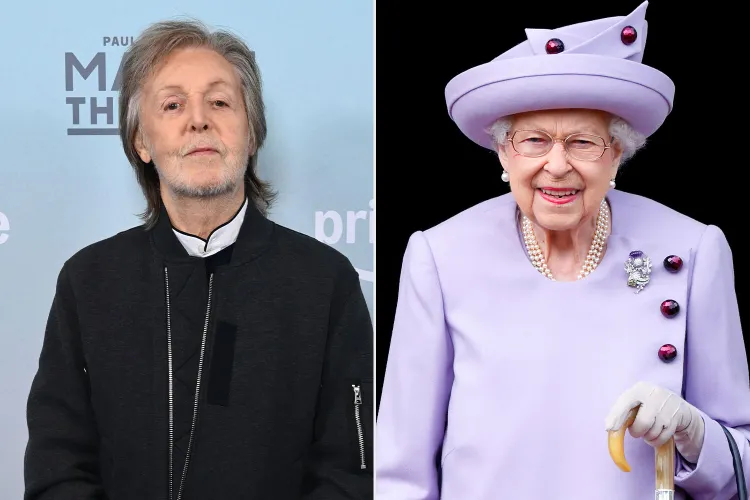
Sir Paul McCartney has shared a charming story about his childhood admiration for Queen Elizabeth II, revealing that his wife, Nancy Shevell, believes the late monarch may have been fond of him, too. The lighthearted anecdote emerged during McCartney’s conversation with comedian Amy Poehler on her podcast, Good Hang with Amy Poehler, offering fans a glimpse into the former Beatle’s humorous side and his memories of one of Britain’s most recognizable historical figures.
McCartney, whose career with The Beatles helped transform popular music, looked back on the Queen’s coronation and his first meeting with the monarch. His recollections were filled with warmth and playful honesty, turning an ordinary question about celebrity encounters into an amusing story involving royalty, youthful admiration, and a teasing comment from his wife.
Although there is no evidence that Queen Elizabeth ever harbored romantic feelings for McCartney, his wife’s playful suggestion gave the conversation an entertaining twist. The story also highlighted the musician’s longstanding appreciation for the late Queen and the special place she held in his memories of growing up in Britain.
Paul McCartney Recalls Queen Elizabeth II as a Childhood ‘Babe’
During his appearance on Good Hang with Amy Poehler, McCartney reflected on the famous people he admired before becoming an international star himself. When asked whether he remembered meeting someone whose fame had left a lasting impression on him, he immediately brought up Queen Elizabeth II.
The musician recalled that the Queen was crowned when he was still a child. In the podcast conversation, he described her as a “babe,” using the informal language of his younger years to explain how he and other boys viewed the young monarch.
For McCartney, the memory was not simply about the monarchy or the significance of the coronation. It was also about the way a young person might perceive a glamorous public figure who seemed almost larger than life.
He remembered being fascinated by the idea that the country had a king and that the royal family included a young, attractive queen. His comments were delivered in a humorous, nostalgic tone, rather than as a serious statement about a personal relationship.
The anecdote offered a glimpse into Britain during the early years of Elizabeth’s reign. The young Queen became a familiar face in homes across the country through newspapers, radio broadcasts, and television coverage. Her public image combined traditional royal formality with the appeal of a young woman suddenly carrying enormous national responsibility.
McCartney’s recollection captured that mixture of admiration and youthful curiosity. Even before The Beatles became one of the most influential musical groups in history, he was a British schoolboy watching the same national events as millions of other people.
Nancy Shevell Jokes That the Queen May Have ‘Fancied’ Her Husband
The most amusing part of McCartney’s story came when he shared what his wife, Nancy Shevell, had said about the Queen.
According to McCartney, Shevell suggested that Elizabeth II might have fancied him. The musician immediately acknowledged that there was no way to know whether the suggestion had any truth behind it, but he was happy to entertain the possibility as a joke.
The exchange added a playful personal dimension to a story that might otherwise have remained a simple recollection of meeting a famous person.
Rather than treating his wife’s comment as a serious claim, McCartney joined in the humor. He indicated that he liked the idea and imagined that the Queen herself would probably have appreciated the joke.
Poehler also joined the conversation, suggesting that Elizabeth might have found Shevell’s remark amusing. McCartney agreed, portraying the late monarch as someone who could enjoy a little good-natured teasing.
There is no indication that the Queen ever expressed romantic interest in the musician. Shevell’s comment was a humorous observation, and McCartney’s response made clear that the story was being shared for entertainment rather than as a revelation about the monarch’s private life.
That distinction is important. The appeal of the anecdote lies in its humor, not in an unverified claim about Queen Elizabeth’s feelings.
It also shows how a celebrity couple can turn a passing comment into a memorable story. Shevell’s playful speculation gave McCartney a reason to revisit an unusual encounter from his younger years, allowing listeners to see a lighter side of his personality.
Paul McCartney Met the Queen as a Young Man
McCartney also recalled meeting Queen Elizabeth II when he was approximately 21 years old. By that stage, his life was beginning to change dramatically as The Beatles gained popularity.
The band’s success soon transformed McCartney, John Lennon, George Harrison, and Ringo Starr into international stars. Their music attracted enormous audiences, and their influence extended far beyond the recording studio.
Meeting the Queen would have been a remarkable experience for someone who had grown up watching her public appearances. McCartney’s recollection suggested that the encounter remained meaningful to him even as he became a celebrity in his own right.
For many British performers, meeting the monarch represented a distinctive moment in a career. The royal family occupied a central position in national life, and audiences often viewed such encounters as symbolic recognition of an artist’s achievements.
McCartney would later receive one of the most significant honors associated with the British monarchy. In 1997, Queen Elizabeth II knighted him for his services to music, giving him the title Sir Paul McCartney.
The ceremony represented a milestone in a career that had already spanned decades. It also connected the musician’s personal history with the institution he had known since childhood.
His recent podcast story did not focus on awards or formal royal occasions, however. Instead, it returned to a much simpler memory: a young man meeting a famous monarch he had admired from afar.
That contrast is part of what makes the anecdote engaging. McCartney has spent much of his life in the company of celebrated musicians, actors, political figures, and members of the royal family. Yet he can still look back on an encounter with the Queen with the excitement and amusement of someone remembering a remarkable moment from his youth.
Queen Elizabeth II and Her Connection to British Popular Music
Queen Elizabeth II’s relationship with British popular music developed during a period of enormous cultural change. When she became monarch in 1952, the music industry was very different from the international entertainment business that would emerge over the following decades.
Rock and roll, television, and youth culture gradually transformed the country’s musical landscape. The Beatles became central figures in that transformation, helping introduce British popular music to audiences around the world.
Their success coincided with a period in which traditional institutions and modern culture increasingly intersected. Musicians who had once seemed distant from the establishment were invited to major public events and recognized for their contributions to British life.
McCartney’s relationship with the monarchy was therefore more than a matter of personal encounters. His career became part of the broader story of how popular musicians gained cultural influence and national recognition.
One of the most direct expressions of his feelings about the Queen was the Beatles song “Her Majesty,” a brief track that appeared on the 1969 album Abbey Road.
The song is short and playful, presenting a musical portrait of the monarch that differs from the grand ceremonial image often associated with the Crown. Its light tone fits naturally with McCartney’s later recollections about admiring the young Queen.
Although the song should not be interpreted as proof of any private relationship, it reflects the band’s willingness to incorporate recognizable British cultural figures into their music.
Over the years, McCartney has continued to speak about the Queen with affection and respect. His latest anecdote adds another personal memory to that history, combining his admiration for the monarch with the humor that has long been part of his public persona.
Nancy Shevell and Paul McCartney’s Longstanding Relationship
Nancy Shevell’s role in the story is small but memorable. Her comment about the Queen possibly having fancied McCartney provided the punchline, demonstrating how a partner’s teasing observation can become an entertaining part of a public interview.
Shevell and McCartney married in London in October 2011. The couple had met several years earlier and maintained a relatively low-key relationship despite McCartney’s extraordinary fame.
Their marriage has continued through a period in which McCartney has remained active as a musician, songwriter, and cultural figure. Although his professional life frequently places him in the public eye, the couple generally keeps many aspects of their private life away from constant scrutiny.
Their recent wedding anniversary offered another opportunity to look back on their relationship and the memories they have shared. The Queen anecdote provides a lighter example of how Shevell features in McCartney’s stories, even when the subject is a historical figure rather than their own life together.
The musician’s willingness to repeat his wife’s joke also suggests that he appreciated its humor. Rather than dismissing the suggestion, he used it to extend the conversation and imagine how the Queen might have reacted.
That kind of playful exchange can be especially appealing to fans who have followed McCartney for decades. It presents him not only as a legendary performer but also as a husband who enjoys a joke at his own expense.
Paul McCartney’s Humor Continues to Connect With Fans
McCartney’s career has included enormous achievements, from writing some of the most enduring songs in popular music to performing for audiences across generations. Yet stories like this one demonstrate why fans remain interested in his everyday recollections as well as his professional accomplishments.
The musician often draws on personal memories when discussing the past. His stories can move between childhood experiences, the early days of The Beatles, family life, and encounters with influential figures.
In this case, a conversation about people he admired became an opportunity to revisit his feelings about Queen Elizabeth II. His description of the young monarch was informal and humorous, making the memory feel personal rather than ceremonial.
The exchange also benefited from Poehler’s conversational approach. Instead of treating the subject as a formal interview about music history, the discussion allowed McCartney to follow a memory wherever it led.
The result was a story that combined nostalgia, royal history, and a gentle joke about celebrity. It did not require a dramatic revelation or an extraordinary claim to capture attention. Its charm came from the contrast between the Queen’s public status and McCartney’s casual recollection of seeing her as a young man.
For fans of The Beatles, the anecdote also serves as a reminder that McCartney’s life has unfolded alongside major changes in British culture. He grew up during the early years of Elizabeth’s reign, became a central figure in the musical revolution of the 1960s, and later received a knighthood from the same monarch he had admired as a child.
Why the Queen Elizabeth Story Is Resonating With Fans
Part of the story’s appeal comes from its unusual combination of familiar names. Paul McCartney is one of the most recognizable musicians in the world, while Queen Elizabeth II remains one of the most prominent figures in modern British history.
The idea that McCartney once viewed the young Queen as a “babe” offers a refreshingly informal perspective on a person usually remembered through official portraits, public ceremonies, and decades of royal duties.
Shevell’s comment adds another layer of humor, but the anecdote works precisely because it does not pretend to reveal a secret romance. McCartney himself acknowledged that nobody could know whether the Queen had ever felt that way about him.
Instead, the story invites listeners to appreciate the absurdity of imagining a private attraction between two people whose lives followed very different paths. One became a globally celebrated musician, while the other devoted her life to the responsibilities of the British Crown.
Their paths crossed at significant moments, including McCartney’s meeting with the Queen as a young man and his knighthood decades later. Those real connections provide enough context for the joke without requiring speculation about the monarch’s personal feelings.
The anecdote also reflects the continuing public fascination with Queen Elizabeth II. Even years after her death in September 2022, memories and stories about her continue to attract attention, particularly when shared by people who encountered her during important periods of their own lives.
For McCartney, the Queen was both a national figure and someone he remembered from his youth. His story preserves that personal perspective while offering fans a moment of lighthearted entertainment.
A Playful Memory of a Remarkable Life
Paul McCartney’s recollection of Queen Elizabeth II is a small story with a distinctly personal touch. It begins with a childhood memory of the young monarch, moves to a meeting when McCartney was a young adult, and ends with Nancy Shevell’s amusing suggestion that the Queen might have fancied him.
There is no evidence that the monarch returned any romantic interest, and McCartney did not present the idea as a fact. The humor came from the possibility itself and from his willingness to imagine that the Queen would have laughed along.
The story also highlights the unusual journey McCartney has taken. From a young boy growing up in Britain during Elizabeth’s early reign to an internationally celebrated musician and knight, he has experienced several generations of cultural and historical change.
His memories of the Queen connect those different stages of his life. They also remind audiences that even the most famous people can look back on major historical figures through ordinary human feelings such as admiration, curiosity, and humor.
Ultimately, Shevell’s comment provided a charming punchline to a conversation about a remarkable encounter. For fans, it is another glimpse into McCartney’s personality: affectionate toward the past, comfortable with a joke, and still able to make a simple memory entertaining.
While the suggestion that Queen Elizabeth “fancied” him remains just that—a playful suggestion—the anecdote offers something more reliable and lasting: a warm recollection of a monarch who left a strong impression on one of Britain’s most influential musicians.