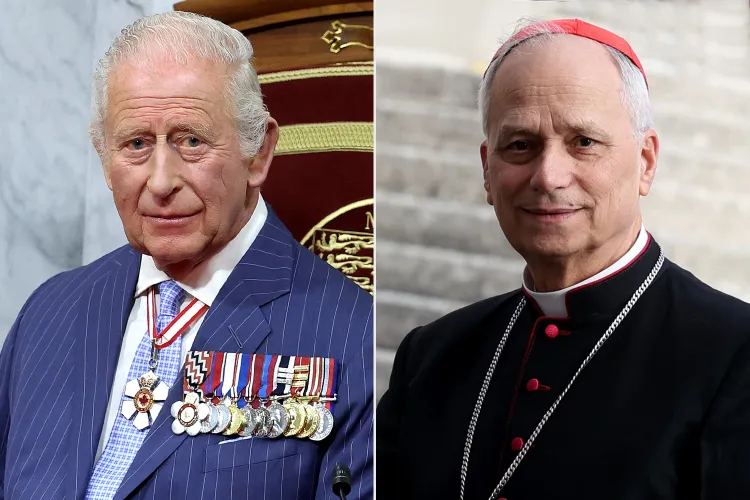
King Charles III is preparing to send a private message to Pope Leo XIV following the pontiff’s lung cancer diagnosis, offering words of support at a difficult moment for the head of the Catholic Church. The gesture carries particular significance because the British monarch is continuing his own cancer treatment, giving him a personal understanding of the challenges that can accompany a serious diagnosis.
The news comes after Pope Leo underwent surgery in Rome on October 13, 2026, to remove the lower lobe of his right lung. The Vatican subsequently confirmed that examinations of the removed tissue had identified lung adenocarcinoma, a form of lung cancer. The pontiff’s public schedule has been temporarily suspended while he recovers.
For King Charles, the situation creates an opportunity to express solidarity with a fellow world leader whose responsibilities extend far beyond public appearances. Although the details of the King’s private message have not been disclosed, his planned correspondence reflects a personal gesture of goodwill during an uncertain period for the Pope.
The two leaders met during the King and Queen Camilla’s visit to the Vatican in 2025, when they also shared a historic moment of Christian unity. Their relationship brings an additional dimension to the King’s response, connecting personal compassion with the wider relationship between the Church of England and the Roman Catholic Church.
King Charles Plans a Private Message to Pope Leo XIV
King Charles is expected to write privately to Pope Leo XIV to offer his well-wishes following the pontiff’s cancer diagnosis. The message is intended as a personal expression of support rather than a formal public statement, and its exact wording has not been made public.
The King’s decision comes as news of the Pope’s condition prompts concern among Catholics and religious communities around the world. As the spiritual leader of the Catholic Church, Pope Leo has a demanding schedule that includes religious ceremonies, meetings with international leaders, pastoral responsibilities, and public addresses.
A serious illness can temporarily interrupt those duties, making rest and medical care especially important. By reaching out privately, Charles can acknowledge the human circumstances behind the Pope’s public role without adding unnecessary pressure during his recovery.
The gesture is also notable because the King has spoken publicly about his own experience of cancer. His diagnosis, announced in February 2024, changed his schedule and required him to balance treatment with his responsibilities as monarch.
Although the two men occupy different positions and have distinct medical circumstances, both understand that serious illness can affect the rhythm of public life. The King’s message offers an opportunity for empathy between two figures whose work is closely connected to faith, service, and duty.
The contents of the correspondence remain private. It would therefore be premature to attribute particular words or promises to Charles. What is known is that he intends to send support to the Pope at a moment when the pontiff is recovering from surgery and facing further medical assessments.
Pope Leo’s Lung Cancer Diagnosis Explained
Pope Leo XIV, 71, underwent a planned surgical procedure at Rome’s Gemelli Hospital on October 13, 2026, after doctors identified a suspicious growth in his right lung. The operation removed the lower lobe of the lung, and subsequent examinations confirmed a diagnosis of lung adenocarcinoma.
Adenocarcinoma is a type of cancer that develops in glandular cells. In the lungs, it is the most common form of non-small cell lung cancer. The diagnosis alone, however, does not provide enough information to determine an individual’s prognosis or the treatment that may be needed after surgery.
The Vatican reported that the procedure was successful and that there were no surgical complications. Doctors have been monitoring the Pope’s postoperative recovery, while his public audiences and engagements have been suspended through October 20.
Medical teams must consider several factors when deciding what comes next after an operation to remove a cancerous growth. These can include the characteristics of the tumor, whether it has spread, the results of further tests, and the patient’s overall health.
As of the latest reports surrounding the diagnosis, the Vatican had not provided a complete account of the Pope’s longer-term treatment plan. It is therefore important not to assume that surgery has definitively ended his cancer care or that additional treatment will necessarily be required.
For now, the immediate priority is recovery from the operation and the medical assessments needed to guide future decisions. The suspension of public engagements gives the pontiff time away from the demands of his official schedule while doctors monitor his progress.
The diagnosis has drawn international attention, but the details of the Pope’s medical care remain a matter for him, his doctors, and the Vatican to communicate.
King Charles Continues His Own Cancer Treatment
King Charles announced in February 2024 that he had been diagnosed with cancer after undergoing a procedure for an enlarged prostate. Buckingham Palace confirmed the diagnosis but did not identify the specific type of cancer, and the King has continued to keep some medical details private.
The announcement was significant because Charles had long been known for maintaining a busy public schedule. His decision to share information about his diagnosis helped explain his temporary reduction in official engagements and brought greater attention to the realities of cancer treatment.
The King later returned to public duties while continuing to receive medical care. In December 2025, he shared an encouraging update, explaining that his treatment schedule could be reduced in the new year following a positive response to treatment.
That development was welcomed as progress, but it did not mean that the King had announced a complete end to his treatment. He has continued with a medical plan while undertaking royal engagements as his circumstances permit.
Charles has also used his public position to encourage greater awareness of cancer screening and early detection. His experience has given him a personal connection to conversations about diagnosis, treatment, and the importance of seeking appropriate medical advice.
Nevertheless, the King’s diagnosis remains unspecified in official public information. Comparisons between his condition and the Pope’s lung adenocarcinoma should therefore be made cautiously. Different cancers can require very different approaches to treatment, and the medical details of one person cannot be used to predict the outcome for another.
The shared experience of facing cancer may provide a meaningful point of understanding between the two leaders, but neither man’s medical journey should be treated as identical to the other’s.
Why the King’s Message Carries Personal Significance
The King’s planned correspondence is more than a routine diplomatic courtesy. It comes at a moment when his own experience may help him appreciate the pressures and uncertainties associated with a serious diagnosis.
Cancer treatment can affect daily routines, energy levels, professional responsibilities, and time spent with family. Even when treatment is progressing positively, patients may have to adapt their schedules around appointments, recovery, and medical advice.
For a monarch or a pope, those adjustments take place alongside extraordinary public responsibilities. Both men lead institutions with international influence and are expected to represent continuity during periods of change.
Yet the people holding these positions are also individuals who must respond to illness and follow medical guidance. A private message can recognize that reality without turning a personal health matter into a public spectacle.
Charles has previously demonstrated a willingness to discuss his own diagnosis in a measured way. His public comments have helped make cancer a subject that can be discussed beyond hospital settings and specialist medical environments.
His outreach to Pope Leo may reflect a similar understanding of the importance of encouragement during treatment. Still, the exact emotional content of the message remains unknown, and it is best to avoid presenting assumptions about the King’s private thoughts as confirmed facts.
The gesture can be understood simply as an expression of goodwill from one international figure to another during a challenging time.
A Historic Meeting at the Vatican in 2025
King Charles and Pope Leo XIV met in October 2025 during the King’s state visit to the Vatican with Queen Camilla. The meeting was notable not only because it brought together two prominent religious and constitutional figures, but also because it included a historic moment of public Christian unity.
During the visit, the King and Pope prayed together in the Sistine Chapel. The event was widely recognized as a significant moment in relations between the Roman Catholic Church and the Church of England.
The historical context stretches back to the English Reformation in the sixteenth century, when the English church separated from the authority of the Pope. Since then, relations between the two institutions have changed considerably, with dialogue and cooperation becoming increasingly important in modern times.
Charles, as Supreme Governor of the Church of England, occupies a position that makes his relationship with the Pope particularly meaningful. Although the two churches maintain distinct traditions and structures, they share important Christian foundations and have found common ground on a range of issues.
The 2025 meeting offered a visible expression of that relationship. The public prayer did not erase centuries of theological and institutional differences, but it demonstrated the possibility of mutual respect and cooperation.
Against that background, the King’s planned message following the Pope’s diagnosis carries both personal and symbolic meaning. It follows a meeting that highlighted shared faith and goodwill, while responding to a situation that transcends religious differences.
The current health news does not change the historical significance of that encounter. Instead, it provides a new context in which the relationship between the two leaders can be understood.
Pope Leo’s Recovery and the Suspension of Public Duties
Following his surgery, Pope Leo’s immediate focus is recovery under medical supervision. His public engagements have been suspended through October 20, allowing time for doctors to assess his condition and determine when he may safely resume his normal activities.
The Pope’s role ordinarily involves a demanding combination of religious ceremonies, audiences, meetings, and international responsibilities. Even routine activities can require substantial preparation and sustained energy.
A period away from those duties is therefore an important part of managing recovery. It allows medical professionals to monitor postoperative progress without the additional demands of a full public schedule.
Reports following the operation indicated that the Pope was recovering within the expected postoperative parameters. However, an encouraging initial recovery should not be confused with a complete assessment of the cancer or a definitive statement about long-term health.
The results of further medical evaluations will help determine what care may be appropriate. Until the Vatican provides additional information, the nature and duration of any further treatment remain uncertain.
The suspension of engagements also demonstrates how a major institution can adjust its public schedule around the health needs of its leader. Religious responsibilities continue to be carried out by the wider Church, even while the Pope takes time to recover.
For Catholics around the world, the news has prompted expressions of concern and prayers for the pontiff. Messages of support from religious leaders and international figures underline the extent to which the Pope’s health matters to communities far beyond the Vatican itself.
A Moment of Solidarity Beyond Religious Differences
The relationship between King Charles and Pope Leo reflects a broader principle: people can express compassion across differences in tradition, authority, and belief.
The King leads a constitutional monarchy and serves as Supreme Governor of the Church of England. The Pope leads the worldwide Catholic Church and holds a distinct spiritual and institutional role. Their responsibilities are different, but both are closely connected to questions of service, moral leadership, and public duty.
Their 2025 meeting demonstrated that these different roles do not prevent meaningful dialogue. The planned private message continues that spirit by focusing on a shared human experience rather than on institutional distinctions.
Health concerns can also bring attention to the value of privacy. Public figures may choose to share certain information about a diagnosis while retaining control over other details. Respecting that balance is important, particularly when medical decisions and recovery are still underway.
The Pope’s diagnosis has been publicly confirmed, but not every question about his future treatment has been answered. Similarly, Charles has acknowledged his own cancer journey without identifying the specific cancer involved.
Responsible discussion of both men should respect those boundaries. Compassion does not require speculation, and public interest does not justify treating unconfirmed medical details as established facts.
Conclusion: King Charles Offers Support as Both Leaders Face Health Challenges
King Charles’s plan to send a private message to Pope Leo XIV following the pontiff’s lung cancer diagnosis is a meaningful gesture at a difficult moment. The Pope underwent surgery on October 13, 2026, to remove the lower lobe of his right lung, and medical tests confirmed lung adenocarcinoma. His public schedule has been temporarily suspended while he recovers.
For Charles, who announced his own cancer diagnosis in 2024 and continues treatment, the situation may offer a personal point of understanding. His treatment schedule was reduced after a positive response, but he has not publicly announced that his care has ended.
The two leaders also share a significant recent history. Their meeting at the Vatican in 2025, including a historic public prayer in the Sistine Chapel, demonstrated the potential for cooperation and goodwill between the Church of England and the Roman Catholic Church.
The details of the King’s private message remain undisclosed, and the Pope’s longer-term treatment plan has not been fully explained. What is clear is that both leaders are navigating serious health matters while remaining figures of considerable importance to their respective communities.
In this moment, a private message of support offers a reminder that behind public duties and historic institutions are individuals whose health, dignity, and need for recovery deserve respect. As Pope Leo continues his recovery and King Charles carries on with his own treatment, the attention now turns to their well-being and the medical guidance that will shape the next stages of their journeys.