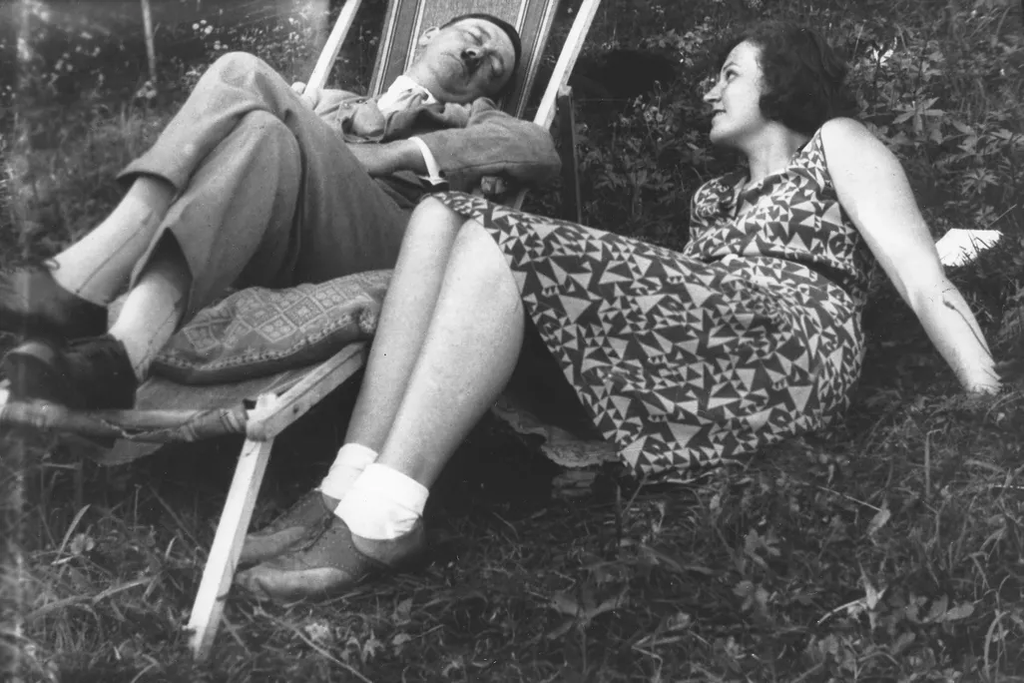
For nearly a century, the death of Angela Maria “Geli” Raubal, the half-niece of Adolf Hitler, has remained one of the most disturbing mysteries surrounding the private life of Nazi Germany’s future dictator. In September 1931, the 23-year-old was found dead from a gunshot wound inside Hitler’s Munich apartment. Authorities officially ruled her death a suicide, and Hitler’s reported whereabouts appeared to support his claim that he could not have been responsible.
Now, newly examined archival documents are raising questions about the timeline that helped protect Hitler from suspicion. German historian Harald Sandner has identified records suggesting that Raubal’s body was discovered on September 18, 1931, rather than September 19, as the established account maintained. If the documents accurately reflect the events, Hitler may still have been in Munich when she was found dead.
The discovery does not prove that Hitler murdered his half-niece. Nevertheless, it challenges an important part of the historical narrative surrounding her death and renews questions about a relationship that was unusually close, reportedly controlling, and surrounded by rumors even before Hitler became Germany’s dictator.
The case is significant not only because of the identity of the people involved but also because it illustrates how archival discoveries can reopen long-standing historical questions.
Who Was Geli Raubal, Adolf Hitler’s Half-Niece?
Angela Maria Raubal, widely known as Geli, was born in 1908 in Austria-Hungary. She was the daughter of Angela Hitler, Adolf Hitler’s half-sister, making Geli his half-niece.
Her connection to Hitler placed her within the orbit of a man whose political ambitions were growing rapidly during the years before the Nazi seizure of power. Yet Raubal was not a political figure in her own right. She was a young woman whose personal life became closely connected to Hitler’s private household.
Raubal moved to Munich in 1927, and by 1929 she was living in Hitler’s apartment. At the time, Hitler was building the Nazi Party into an increasingly influential political movement, using speeches, rallies, and propaganda to attract supporters amid Germany’s economic and political instability.
Accounts of their relationship describe Hitler as intensely interested in Raubal’s activities and protective of his position in her life. Some historical accounts portray his behavior as controlling, particularly regarding her social relationships and personal choices.
Raubal reportedly wanted to pursue singing lessons and had considered traveling to Vienna. Her ambitions, however, became a source of tension because Hitler was said to have opposed her plans.
The precise emotional nature of their relationship remains difficult to establish. Later writers and commentators have described it in romantic or obsessive terms, but the available evidence does not justify treating every sensational claim about their private lives as fact.
What is clearer is that Raubal lived under the influence of a powerful relative whose political career was accelerating. Her death would soon become entangled with the growing public interest in Hitler, creating a controversy that his political allies had strong reasons to manage carefully.
The Mysterious Death in Munich in September 1931
On September 18, 1931, or possibly September 19 according to the long-accepted chronology, Raubal died in Hitler’s Munich apartment from a gunshot wound to the chest.
She was 23 years old.
The weapon was reportedly a Walther pistol belonging to Hitler. Authorities ultimately classified her death as suicide, a conclusion that shaped the official account for decades.
According to the traditional narrative, Raubal and Hitler had argued shortly before her death. One reported point of disagreement concerned her wish to travel to Vienna, which Hitler allegedly opposed. Hitler then left Munich for Nuremberg, and Raubal was subsequently discovered dead by his personal servant, Georg Winter.
The circumstances were troubling from the beginning. Raubal was young, her death occurred in the home of one of Germany’s most prominent political figures, and the gun reportedly belonged to him.
News of the death quickly attracted attention. Contemporary newspapers and political opponents questioned whether the official explanation told the entire story. Reports also circulated alleging that Raubal had suffered injuries beyond the fatal gunshot, although such claims must be treated cautiously because they were not established as definitive proof of homicide.
Hitler denied accusations that he had killed her. The official conclusion remained suicide, and his reported departure from Munich became a crucial part of the explanation for why he could not have been present at the time of her death.
For many years, the accepted chronology made the case difficult to reopen. Without compelling evidence establishing a different sequence of events, alternative theories remained speculative.
The newly examined documents have now brought that chronology back into focus.
Newly Discovered Records Challenge Hitler’s Alibi
The latest development comes from historian Harald Sandner, who found records in Munich archives that appear to conflict with the established timeline.
According to reports published in September 2026, the documents include two death notices and an entry in the local death register. They reportedly record the discovery of Raubal’s body at approximately 10:15 a.m. on September 18, 1931.
That date is important because the traditional account places the discovery on the morning of September 19. Under the established narrative, Hitler had already left Munich before Raubal died or was discovered.
The newly identified records suggest that the body may have been found roughly a day earlier than previously believed. If the date is accurate, Hitler was still in Munich during the period in question.
This discrepancy could undermine the alibi that has long formed part of the official explanation.
Sandner argues that the conflicting records point to serious problems in the accepted account. He has suggested that the historical narrative was affected by errors and deliberate manipulation by officials sympathetic to Hitler and the Nazi Party.
Those are substantial allegations, and they require careful examination. A disagreement between historical records can arise for several reasons, including administrative mistakes, inaccurate reporting, or intentional interference. Establishing which explanation best fits the evidence requires more than identifying a discrepancy.
The discovery therefore does not automatically establish that Hitler was responsible for Raubal’s death. It does, however, provide historians with a concrete reason to reassess the timeline and examine how the original investigation was conducted.
Thomas Weber, a historian and specialist in modern German history, has reportedly examined the new claims and said that the discrepancy raises serious questions about the established chronology.
The distinction is essential: evidence that weakens an alibi is not the same as evidence that proves murder.
Was There an Attempt to Protect Hitler’s Political Future?
The possibility that the official account was shaped to protect Hitler has become one of the most contentious aspects of the renewed investigation.
In 1931, Hitler was not yet Germany’s head of government, but his political influence was expanding. The Nazi Party had made major electoral gains, and Hitler was seeking to present himself as a credible national leader.
A scandal involving the death of a young woman in his apartment could have damaged his public image. Questions about his private behavior, particularly if they involved allegations of violence or an improper relationship, could have undermined the carefully constructed public persona he and his supporters were promoting.
Contemporary reports indicated that Nazi officials discussed how news of Raubal’s death should be presented. Such reports have contributed to suspicions that the party recognized the political danger posed by the circumstances.
Sandner’s interpretation is that inconsistencies in the official records may have helped preserve a version of events favorable to Hitler.
However, the existence of political motives does not itself prove that officials falsified records or concealed a murder. A historical investigation must distinguish between evidence of a possible incentive and evidence that an alleged action actually occurred.
The Nazi Party would later establish a dictatorship characterized by propaganda, political repression, and the systematic persecution and murder of millions of people. Its documented record makes scrutiny of the regime’s handling of sensitive events essential, but it cannot substitute for specific evidence about an individual case in 1931.
The archival discrepancy matters precisely because it provides a question that can be investigated rather than merely a suspicion based on Hitler’s later crimes.
Rumors About Hitler and Geli Raubal’s Relationship
The relationship between Hitler and Raubal has generated decades of speculation. Some accounts have described it as an obsessive attachment, while others have suggested that it may have involved romantic or sexual feelings.
American journalist William Shirer, who later wrote extensively about Nazi Germany, characterized the relationship as exceptionally significant in Hitler’s emotional life. Other biographers have likewise emphasized how closely Hitler appeared to supervise Raubal’s activities.
Yet the exact nature of their relationship remains uncertain. Much of the discussion comes from retrospective accounts, secondhand testimony, political opponents, and later interpretations of incomplete evidence.
It is therefore important not to confuse repeated rumors with established facts.
What historical accounts consistently emphasize is the imbalance of power between the two. Hitler was older, politically ambitious, and increasingly influential. Raubal was a young relative living in his apartment, whose choices could be affected by his preferences and authority.
Reports that the pair argued over her plans to travel to Vienna suggest a possible source of tension, although the full details of their final conversations are not securely established.
The rumors surrounding their relationship also became politically useful to Hitler’s opponents. In an increasingly polarized environment, allegations about his private life could be used to challenge his public image.
For historians, the challenge is to separate reliable evidence from sensational storytelling. The relationship may have been emotionally intense, but the evidence does not permit a definitive reconstruction of every private aspect of their lives.
Raubal should also be remembered as an individual, not simply as a figure in the story of Hitler’s rise. Her life and death deserve attention independently of the speculation surrounding her famous relative.
Why the Original Investigation Remains Controversial
The original ruling of suicide has long shaped the historical discussion. But the renewed debate highlights a broader problem: investigations from politically sensitive periods may leave behind records that are incomplete, contradictory, or difficult to evaluate.
Raubal’s death occurred before the Nazi Party took control of Germany in 1933. Hitler did not yet possess the full power of the dictatorship he would later establish, but his growing political influence could already have affected how his associates responded to damaging publicity.
Some contemporary reports alleged that the investigation was compromised. Later accounts also questioned the speed with which the case was concluded and the lack of certain kinds of forensic evidence.
Such concerns are relevant, but they do not independently establish that the official verdict was wrong. Historical judgments must account for the limitations of the surviving evidence and avoid treating every unexplained detail as proof of a particular theory.
The newly identified records offer a more specific avenue for investigation: the dates and times recorded in archival documents.
Historians can compare these entries with police reports, newspaper accounts, travel records, correspondence, and other surviving materials. They can also assess whether the documents were produced at the time of the events or copied from earlier sources.
Such work may help establish whether the discrepancy resulted from a clerical error, a misunderstanding, or a deliberate effort to alter the public chronology.
Until that assessment is complete, the most responsible conclusion is that the new evidence challenges the established timeline without conclusively resolving the circumstances of Raubal’s death.
What the New Research Does—and Does Not—Prove
The renewed attention surrounding Raubal’s death has produced a compelling historical question: if she was found dead on September 18, rather than September 19, does Hitler’s traditional alibi still hold?
According to Sandner’s interpretation, the newly examined records suggest that it may not.
That possibility changes the terms of the discussion. For decades, the accepted chronology helped support the view that Hitler was away when Raubal died. If the chronology is incorrect, the alibi requires reassessment.
But several questions remain unanswered. The records must be evaluated in context, the timing of the death must be established as precisely as possible, and evidence about the circumstances inside the apartment must be weighed independently.
Even if Hitler was in Munich when Raubal was found dead, that fact alone would not demonstrate that he shot her. Nor would it automatically rule out suicide or establish the involvement of another person.
The new findings also do not, by themselves, demonstrate that Nazi officials deliberately falsified the records. Sandner has advanced that interpretation, but it remains a claim requiring corroboration.
These distinctions are not minor technicalities. They are central to responsible historical reporting, particularly when discussing a death that has inspired nearly a century of speculation.
The strongest conclusion at present is that previously identified archival records appear to contradict an important part of the established timeline, making further investigation necessary.
A Historical Mystery With Lasting Significance
Geli Raubal’s death remains significant because it offers a glimpse into Adolf Hitler’s private world before he became dictator of Germany. The case also illustrates the way personal scandal, political ambition, and the management of public information could intersect during the Nazi Party’s rise.
The new archival findings have reopened a question that many historians considered difficult to resolve. By challenging the date on which Raubal’s body was discovered, Sandner’s research calls attention to the evidence underlying Hitler’s long-standing alibi.
The discovery is not a final verdict. It is an invitation to reexamine the documents, compare competing accounts, and determine whether the accepted narrative can withstand closer scrutiny.
For now, the central facts remain clear: Raubal died at the age of 23 in Hitler’s Munich apartment in September 1931; authorities ruled her death a suicide; and the newly identified records have raised serious questions about the timeline on which the traditional account rests.
Whether those questions ultimately establish a different explanation for her death remains unresolved.
Nearly a century later, Raubal’s story demonstrates why historical research never entirely ends. Documents long overlooked or misunderstood can change how familiar events are interpreted, even when they do not provide a definitive answer.
The most important task now is to establish what the evidence can genuinely show—and to resist turning an unresolved historical mystery into a certainty that the surviving records cannot support.