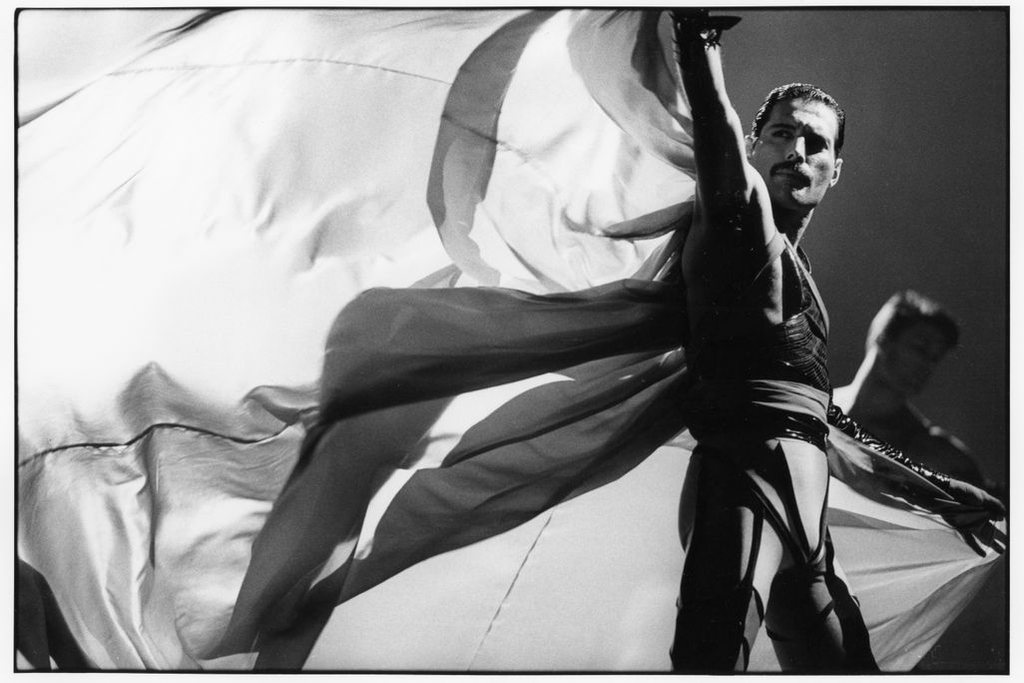
Freddie Mercury’s extraordinary stage presence is being celebrated through one of the most recognizable elements of his artistic legacy: his daring, boundary-pushing fashion. To mark the 80th anniversary of the birth of the legendary Queen frontman, the Victoria and Albert Museum in London is presenting eight ensembles associated with Mercury’s career across six stops in its permanent galleries. The display offers visitors an opportunity to explore the clothing behind his unforgettable stage persona and discover how fashion helped shape one of rock music’s most influential performers.
Mercury, who was born Farrokh Bulsara on September 5, 1946, became famous for his powerful voice, theatrical performances, and ability to command enormous audiences. As the lead singer of Queen, he helped create a catalog of enduring rock anthems while developing a visual identity that was as distinctive as his music. His costumes ranged from flamboyant, theatrical outfits to simpler combinations that became iconic in their own right.
The Victoria and Albert Museum, widely known for its collections of fashion, design, and performing arts, provides a fitting setting for a celebration of Mercury’s influence. By displaying selected outfits throughout its permanent galleries, the museum places his clothing within a broader conversation about creativity, craftsmanship, self-expression, and the relationship between fashion and popular music.
The exhibition also highlights an important aspect of Mercury’s legacy: his ability to challenge expectations. Through his clothing, he embraced theatricality, experimented with silhouettes and materials, and treated the stage as a space where conventional rules could be reimagined.
Freddie Mercury’s Fashion Legacy Takes Center Stage in London
Freddie Mercury was never simply a singer standing in front of a microphone. His performances combined music, movement, costume, and dramatic gestures into a complete theatrical experience. Every element contributed to the connection he established with audiences, whether he was performing in a small venue or commanding a stadium filled with tens of thousands of fans.
Fashion became an essential part of that experience. Mercury understood that clothing could communicate personality before a performer sang a single note. A striking outfit could establish a mood, emphasize movement, and help transform a concert into an unforgettable spectacle.
His stage wardrobe frequently challenged traditional ideas about what a male rock star should wear. He appeared in close-fitting garments, dramatic capes, shimmering fabrics, and bold combinations that emphasized his theatrical instincts. Rather than treating costumes as secondary to the music, he used them to reinforce the emotional and visual dimensions of his performances.
The eight ensembles displayed at the Victoria and Albert Museum offer a closer look at this creative approach. Presented across six locations within the museum’s permanent galleries, the outfits encourage visitors to encounter Mercury’s fashion legacy in different contexts rather than viewing it as a single, isolated collection.
This presentation also reflects the continuing interest in the relationship between music and clothing. Musicians have long used fashion to establish their identities, communicate ideas, and distinguish themselves from their contemporaries. Mercury’s wardrobe demonstrates how a performer can develop a visual language that remains recognizable long after the original performances have ended.
For visitors who remember Queen’s concerts firsthand, the costumes may evoke memories of Mercury’s extraordinary stage presence. For younger audiences, they provide a tangible connection to a performer whose influence continues to reach beyond his own generation.
Celebrating the 80th Anniversary of Freddie Mercury’s Birth
Born on September 5, 1946, Freddie Mercury would have turned 80 in 2026. His birthday offers an opportunity to reflect on the achievements of a performer whose voice, songwriting, and visual imagination helped redefine the possibilities of rock entertainment.
Mercury was born in Zanzibar, now part of Tanzania, and spent part of his childhood in India before moving with his family to England. His early experiences across different cultural environments formed part of the background to a life that would eventually place him at the center of British rock music.
In 1970, he became part of the group that developed into Queen, alongside guitarist Brian May and drummer Roger Taylor, with bassist John Deacon joining shortly afterward. The band developed a distinctive sound that combined hard rock, elaborate harmonies, theatrical arrangements, and elements drawn from several musical traditions.
Mercury’s contribution extended well beyond his vocal performances. He wrote songs that became central to Queen’s identity, including “Bohemian Rhapsody,” “Somebody to Love,” and “We Are the Champions.” His songwriting demonstrated a willingness to move between musical styles and embrace ambitious structures.
As Queen grew in popularity, Mercury’s stage persona became an increasingly important part of the band’s appeal. His confident movements, expressive gestures, and dramatic costumes helped create performances that audiences could recognize immediately.
The anniversary display celebrates that combination of musical achievement and visual creativity. By focusing on his clothing, the museum offers a different route into Mercury’s story, showing how his appearance contributed to the larger artistic experience he created.
An anniversary celebration can easily become a collection of familiar photographs and greatest hits. The exhibition instead invites visitors to examine the physical garments that helped turn those photographs and performances into enduring cultural images.
Eight Ensembles Reveal the Art Behind His Stage Persona
The display of eight ensembles offers a rare opportunity to appreciate Mercury’s wardrobe as more than a collection of memorable outfits. Each costume represents decisions about shape, texture, movement, and visual impact, all of which helped determine how he appeared before an audience.
Stage clothing must meet requirements that ordinary fashion does not always face. Performers need garments that work under powerful lighting, remain effective when seen from a distance, and allow sufficient freedom of movement. A costume must also support the character or atmosphere that an artist wants to create.
Mercury’s outfits frequently balanced these practical considerations with theatrical ambition. His stage wardrobe included garments that emphasized the body’s movement and others that created dramatic silhouettes through flowing fabric, structured shapes, or contrasting details.
The costumes also reflected the changing character of Queen’s performances over the years. As the band moved between studio experimentation, large-scale tours, and landmark concerts, Mercury’s visual presentation evolved alongside the music.
A display of original clothing can reveal details that photographs do not always communicate. Visitors may be able to observe the construction of a garment, the texture of its material, or the way different elements were combined to create a particular effect.
Such details help demonstrate the skill and planning involved in performance fashion. An outfit that appears spontaneous or effortless under stage lights may have required careful design and preparation to achieve the desired appearance.
The exhibition’s distribution across six stops in the museum’s permanent galleries also creates opportunities to encounter the ensembles in relation to different aspects of art and design. Rather than presenting the clothes solely as memorabilia, the museum places Mercury’s visual identity within a wider cultural setting.
The result is an opportunity to look closely at the craftsmanship behind a stage persona that often appeared larger than life.
From the Iconic Yellow Jacket to Theatrical Stagewear
Mercury’s best-known looks demonstrate the range of his approach to fashion. Some were extravagant and theatrical, while others relied on relatively simple pieces that became inseparable from his public image.
One of his most recognizable appearances came during Queen’s legendary Live Aid performance at Wembley Stadium in July 1985. Mercury wore a white sleeveless top, white trousers with a red stripe, and an armband. The understated outfit became closely associated with a performance frequently remembered as one of the defining moments in live rock history.
The look was effective partly because it allowed Mercury’s movement and physical energy to take center stage. Without an elaborate costume competing for attention, his gestures, microphone movements, and interaction with the crowd became central visual elements.
Other periods of his career featured more elaborate theatrical clothing. Mercury embraced designs that drew upon glam rock, stage performance, and a broad tradition of flamboyant entertainment. His wardrobe could include fitted bodysuits, dramatic outerwear, and garments designed to make a striking impression under concert lighting.
The famous yellow military-style jacket he wore during Queen’s 1986 tour became another recognizable part of his image. Its strong color and structured design made it visually memorable, helping reinforce the sense of occasion surrounding his performances.
Mercury’s style cannot be reduced to a single signature outfit. His ability to move between different visual identities was one of its defining qualities. He could appear playful, commanding, theatrical, or understated, depending on the music and the atmosphere of a particular performance.
The museum display offers an opportunity to consider these changes as part of a broader creative evolution. Rather than treating each outfit as an isolated fashion statement, visitors can explore how clothing helped Mercury communicate different dimensions of his stage personality.
How Freddie Mercury Challenged Fashion Conventions
Mercury’s approach to clothing emerged during a period when rock music was becoming an increasingly important space for experimentation with personal appearance. Performers across several genres were questioning established ideas about masculinity, glamour, and the relationship between the artist and the audience.
Glam rock, in particular, embraced theatrical costumes, makeup, bold colors, and exaggerated silhouettes. These visual choices challenged the idea that rock musicians had to present themselves through a narrowly defined image of toughness or conventional masculinity.
Mercury developed his own approach within this changing environment. He incorporated theatrical elements without allowing his visual identity to become fixed. His clothing could be playful, dramatic, or provocative, but it remained closely connected to the energy of his performances.
His willingness to experiment also helped demonstrate that stage fashion could function as an extension of musical expression. Just as a song could shift from a quiet passage to an explosive chorus, a costume could transform the atmosphere of a performance through its shape, movement, and visual intensity.
For many performers, clothing has become a tool for challenging social expectations and creating a recognizable artistic identity. Mercury’s legacy illustrates how that process can influence audiences far beyond the original concert venue.
His outfits continue to inspire designers, musicians, photographers, and fans who see fashion as a way to explore individuality. Their enduring appeal comes not only from their association with a famous performer but also from the boldness of the choices they represent.
The anniversary display provides a setting in which those choices can be examined more closely, allowing visitors to consider the cultural meaning of clothing that was created for the excitement of live performance.
The Victoria and Albert Museum: A Fitting Home for Mercury’s Costumes
The Victoria and Albert Museum has a long-standing reputation for collecting and presenting objects that illuminate the history of art, design, fashion, and performance. Its collections encourage visitors to consider how creative objects are shaped by their time and how they influence later generations.
Mercury’s stage costumes fit naturally within this mission. Although originally created for performances rather than museum display, the garments also represent examples of design, craftsmanship, and visual communication.
Placing the ensembles within the museum’s permanent galleries allows visitors to consider them alongside other forms of artistic expression. Fashion does not develop in isolation, and performance clothing often draws on influences from theater, fine art, historical dress, and contemporary design.
The display also challenges the traditional separation between popular entertainment and museum culture. Rock music has often been treated as a form of mass entertainment, but artists such as Mercury demonstrate that popular performance can also be a site of ambitious visual experimentation.
Museums can help preserve that history by presenting the physical objects associated with important cultural moments. A costume worn onstage becomes more than a piece of clothing when it carries memories of a performance, a musical era, or an artist’s influence on public life.
For visitors, seeing an original garment can create a more direct connection to the past. The material object offers evidence of the decisions involved in creating a performance, from the selection of fabric to the way a garment was assembled and worn.
The V&A’s celebration of Mercury therefore places his fashion within a larger story about how design shapes cultural memory.
Queen’s Musical Legacy and Mercury’s Enduring Influence
While the exhibition focuses on clothing, Mercury’s musical achievements provide essential context for understanding why his wardrobe continues to attract attention.
Queen developed a distinctive sound by combining the strengths of its individual members with a willingness to experiment. The band moved between hard rock, pop, progressive influences, and theatrical arrangements, often refusing to follow conventional formulas.
“Bohemian Rhapsody,” released in 1975, remains one of the clearest examples of that ambition. Its structure moves through contrasting musical sections, bringing together ballad-like passages, operatic harmonies, and hard-rock intensity. The song became a major success and helped establish Queen as a group capable of turning ambitious musical ideas into popular entertainment.
Mercury’s stage presence gave the band’s music a powerful visual counterpart. His performances could transform a large venue into a shared experience, with gestures and vocal calls encouraging audiences to participate.
Queen’s Live Aid set in 1985 is frequently cited as a landmark in the history of live music. Mercury’s interaction with the crowd demonstrated how a performer could establish a connection across a vast stadium through timing, movement, and vocal command.
That ability to combine music and spectacle helps explain why his costumes remain meaningful decades later. The clothing was part of a larger performance language that included sound, movement, audience participation, and dramatic presentation.
Mercury died in November 1991 at the age of 45, but his influence has continued through Queen’s music, archival performances, documentaries, theatrical productions, and new generations of fans.
The 80th-anniversary display adds another dimension to that legacy by emphasizing the visual decisions that helped make his performances so distinctive.
Why Freddie Mercury’s Fashion Still Matters Today
Contemporary music continues to place considerable emphasis on visual identity. Artists use clothing, stage design, music videos, and public appearances to communicate their personalities and distinguish themselves in a crowded entertainment landscape.
Mercury’s career offers an early and influential example of how these elements can work together. His costumes were not simply decorations added to a performance. They helped establish the atmosphere, reinforced the music’s theatrical qualities, and made his public image immediately recognizable.
His willingness to experiment also remains relevant to conversations about self-expression. Fashion can provide a way to question expectations, explore different identities, and communicate ideas that may be difficult to express through words alone.
The costumes displayed at the V&A allow visitors to examine those themes through tangible objects. They offer a chance to see the materials and designs behind the images that have circulated for decades.
For fashion enthusiasts, the display provides insight into performance clothing and the relationship between design and movement. For music fans, it offers a connection to one of rock’s most memorable performers. For younger visitors, it may introduce Mercury’s visual legacy in a way that encourages further exploration of his music.
The exhibition also highlights the importance of preserving objects associated with popular culture. Concert costumes can deteriorate over time, and their historical significance may be overlooked if they are treated only as entertainment memorabilia.
Through museum collections and curated displays, such objects can be studied, protected, and interpreted for future audiences.
A Lasting Tribute to a Rock Icon
Freddie Mercury’s 80th birthday provides an opportunity to celebrate a performer whose creativity extended far beyond the recording studio. His voice and songwriting helped shape Queen’s place in music history, while his fashion choices became an essential part of his stage persona.
The Victoria and Albert Museum’s presentation of eight ensembles across six stops in its permanent galleries offers a fresh way to appreciate that achievement. By focusing on the clothes behind the performances, the display brings attention to the craftsmanship, theatrical imagination, and visual experimentation that helped distinguish Mercury from his contemporaries.
His costumes demonstrate how fashion can become part of a musical language, helping performers communicate energy, confidence, humor, and individuality. They also show how a carefully constructed visual identity can remain meaningful long after the original performances have passed into history.
Mercury’s influence continues to reach across music, fashion, and popular culture. His ability to challenge expectations while creating memorable entertainment has helped secure his position as one of rock’s most enduring figures.
As visitors encounter his stagewear at the V&A, they will have an opportunity to look beyond the familiar photographs and rediscover the creative decisions behind the legend. The garments offer a tangible connection to a performer who understood that a great show is about more than the notes being sung.
It is also about the way music, movement, clothing, and personality come together to create a moment audiences never forget. Eight ensembles may represent only a small part of Mercury’s wardrobe, but they provide a powerful reminder of the imagination and theatrical daring that made him unforgettable.