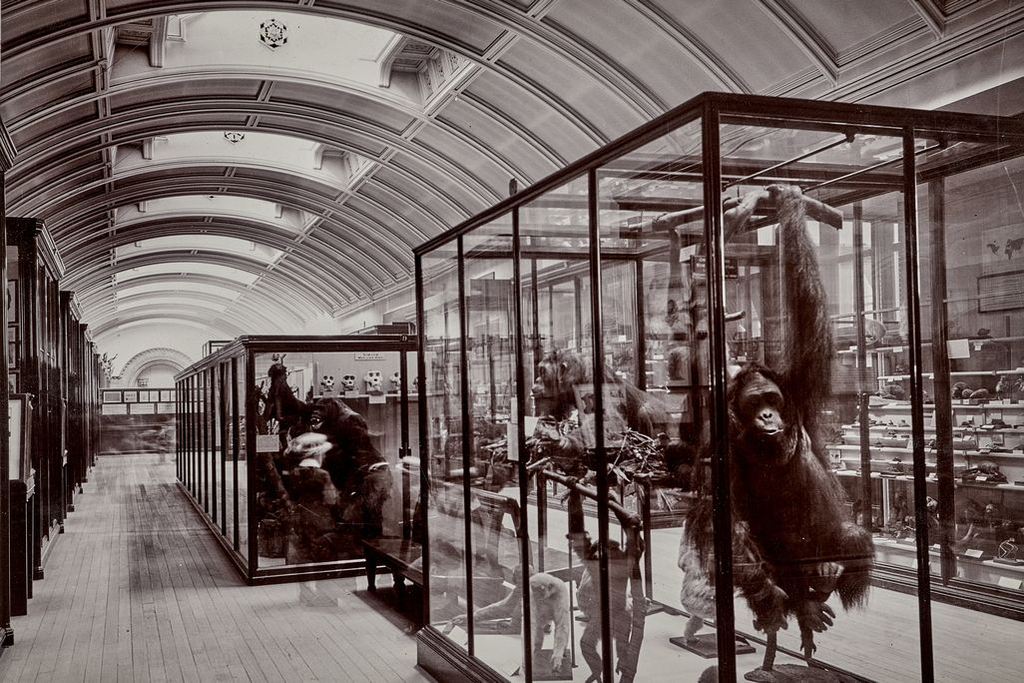
A hidden corner of London’s Natural History Museum is welcoming visitors again, offering a rare opportunity to explore a gallery that has remained closed to the public since the Second World War. The reopening introduces audiences to “Nature and Us,” an exhibition bringing together objects that reveal the complicated, fascinating relationship between humans and the natural world. From animal skeletons and Neolithic tools to memorabilia drawn from popular culture, the collection offers a fresh perspective on how people have studied, used, celebrated, and sometimes misunderstood nature throughout history.
The gallery’s return is significant not only because it restores access to a previously inaccessible space but also because it encourages visitors to reconsider the connections between humanity and the environment. The objects on display span different periods and areas of interest, bringing scientific specimens into conversation with artifacts from human history and contemporary culture.
For a museum famous for its dinosaur skeletons, geological collections, and displays of biodiversity, the reopening represents an opportunity to tell a broader story. Nature is not simply something that exists outside human society. It influences how communities develop, what materials people use, how cultures express themselves, and how modern societies understand their responsibilities toward the planet.
The “Nature and Us” exhibition places those connections at the center of the visitor experience. By combining scientific objects with archaeological finds and pop culture memorabilia, it offers an accessible way to explore how attitudes toward the natural world have changed over time—and why those relationships matter today.
A Hidden Gallery Reopens at the Natural History Museum
London’s Natural History Museum is one of the United Kingdom’s most recognizable cultural institutions. Its collections cover an extraordinary range of subjects, including zoology, botany, paleontology, mineralogy, and the history of life on Earth. Millions of visitors have passed through its galleries to encounter dinosaur fossils, remarkable animal specimens, and displays explaining the processes that shape the natural world.
Yet even within a museum of this scale, not every space has always been accessible to the public. Some rooms have been used for research, storage, or other institutional purposes, while others have remained closed for extended periods as buildings and collections changed.
The reopening of a gallery that has been inaccessible to the public since the Second World War offers a particularly compelling reason to look again at the museum’s history. A space that has remained outside the normal visitor route for decades can reveal how museums evolve, how their priorities change, and how objects acquire new meanings as they are displayed in different contexts.
The “Nature and Us” exhibition gives the restored public space a clear purpose. Rather than presenting a collection of unrelated curiosities, it brings together objects that can help visitors explore the relationship between human activity and the natural environment.
This approach makes the gallery more than an architectural discovery. It becomes a place for considering how scientific knowledge, cultural traditions, and everyday experiences shape the ways people understand nature.
For returning museum visitors, the reopened space may provide a different experience from the familiar major galleries. For first-time visitors, it offers another way to engage with the institution’s collections and the wider questions they raise.
What Is on Display in the ‘Nature and Us’ Exhibition?
The exhibition brings together dozens of objects representing different dimensions of the relationship between humans and nature. Animal skeletons, Neolithic tools, and pop culture memorabilia form part of a collection that moves between natural history, archaeology, and modern cultural expression.
At first glance, these objects may appear to belong to separate worlds. An animal skeleton is a scientific specimen, a prehistoric tool is an archaeological artifact, and a piece of popular culture memorabilia may be associated with entertainment or contemporary life.
Placed together, however, they can help tell a connected story about humanity’s place in the natural world.
Animal remains can reveal the structure, movement, and adaptations of living creatures. Skeletons allow scientists to examine how bodies function, how species are related, and how animals have evolved to survive in particular environments. They can also encourage visitors to think about the diversity of life and the ecological relationships that sustain it.
Neolithic tools offer a different kind of evidence. They show how early communities used materials available in their surroundings to develop technologies, prepare food, shape objects, and respond to the demands of daily life.
Pop culture memorabilia introduces yet another perspective. Popular entertainment frequently uses animals, landscapes, and natural imagery to tell stories, create recognizable characters, and express ideas about the environment. These representations influence how people imagine nature, even when they are not intended as scientific explanations.
The combination of objects allows visitors to consider nature through multiple lenses. Scientific research, practical knowledge, and cultural imagination all contribute to the ways people understand the world around them.
The exhibition’s strength lies in these connections. Instead of treating natural history as a subject limited to specimens and scientific classifications, “Nature and Us” invites visitors to explore how the natural world intersects with human creativity, technology, and identity.
Animal Skeletons Reveal the Diversity of Life
Animal skeletons are among the most immediately striking objects in natural history collections. They can appear dramatic or unfamiliar, yet they provide detailed evidence of the structures that support life.
Bones and other skeletal elements help scientists understand how animals move, feed, and interact with their environments. Differences in skull shape, limb length, spinal structure, and joint arrangement can reveal adaptations to particular ways of living.
For example, the skeleton of an animal adapted for running may display different proportions from that of a creature designed for climbing or swimming. The arrangement of teeth can provide clues about diet, while the structure of limbs can offer evidence of how an animal moves through its habitat.
Skeletal specimens can also help visitors understand the relationship between anatomy and evolution. Species that look very different on the outside may share underlying structural features, reflecting their evolutionary histories. Conversely, animals that live in similar environments may develop comparable adaptations even when they are not closely related.
Displaying animal skeletons within an exhibition about the relationship between nature and people can encourage questions beyond anatomy. How have humans studied animals? How have different species influenced art and storytelling? What can skeletal remains reveal about changes in ecosystems and the history of biodiversity?
Natural history museums preserve specimens that help answer these questions. Their collections provide researchers with material that can be studied using new methods, allowing discoveries to emerge long after an animal was first collected.
For visitors, the skeletons offer an opportunity to observe details that are difficult to appreciate through photographs alone. The scale, structure, and complexity of the specimens can make the diversity of life feel immediate and tangible.
Neolithic Tools Offer a Glimpse Into Humanity’s Past
The inclusion of Neolithic tools introduces a historical dimension to “Nature and Us.” The Neolithic period, often associated with the development and spread of farming in different parts of the world, marked major changes in how many human communities obtained food, organized settlements, and interacted with their environments.
The transition toward farming did not happen at the same time everywhere, nor did all communities follow identical paths. Nevertheless, the period is often associated with developments such as the cultivation of plants, the management of domesticated animals, and the growth of more settled ways of life.
Tools were essential to these changes. People shaped stone, wood, and other available materials into objects used for cutting, scraping, grinding, and performing everyday tasks. The design of a tool reflected both the needs of its user and the materials that could be obtained from the surrounding environment.
Archaeological artifacts provide evidence of the skills and knowledge developed by early communities. Even a small object can reveal information about manufacturing techniques, patterns of use, and the practical challenges people faced.
Neolithic tools also encourage visitors to think about the long history of human dependence on natural resources. People have always relied on materials from their environments, but the ways they obtain and use those resources have changed dramatically over time.
Modern societies depend on complex systems of extraction, manufacturing, transportation, and trade. In contrast, many early tools were made directly from materials gathered or prepared by their users. Although the technologies differ, both situations demonstrate the relationship between human needs and the natural world.
By presenting prehistoric tools alongside animal specimens and contemporary cultural objects, the exhibition connects the deep past with questions that remain relevant today.
What Pop Culture Memorabilia Can Tell Us About Nature
The presence of pop culture memorabilia adds an unexpected dimension to a natural history exhibition. Unlike an animal skeleton or an archaeological tool, an item associated with popular entertainment may not initially seem like an obvious way to explore the natural world.
Yet cultural representations of nature are everywhere. Animals appear in films, television programs, toys, advertising, books, games, and works of art. Landscapes can become symbols of adventure, freedom, danger, or environmental loss. Familiar fictional creatures can even influence the way audiences think about real species.
Popular culture can make scientific subjects more accessible by presenting them through stories and recognizable images. A film featuring animals may encourage viewers to learn more about their behavior, while a fictional creature might spark curiosity about evolution, anatomy, or the limits of biological possibility.
At the same time, entertainment does not always portray nature accurately. Animals may be given human characteristics, ecological relationships may be simplified, and complex environmental issues may be reduced to dramatic storylines. Recognizing the difference between fiction and scientific evidence is therefore an important part of understanding how culture influences environmental awareness.
Memorabilia can preserve the history of these representations. An object associated with a popular film or character may reveal how a particular era imagined nature and how those images became embedded in public memory.
Including such material alongside scientific and archaeological objects encourages visitors to consider the different ways knowledge is communicated. Museums do not need to rely exclusively on technical explanations to engage audiences. They can also explore the emotional and cultural connections that shape people’s interest in the natural world.
The result is a more expansive view of natural history, one that recognizes that human relationships with nature are shaped by both direct experience and the stories people tell.
Why the Relationship Between Humans and Nature Matters
The title “Nature and Us” points toward a central question: how should people understand their place within the natural world?
For much of human history, communities have depended directly on local ecosystems for food, water, shelter, and materials. Changes in weather, soil conditions, animal populations, and plant growth could influence whether a community prospered or struggled.
As societies developed larger settlements and more complex technologies, their relationships with nature changed. Agriculture transformed landscapes, industrialization increased the scale of resource use, and modern transportation systems connected people to materials and products from across the globe.
These developments brought significant benefits, including greater food production, new technologies, and improved access to goods. They also created environmental challenges, such as habitat loss, pollution, and pressure on wildlife populations.
Understanding those challenges requires more than scientific data alone. It also involves examining cultural attitudes, economic decisions, historical practices, and the ways people understand their responsibilities toward the environment.
A museum exhibition can help make these connections visible. By placing objects from different periods and contexts together, it can show that the relationship between humans and nature has never been static.
Neolithic tools demonstrate the ingenuity with which people used natural materials. Animal skeletons reveal the biological diversity that exists on Earth. Pop culture memorabilia shows how nature continues to influence human imagination.
Together, these objects can encourage visitors to consider how present-day decisions will shape the world inherited by future generations.
The Natural History Museum’s Role in Public Education
Natural history museums occupy a distinctive position between scientific research and public education. Their collections preserve specimens and artifacts that can support scholarly work, while their exhibitions translate complex ideas into experiences accessible to a broad audience.
The Natural History Museum in London is internationally recognized for its collections and scientific research. Its work includes studying biodiversity, examining the history of life, and investigating environmental changes that affect the planet.
Exhibitions help bring these subjects into public discussion. Visitors can encounter objects directly, ask questions, and explore scientific concepts through visual displays and interpretive material.
A gallery such as “Nature and Us” also offers opportunities to connect scientific information with personal experience. People may arrive with different interests: some are drawn to archaeology, others to animals, design, or popular culture. A varied exhibition can create several entry points into the same central theme.
This approach is particularly valuable for families and younger visitors. Objects that capture the imagination can encourage further questions, leading to a deeper interest in history, biology, or environmental issues.
The reopening of a previously inaccessible gallery also reminds visitors that museums themselves have histories. Their buildings, collections, and exhibition spaces change as curators reassess how best to present knowledge and engage the public.
Making a hidden gallery accessible again can therefore serve two purposes: revealing a part of the institution that many visitors have never seen and providing a new setting for examining familiar subjects from a different perspective.
Why the Reopening Is Significant After Decades of Closure
A gallery that has remained closed to the public since the Second World War carries an unusual sense of historical distance. The decades separating its closure from its reopening encompass enormous changes in science, society, technology, and museum practice.
The Second World War affected cultural institutions across Europe. Buildings and collections faced difficult circumstances, while staff and resources were redirected toward urgent wartime needs. In the years that followed, museums adapted to changing priorities and developed new ways to preserve and present their collections.
A long-closed space can become part of an institution’s hidden history, known to staff or specialists but unfamiliar to ordinary visitors. Reopening such a gallery can renew interest in the building itself as well as in the objects it contains.
The “Nature and Us” exhibition gives the space a contemporary purpose while linking it to enduring questions about the natural world. Its mixture of scientific specimens, archaeological objects, and popular culture material provides a framework for engaging visitors with both historical and modern perspectives.
The reopening also highlights the value of making museum collections accessible. Objects can remain important even when they are not regularly displayed, but public exhibitions allow people to encounter them, consider their significance, and understand how they fit into wider stories.
For Londoners and visitors from elsewhere, the return of the gallery offers another reason to explore the Natural History Museum beyond its best-known attractions.
A New Perspective on the Natural World
The reopening of the hidden gallery at London’s Natural History Museum offers more than an opportunity to see a previously inaccessible space. Through “Nature and Us,” visitors can explore the many ways human lives have been connected to the natural world, from prehistoric toolmaking to modern cultural expression.
Animal skeletons reveal the complexity and diversity of life. Neolithic tools demonstrate how early communities developed practical knowledge from the materials around them. Pop culture memorabilia illustrates the influence of stories and images on how people imagine nature.
Together, the objects show that natural history is not simply a record of animals, plants, rocks, and fossils. It is also a history of human interaction with the environment and the ideas people have developed to understand their place within it.
The gallery’s reopening after decades of closure adds another layer to that story, reconnecting a historic museum space with contemporary audiences and questions.
For visitors, the exhibition promises a chance to discover unexpected objects, make connections between different fields, and reconsider familiar ideas about the relationship between humanity and nature.
Ultimately, “Nature and Us” offers a reminder that the natural world is not separate from human history. It has shaped the tools people make, the communities they build, the stories they tell, and the choices they face today. By bringing these connections together in a newly accessible gallery, the Natural History Museum invites audiences to look at both the past and the present with fresh curiosity.