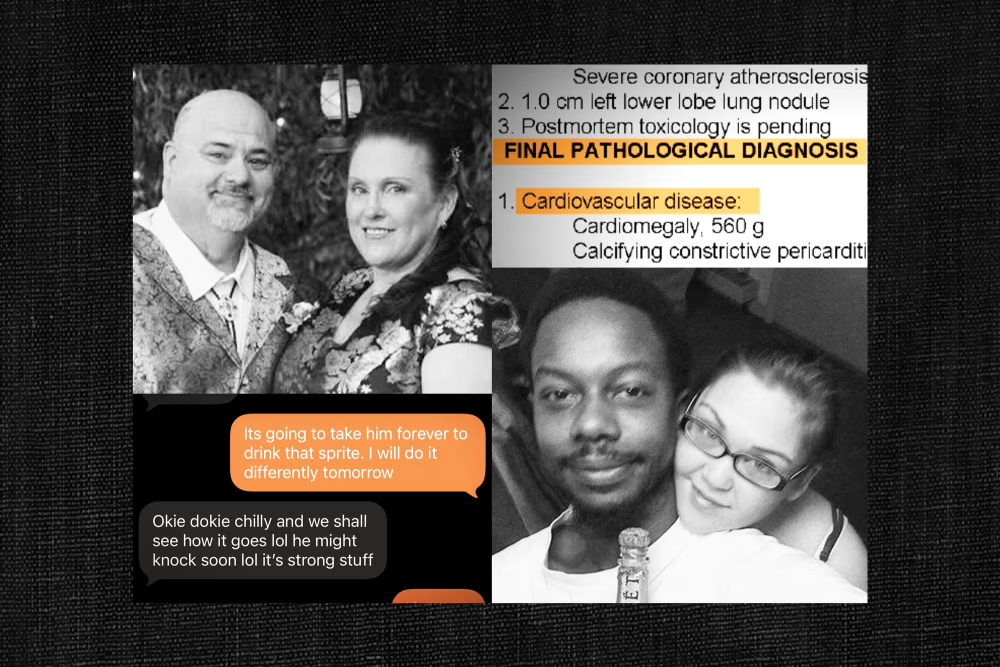
A disturbing alleged poisoning plot involving a mother, her daughter, and a husband has raised questions about family relationships, criminal investigations, and the challenge of determining whether a suspected crime may be connected to earlier incidents. According to officials, the two women allegedly conspired to poison the man, prompting investigators to examine the circumstances surrounding the case and consider whether additional evidence could reveal a broader pattern of wrongdoing.
The question at the center of the investigation is both straightforward and difficult to answer: Was the alleged poisoning an isolated incident, or could it be connected to earlier events?
For investigators, answering that question requires more than suspicion. It involves examining medical records, laboratory results, communications, witness statements, and the timeline of events. Even when authorities believe a poisoning was deliberate, establishing who was responsible—and whether similar conduct occurred previously—can require extensive forensic work.
Without verified case-specific details, it is not possible to establish whether the mother and daughter had allegedly attempted to poison the husband before, what substances were involved, or what evidence investigators have uncovered. Nevertheless, the case raises broader questions about how suspected poisoning plots are investigated, how officials distinguish evidence from speculation, and why earlier incidents can become important in a criminal inquiry.
The Alleged Plot That Raised Serious Questions
According to the allegation reflected in the case’s headline, a mother and daughter planned to poison a husband. If established in court, such a scheme would represent a serious criminal offense, potentially involving conspiracy, attempted murder, or other charges depending on the jurisdiction and the evidence.
Poisoning cases can be particularly difficult to investigate because the suspected substance may initially resemble an ordinary medication, household chemical, or other material. Symptoms can vary considerably depending on the substance, the amount involved, the method of exposure, and the person’s underlying health.
In some cases, a victim may initially believe that an illness is caused by a common infection or another medical condition. A connection to deliberate poisoning may only become apparent after laboratory testing, a review of medical history, or the discovery of suspicious communications.
Investigators must therefore establish a clear sequence of events. They need to determine what the alleged victim was exposed to, whether the exposure caused harm, and whether the available evidence supports the conclusion that another person deliberately introduced the substance.
In a case involving relatives, investigators may also examine the relationships between the people involved, possible motives, access to the victim, and communications that could clarify the alleged plan.
However, family conflict alone is not proof of criminal intent. A sound investigation must connect the evidence to specific actions rather than rely on assumptions about relationships or behavior.
Why Investigators May Ask Whether It Happened Before
When authorities investigate an alleged poisoning, one of the most important questions is whether earlier incidents might be relevant.
A suspected victim may have experienced unexplained illnesses, recurring symptoms, or other medical emergencies before investigators became aware of a possible crime. Those events could be unrelated, but they may also provide important context if forensic evidence establishes a connection.
Investigators might review previous hospital visits, medical test results, prescriptions, and reports of unusual symptoms. They may also interview relatives, friends, medical professionals, and other witnesses who observed changes in the victim’s condition.
The purpose is not to assume that every earlier illness was caused by poisoning. Instead, investigators seek to determine whether there is reliable evidence connecting separate events.
For example, if laboratory testing identifies a particular toxic substance in a suspected poisoning case, investigators may consider whether earlier medical samples or documented symptoms are consistent with exposure to the same substance. Any such comparison must be supported by qualified forensic and medical analysis.
The timeline also matters. Investigators need to know when the victim became ill, who had access to relevant food or drinks, whether the suspected individuals were present, and whether the circumstances support a deliberate act.
A pattern of suspicious events can justify further investigation, but a pattern is not automatically proof of a crime. Each incident must be assessed on its own evidence.
Could Earlier Incidents Reveal a Pattern?
The possibility of repeated poisoning is one of the most troubling aspects of cases involving alleged attempts to harm a family member. If authorities uncover evidence of earlier deliberate exposures, those incidents could significantly change the scope of an investigation.
A repeated pattern might involve similar symptoms, common access to a suspected substance, consistent timing, or communications that suggest prior planning. Investigators would need to determine whether those similarities are meaningful or merely coincidental.
The strongest evidence would typically come from a combination of independent sources. Laboratory findings could establish the presence of a toxic substance, medical records could document the victim’s condition, and digital or physical evidence could help establish who had access to the substance.
Witness testimony might also help investigators reconstruct events that occurred before the alleged plot came to light.
Even then, authorities must distinguish between a suspicious pattern and proof that a particular person caused each incident. A medical condition can produce recurring symptoms, and an apparent similarity between events does not necessarily mean they share a criminal cause.
In the case described by the headline, it would be premature to conclude that the mother and daughter had poisoned the husband before. Such a conclusion would require verified information about the investigation, including whether earlier incidents were formally examined and whether evidence connected them to the accused individuals.
Until those facts are established, the question remains an investigative possibility rather than a proven part of the case.
The Role of Forensic Evidence in Poisoning Investigations
Forensic science can play a central role in determining whether an alleged poisoning occurred.
Toxicologists analyze biological samples and other materials to identify potentially harmful substances. Depending on the circumstances, investigators may also examine food, beverages, containers, medications, or other items that could be relevant to the suspected exposure.
The results must be interpreted carefully. Detecting a substance does not always establish when or how it entered the body, whether it caused the reported symptoms, or whether the exposure was intentional.
Some substances can occur naturally, be prescribed for legitimate medical purposes, or remain detectable after an earlier exposure. Investigators therefore need medical context and reliable documentation to interpret laboratory findings accurately.
The timing of sample collection can also affect the results. Certain substances are difficult to detect after a period of time, while others may leave evidence that can be identified through specialized testing.
In a suspected criminal case, maintaining the integrity of evidence is essential. Investigators must document how samples were collected, stored, transferred, and analyzed. This process helps ensure that findings can be reviewed and challenged in court.
Forensic evidence is most persuasive when it supports a coherent account of what happened and is consistent with other independently established facts.
Digital Records and Communications May Provide Important Clues
Modern criminal investigations often extend beyond physical evidence. Messages, emails, online searches, financial records, and other digital materials can help establish a timeline or clarify the relationship between suspects and an alleged victim.
In a suspected conspiracy, investigators may look for communications that appear to show coordination, advance planning, or knowledge of an intended act. They must also consider the context of those communications rather than interpreting isolated statements as conclusive proof.
Digital evidence can be incomplete or misleading if viewed without surrounding information. A message may have an innocent explanation, an account may have been accessed by another person, and a search does not necessarily demonstrate that someone acted on the information found.
Investigators therefore need to establish the authenticity of relevant records and determine who created or sent them. Where appropriate, forensic specialists may examine devices and associated records while following applicable legal procedures.
In a case involving two relatives, communications could potentially help establish whether they acted together or whether their involvement has been misunderstood.
However, no specific digital evidence can be attributed to the mother and daughter described in the headline without verified reporting about the case.
Motive, Opportunity, and the Danger of Assumptions
Public attention often focuses on motive when a suspected crime occurs within a family. Questions about money, relationships, inheritance, domestic conflict, or personal grievances can quickly dominate discussion.
Motive can be relevant to an investigation, but it is not the same as proof. A person may have a reason to dislike or resent someone without committing a crime. Conversely, an alleged offense may occur for reasons that are not immediately apparent to investigators.
Opportunity also requires careful analysis. Establishing that a suspect had access to a victim or a potentially harmful substance does not automatically demonstrate that the suspect used it unlawfully.
A strong case generally depends on the combined weight of the evidence: what happened, when it happened, how the victim was exposed, and whether the available information reliably connects the accused to the alleged act.
These distinctions are especially important in cases that attract public attention because of their disturbing circumstances. Sensational interpretations can spread quickly, even when essential details remain unknown.
Responsible reporting should identify what authorities have alleged, what evidence has been publicly confirmed, and what remains unresolved.
Why the Legal Process Matters
An allegation of attempted poisoning can carry serious legal consequences. Depending on the jurisdiction and the facts, prosecutors may consider charges involving conspiracy, attempted murder, assault, or the unlawful administration of a harmful substance.
The precise charges depend on the applicable law and the evidence available. Prosecutors generally need to establish the required elements of each offense, including any necessary proof of intent.
A conspiracy allegation may require evidence that the individuals knowingly agreed to participate in an unlawful plan. An attempted-murder allegation may require proof of a specific intent to kill and conduct that went beyond mere preparation, although the legal standards vary by jurisdiction.
The defense may challenge the reliability of forensic testing, the interpretation of communications, witness credibility, or the prosecution’s account of events.
A court must evaluate the evidence under the relevant legal standard rather than simply accept the version of events that attracts the most public attention.
It is also important to distinguish between an arrest, a formal charge, a trial, and a conviction. These are separate stages of the legal process, and none should be described as interchangeable with another.
Until a case has been resolved, the accused must be treated as presumed innocent under the applicable legal principles.
The Human Impact of Suspected Family Poisoning
Cases involving alleged violence within a family can have consequences extending well beyond the immediate victim and suspects.
Relatives may struggle to understand how a trusted relationship could become the focus of a criminal investigation. Friends may find themselves asked to provide evidence about private conversations or past events. Children and other family members can also be affected by the uncertainty and public scrutiny surrounding a case.
For the person who may have been poisoned, the experience can involve both physical harm and a loss of trust. If someone suspects that a relative deliberately caused an illness, ordinary activities such as eating a meal or accepting medication may become sources of anxiety.
The possibility of repeated exposure can intensify that uncertainty, particularly when earlier medical problems have not been explained.
At the same time, the accused individuals and their families may face intense public judgment before a court has determined what happened. This is another reason to report allegations carefully and avoid presenting unproven theories as established facts.
The human consequences make a thorough investigation important, but they also make accuracy essential.
The Question That Remains: Had They Done It Before?
The question raised by the headline is whether investigators have evidence that the alleged plan was part of a longer history of attempts to harm the husband.
That question cannot be answered reliably without the specific case records or verified reporting. No confirmed information has been established here about previous poisoning incidents, earlier victims, the substances allegedly involved, or whether authorities have formally connected other events to the mother and daughter.
If investigators do identify earlier incidents, the next step would be to determine whether those events are supported by medical and forensic evidence and whether a reliable connection exists to the people under investigation.
If no such evidence emerges, the earlier incidents may have no connection to the alleged plot at all.
The difference between these possibilities is substantial. A suspected attempt to poison one person is already a serious allegation; claims of repeated attempts would require additional evidence and should not be added to the story simply because they appear plausible.
For readers following the case, the most meaningful developments will be verified findings from investigators, formal court documents, and testimony that clarifies the timeline and the nature of the alleged conduct.
Conclusion: Evidence Must Come Before Conclusions
The allegation that a mother and daughter plotted to poison a husband raises disturbing questions about trust, motive, and the possibility of repeated harm. It also illustrates the complexity of investigating suspected poisoning, where medical evidence, forensic analysis, digital records, and witness accounts may all be needed to reconstruct events.
The central question—whether similar incidents occurred before—can only be answered through reliable evidence. Earlier illnesses, family disagreements, and suspicious circumstances may justify further inquiry, but they do not establish that another crime took place.
A careful investigation must determine what happened, whether the alleged exposure was deliberate, who may have been responsible, and whether any earlier events can be connected to the same case.
Until verified case-specific details become available, the possibility of previous poisoning attempts remains unconfirmed. The responsible approach is to follow the evidence, respect the legal process, and distinguish clearly between official allegations and proven facts.
In a case this serious, the truth depends not on the most dramatic theory, but on what investigators can establish and what the evidence can ultimately demonstrate in court.