Photos are such a familiar part of modern life that it is easy to forget how extraordinary photography once seemed. Today, people can capture a sunrise, a family gathering, a beloved pet, or a historic event with a smartphone in seconds. Images can be edited, shared, printed, and viewed around the world almost instantly. But in the early days of photography, creating a single picture could require hours of preparation, specialized equipment, and a great deal of patience.
Before photography became widely available, people relied on paintings, drawings, and written descriptions to preserve memories and record important events. A portrait required an artist, time, and often considerable expense. The arrival of photography changed that relationship between people and images, offering a new way to document reality with remarkable detail.
The earliest photographs were more than technical experiments. They marked the beginning of a visual revolution that would eventually transform journalism, science, art, family life, and our understanding of history. From the first surviving camera images to early photographs of people, pets, and presidents, these pioneering pictures reveal how an extraordinary invention became an essential part of everyday life.
The First Photograph: A View From a Window
The story of photography begins in the early 19th century, when inventors were searching for a way to capture images formed by light without having to draw them by hand.
One of the most important figures in this history was Joseph Nicéphore Niépce, a French inventor who experimented with light-sensitive materials. Around 1826 or 1827, Niépce produced what is generally recognized as the oldest surviving photograph made with a camera.
Known as View from the Window at Le Gras, the image depicts buildings and rooftops seen from an upper-floor window at Niépce’s estate in Saint-Loup-de-Varennes, France.
The picture looks unusual by modern standards. Its shapes are indistinct, and the light appears to fall across the scene in ways that can make the image difficult to interpret at first glance. Nevertheless, its historical importance is enormous. Rather than relying on an artist to reproduce the view, Niépce used light itself to create a lasting image.
His process, called heliography, involved a light-sensitive substance applied to a metal plate. The exposure took an exceptionally long time, likely many hours under the conditions used for the surviving image. During that period, the sun moved across the sky, illuminating different parts of the scene.
The result was far from the instant photography people enjoy today. Yet it demonstrated that an image created by a camera could be preserved.
Niépce’s achievement did not immediately make photography practical or widely accessible. The process was complicated, and the resulting pictures lacked the clarity and convenience that would eventually become standard. Still, it established a crucial foundation for the inventors who followed.
Louis Daguerre and the Birth of Practical Photography
Another major milestone arrived through the work of Louis Daguerre, a French artist and inventor who collaborated with Niépce before developing his own photographic process.
After Niépce’s death in 1833, Daguerre continued experimenting with ways to make photographs clearer and easier to produce. His efforts led to the daguerreotype, a process publicly announced in 1839.
A daguerreotype was created on a polished, silver-coated copper plate. The plate was treated with chemicals that made it sensitive to light, exposed inside a camera, and then developed to reveal an image. Each photograph was a unique object rather than a negative from which numerous prints could easily be made.
Compared with Niépce’s earliest experiments, the daguerreotype could produce impressively detailed pictures with much shorter exposures under suitable conditions. The invention attracted enormous attention, and photography began moving from experimental science toward public use.
Portrait studios gradually appeared in cities, giving people opportunities to have their likenesses recorded without commissioning a traditional painted portrait. Although early photographic equipment remained expensive and the process demanded technical skill, the possibility of preserving a person’s appearance was becoming increasingly accessible.
The year 1839 is widely remembered as a defining moment in photography’s public history. It marked the beginning of a period in which photographs increasingly became part of ordinary social and cultural life.
Why Early Photographs Looked So Different
Looking at the earliest photographs, modern viewers may wonder why the images seem faded, mysterious, or almost unreal. The answer lies in the technology available at the time.
Early photographic materials were far less sensitive to light than today’s digital sensors and photographic film. Exposures often needed to last several minutes or longer, depending on the method, lighting, and equipment.
Subjects had to remain very still. Even a small movement could produce a blurred image, making spontaneous photographs difficult to achieve. This was particularly challenging when photographing children, animals, or busy streets.
Photographers also had limited control over how different colors appeared in a monochrome image. Some materials responded more strongly to certain wavelengths of light than others, causing the brightness of objects in a photograph to differ from what the human eye perceived.
Equipment was bulky, and the chemical processes required careful handling. Taking a photograph was not simply a matter of pressing a button. It involved preparing materials, positioning the camera, calculating exposure, and developing the image.
These limitations influenced the subjects early photographers chose. Buildings, landscapes, monuments, and still objects were easier to photograph than moving people. The technology itself helped shape the visual character of photography’s first decades.
The First Photographs of People
Some of the most fascinating early photographs show human beings, although photographing a person was initially much more difficult than capturing an empty street or a building.
One famous example appears in a daguerreotype of Paris made by Daguerre around 1838. The image shows a city street that seems largely deserted, even though Paris was a busy urban center.
The explanation is exposure time. People and carriages moving through the street did not remain in one position long enough to register clearly. However, a man having his shoes polished apparently stayed in place long enough to appear in the photograph.
The figures are small, but the image is historically significant because it is often described as containing the earliest known photographic depiction of a person.
This picture also illustrates an important distinction between the first photograph of a person and the first photographic portrait intentionally made of a person. Early photographs captured human figures in different circumstances, and the surviving historical record does not always establish a single uncontested first for every category.
By the 1840s, photographic portraiture was becoming increasingly popular. People could sit for portraits that recorded their facial features, clothing, and expressions with a level of detail that was difficult to achieve quickly through painting.
Yet the experience could be uncomfortable. Subjects sometimes had to remain motionless for an extended period, and portrait studios used supports to help keep their customers steady. Smiles were less common than they are in modern snapshots, partly because holding an expression for a long exposure could be tiring.
For many families, however, the inconvenience was worthwhile. A photograph offered a lasting record of a loved one that could be kept, displayed, or shared across generations.
The First Photographs of Presidents
Photography also changed the way political leaders were represented to the public. Before cameras became widely available, portraits of presidents and other prominent figures were typically produced by painters, engravers, and illustrators.
Photography introduced a new way to document political life. It could preserve a leader’s appearance more directly and provide visual records that newspapers, publishers, and historians could use.
John Quincy Adams, the sixth president of the United States, is associated with one of the earliest surviving photographic portraits of an American president. A daguerreotype of Adams was made in 1843, years after he had left office. The image is a reminder that early presidential photographs were not necessarily taken while a subject occupied the White House.
William Henry Harrison, the ninth president, died in 1841, only weeks after taking office. Although portraits of Harrison existed in painted and printed forms, the surviving photographic record from the earliest years of the medium is more complicated than a simple list of firsts.
By the middle of the 19th century, photography was becoming an increasingly important part of political documentation. Abraham Lincoln, for example, was photographed numerous times during his political career and presidency. His images helped create a recognizable public identity at a time when photographs could be reproduced and circulated with growing efficiency.
Photographs of political figures would eventually become central to campaign coverage, official government records, historical archives, and public memory. What began as a demanding technical process became a powerful means of connecting citizens with the people who shaped their country.
Photographing Pets: A Different Kind of Challenge
Today, pet photography is everywhere. People photograph their dogs sleeping, their cats exploring boxes, and their animals making amusing expressions. Many pets appear in dedicated social media accounts, calendars, advertisements, and family photo albums.
In the earliest decades of photography, however, photographing an animal presented a particular challenge. Dogs and cats rarely understood the need to remain still, and long exposure times made movement especially problematic.
Early animal photographs therefore often relied on patience, careful positioning, and the cooperation of the animal’s owner. A photographer might have to wait for a pet to settle down or arrange the setting to minimize movement.
The earliest surviving photographs of pets are not always easy to classify. Some images show animals in domestic settings, while others depict horses, livestock, or animals included in scientific and artistic studies. It is difficult to identify one universally accepted first photograph of a pet because historical collections differ in their definitions and documentation.
Nevertheless, animal photography developed alongside portraiture and documentary photography. As cameras became easier to operate and exposure times shortened, photographers gained more opportunities to capture animals in natural poses.
The change was significant. Animals that had previously appeared mainly in paintings, drawings, and engravings could now be recorded photographically. Owners could preserve a visual memory of a beloved companion, while photographers could document animal behavior and appearance with increasing accuracy.
The modern pet photograph may seem ordinary, but it belongs to a tradition that began when every successful image required patience and technical effort.
The First Photographs of War and Historic Events
Photography’s ability to preserve real-world scenes made it particularly important for documenting history. During the 19th century, photographers began recording military campaigns, public ceremonies, infrastructure projects, and the changing appearance of cities.
The Crimean War of the 1850s became one of the earliest major conflicts to receive extensive photographic documentation. British photographer Roger Fenton traveled to the region in 1855 and produced images of soldiers, camps, and landscapes.
The equipment and photographic processes of the period imposed serious limitations. Cameras and supplies were heavy, exposures were relatively long, and the wet-plate collodion process required photographers to prepare and develop their plates under demanding conditions. Action scenes were especially difficult to capture.
As a result, many early war photographs showed camps, equipment, landscapes, and posed groups rather than the immediate chaos of battle.
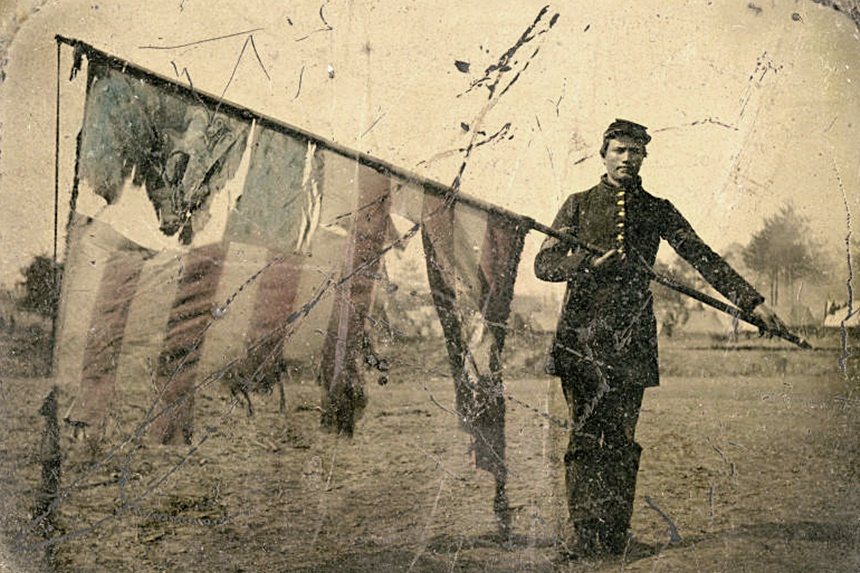
Photography’s documentary role expanded during the American Civil War from 1861 to 1865. Photographers such as Mathew Brady, Alexander Gardner, and their associates created images of soldiers, military camps, landscapes, and battlefields. Some photographs brought the physical consequences of war into public view in a way that illustrations could not fully replicate.
These pictures were not neutral windows into the past. Photographers selected subjects, arranged scenes in some cases, and worked within the technical and editorial limits of their time. Still, their images became valuable historical records, offering details about clothing, weapons, architecture, and daily life.
The camera had begun to change not only how people remembered individuals but also how entire generations understood major events.
From Rare Experiments to Everyday Snapshots
Photography continued to evolve throughout the second half of the 19th century. Improvements in lenses, photographic plates, chemicals, and printing methods gradually made the process more reliable.
A major transformation came with the development of dry photographic plates, which reduced the need to prepare and develop materials immediately at the location. Later innovations made cameras increasingly practical for amateurs rather than trained professionals alone.
George Eastman helped bring photography to a wider public through the development and marketing of simpler cameras and roll film. The introduction of the Kodak camera in 1888 was a landmark in making photography more accessible. Instead of requiring every customer to master the full technical process, the system allowed people to take pictures and send the camera or film for processing.
Photography was no longer limited to professional studios, scientific experiments, or wealthy customers. Families could begin documenting holidays, celebrations, children, pets, and ordinary moments of daily life.
The camera gradually became a tool for personal memory as well as public record. Family albums preserved faces and milestones that might otherwise have disappeared from living memory. Travel photography allowed people to record places they visited. Newspapers and magazines increasingly used photographs to accompany stories and illustrate events.
Each innovation brought photography closer to the form familiar today.
How Digital Photography Changed Everything
The shift from film to digital photography introduced another major transformation. Digital cameras replaced chemical film with electronic sensors that converted light into data. Images could be reviewed immediately, stored electronically, and transferred between devices without waiting for film to be developed.
Smartphones took this convenience even further. A camera became part of a device that people carried throughout the day, allowing photographs to be taken in almost any setting.
Digital editing also changed how images could be adjusted and presented. Exposure, contrast, color, and composition could be modified through software, while online platforms made it possible to share pictures with enormous audiences.
This accessibility has created new opportunities for journalism, education, research, and personal expression. It has also raised questions about authenticity, privacy, image manipulation, and the reliability of photographs as evidence.
In the earliest days of photography, the challenge was to capture and preserve an image at all. Today, people must often decide which images to keep, which to share, and how to determine whether an image accurately represents what happened.
The technology has changed dramatically, but the central purpose remains recognizable: photography allows people to preserve a moment beyond the time in which it occurred.
Why the First Photographs Still Matter
The first photographs are important not simply because they were technical achievements. They reveal how people began developing a new relationship with visual evidence, personal memory, and historical documentation.
Niépce’s view from a window demonstrated that light could create a lasting image. Daguerre’s process helped bring photography into public awareness. Early portraits preserved the appearances of individuals who lived before cameras became commonplace. Images of streets, political figures, animals, and battlefields opened new possibilities for documenting the world.
These photographs also remind us that technological revolutions often begin with imperfect results. The earliest images were slow to produce, difficult to interpret, and far removed from the sharp, colorful photographs people take today. Yet they established the foundations for a medium that would influence nearly every aspect of modern culture.
The history of photography is ultimately a story about the human desire to remember. People have always wanted to preserve the faces of loved ones, record important events, and capture the places that shape their lives. Photography gave that desire a new form.
The next time you take a quick picture of a family member, a pet, or an ordinary moment at home, consider how much history stands behind that simple action. What now takes a fraction of a second once required experimentation, specialized materials, and extraordinary patience.
The first photographs may look distant and unfamiliar, but their purpose remains remarkably close to our own. They were created by people who wanted to hold on to a moment—and, in doing so, helped change the way the world remembers.