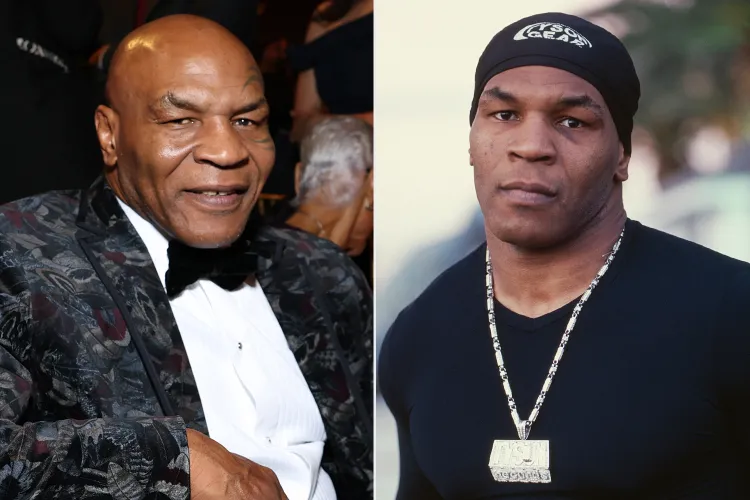
Mike Tyson has spent decades being recognized as one of the most formidable figures in boxing history. His explosive power, intimidating presence, and extraordinary rise to heavyweight champion made him a global sports icon. Yet behind the championship belts and international fame lies a complicated personal story marked by poverty, grief, addiction, controversy, and painful lessons.
Now, at 60, Tyson is looking back on that turbulent journey with a perspective that might surprise people who remember him primarily for his aggressive reputation. In a new four-part Netflix docuseries titled TYSON, the former heavyweight champion revisits some of the most difficult experiences of his life, reflecting on the people he lost, his struggles with cocaine and alcohol, and the consequences of his actions.
In a recent interview with PEOPLE, Tyson offered a striking summary of how he now views his past: “Everything bad that happened to me, I’m grateful for.”
The statement does not erase the pain or controversy associated with his history. Instead, it reflects his belief that the experiences he once viewed as entirely negative helped shape the person he has become.
For a man whose life has repeatedly moved between extraordinary success and personal upheaval, gratitude appears to have become an important part of his ongoing effort to understand his past.
A Difficult Childhood That Shaped a Future Champion
Mike Tyson grew up in Brownsville, Brooklyn, an environment he has frequently described as difficult and marked by poverty. Long before he became a household name, he faced instability, trouble with the law, and challenges that made it difficult to imagine a conventional future.
As a teenager, Tyson was arrested repeatedly for theft and other offenses. By his own account, he had already experienced considerable trouble before discovering the sport that would eventually transform his life.
Boxing became a turning point when Tyson was introduced to trainer Cus D’Amato. The experienced coach recognized the teenager’s physical talent but also understood that developing a champion required more than teaching someone how to punch.
D’Amato became Tyson’s mentor and legal guardian, providing structure, encouragement, and a sense of direction. Their relationship would become one of the most influential connections in Tyson’s life.
Reflecting on D’Amato’s impact, Tyson has emphasized how much the trainer helped him believe in himself.
“He gave me confidence. He gave me character. He made me believe in myself and what I could do,” Tyson told PEOPLE.
For a young person who had struggled with self-esteem and direction, that encouragement proved significant. Tyson began concentrating on boxing rather than the behavior that had repeatedly brought him into trouble.
His transformation was remarkable. In 1986, at just 20 years old, he became the youngest heavyweight champion in boxing history, establishing a record that has remained an important part of his legacy.
However, the discipline and guidance that helped him rise were not always enough to protect him from the pressures that followed.
The Rise to Global Fame—and the Cost of Success
Tyson’s ascent through professional boxing was extraordinarily rapid. His aggressive style, speed, and punching power made him one of the most feared fighters of his era.
As his victories accumulated, so did his wealth and celebrity. He became a major attraction beyond the boxing ring, with media attention increasingly focused on his personal life as well as his sporting achievements.
But fame brought new challenges. Tyson has described feeling vulnerable to people who viewed him primarily as a financial opportunity rather than as a person with emotions, fears, and relationships.
The death of D’Amato in 1985 was especially important in this context. Tyson lost the mentor who had provided stability during his formative years, and he later reflected on how much he missed that protection as his career expanded.
Without the person he trusted most, navigating the business side of professional boxing became increasingly complicated. Tyson has spoken about feeling betrayed by people around him, including former associates and managers, as well as experiencing serious financial difficulties.
His story illustrates the difference between achieving public success and developing the personal support system necessary to sustain it.
Winning championships gave Tyson status and money, but those accomplishments could not guarantee that the people surrounding him would always act in his best interests.
In retrospect, he has come to view these experiences as part of the painful education that accompanied his rise.
The Losses That Left a Lasting Mark
Among the most difficult subjects revisited in TYSON are the deaths of people who played significant roles in Tyson’s life.
The loss of his mother, Lorna Smith, and his mentor D’Amato affected him deeply. Both had been important figures during different stages of his development, and their absence left him without people he had relied on for guidance and emotional support.
Another devastating tragedy occurred in 2009, when Tyson’s four-year-old daughter, Exodus, died following an accident involving a treadmill cord at the family’s home in Arizona.
The loss of a child is an experience no parent expects to face. For Tyson, the tragedy brought an intensely personal dimension to a life that had already been shaped by public scrutiny and repeated upheaval.
Although he has spoken about many aspects of his past, such experiences cannot be reduced to simple lessons about personal growth. Grief does not disappear merely because someone eventually finds a way to live with it.
Tyson’s reflections suggest that he has gradually developed a different relationship with painful memories. Rather than pretending that difficult experiences never happened, he recognizes them as part of his life story.
His willingness to discuss these events also reveals a side of the former champion that can be overlooked when attention focuses exclusively on his reputation inside the boxing ring.
Behind the famous name is a father, a husband, and a person who has experienced profound loss.
Cocaine Addiction and the Struggle to Regain Control
Tyson’s battles with substance use are another major part of the story explored in the Netflix series.
During periods of his adult life, he struggled with cocaine and alcohol, and his addiction contributed to an already unstable relationship with fame, money, and personal responsibility.
In his recent PEOPLE interview, Tyson said he had been free from cocaine and alcohol for 10 years. The milestone represents a significant change for someone who has spoken openly about the destructive effects of his past behavior.
Recovery, however, is rarely as straightforward as a single declaration. Addiction can affect relationships, decision-making, physical health, and the ability to maintain a stable daily life. For Tyson, the consequences unfolded alongside the intense public attention that followed him throughout his career.
The new documentary revisits these difficult periods, including accounts of dangerous experiences involving drug use. Tyson has also described how his struggle with substances intersected with feelings about his identity, self-worth, and the expectations attached to being a famous athlete.
He has discussed using an unconventional psychedelic treatment involving toad-derived 5-MeO-DMT, which he credits with helping him change his relationship with cocaine and alcohol. His personal account should not be mistaken for established medical evidence that the treatment is safe or effective for everyone; psychedelic substances can carry significant risks and should not be treated as a do-it-yourself solution for addiction.
What matters most in Tyson’s reflection is his recognition that the life he once pursued was not sustainable.
His reported decade without alcohol or cocaine represents a personal milestone, but it does not erase the harm associated with addiction. Instead, it offers an opportunity to consider how someone can acknowledge past behavior while continuing to work toward a different future.
Prison, Accountability, and a Controversial Chapter
Tyson’s history also includes one of the most serious and controversial episodes of his life: his 1992 conviction for the rape of Desiree Washington, an 18-year-old beauty pageant contestant.
Tyson denied the accusation and has continued to maintain his innocence. He was convicted in 1992 and sentenced to six years in prison, with four years suspended, as well as four years of probation. He served approximately three years before being released in 1995.
The conviction remains an essential part of any comprehensive account of his life. It cannot be separated from his public legacy or treated simply as another obstacle that made him stronger.
The case had lasting consequences for Tyson’s career, reputation, and personal life. His time in prison also marked a major interruption in his professional trajectory, although he eventually returned to boxing after his release.
Reflecting on his past today requires acknowledging more than the personal difficulties Tyson experienced. It also requires recognizing the seriousness of the conviction and the harm associated with sexual violence.
Tyson’s own interpretation of his experiences does not determine how others must understand them. His feelings of gratitude are personal, and they do not eliminate the need to consider accountability, the experiences of victims, or the wider consequences of his actions.
That distinction is important when discussing a public figure whose story includes both remarkable athletic achievements and deeply troubling events.
The Infamous Evander Holyfield Fight Still Haunts Him
Another moment that continues to define Tyson’s public image occurred during his 1997 rematch with Evander Holyfield.
During the heavyweight bout, Tyson bit Holyfield’s ear twice, resulting in his disqualification. The incident shocked the sporting world and became one of the most notorious moments in modern boxing history.
The fight has been replayed and discussed countless times, turning a single episode into a lasting symbol of Tyson’s volatility.
In his recent interview, Tyson admitted that he remains embarrassed by what happened. He recalled that some people responded to the incident as if it were entertaining, but he does not view it as something to celebrate.
His reaction suggests that the passage of time has changed how he interprets some of his most infamous moments.
Public attention can turn controversial behavior into a spectacle, sometimes obscuring the consequences and the people affected. Tyson’s embarrassment indicates that he does not necessarily share the amusement that some viewers have attached to the incident.
The episode also illustrates the difference between being famous for a moment and being able to live comfortably with its consequences.
For Tyson, the bite fight remains a reminder of a period when anger and impulsive behavior could overshadow everything he had achieved as an athlete.
Why Tyson Says He Is Grateful for the Bad Experiences
The most striking part of Tyson’s current outlook is his willingness to find meaning in experiences that caused pain, shame, or disappointment.
“Everything that was quote-unquote ‘negative,’ turned out to be a positive for me,” he told PEOPLE.
He explained that he believes these experiences contributed to his personal development, adding that he is grateful because they helped make him a better person.
Such a perspective can be difficult to understand when applied to traumatic events. Gratitude does not necessarily mean that a person is thankful for suffering itself, nor does it suggest that every painful experience has an inherently beneficial purpose.
For Tyson, the statement appears to reflect how he interprets his own journey after years of confronting its consequences.
The losses he experienced, the addiction he struggled with, the time he spent in prison, and the mistakes he made are all part of a past he cannot change. What he can change is how he responds to that history in the present.
His comments also suggest that he no longer measures his life exclusively through championship titles, money, or public recognition.
At the height of his fame, Tyson was celebrated for his physical dominance and ability to defeat opponents. His more recent reflections place greater emphasis on personal growth, family, and the challenge of living differently from the person he once was.
That change in perspective does not settle every question about his legacy, but it offers insight into how he understands himself today.
Netflix’s TYSON Revisits the Man Behind the Boxing Legend
The four-part Netflix docuseries TYSON, which premiered on October 13, 2026, examines the different stages of Tyson’s life, from his difficult upbringing and extraordinary boxing career to his personal crises and efforts to understand his past.
The series brings renewed attention to a story that has been documented many times before. Yet Tyson’s reflections at 60 offer a different perspective from those of a young champion who appeared almost invincible inside the ring.
The documentary explores his relationships, addiction, family tragedies, legal troubles, and the complicated legacy he has built over several decades.
Tyson himself has expressed surprise that audiences remain interested in his life after so many documentaries and interviews. At the same time, he acknowledges that revisiting the past can be uncomfortable, particularly when it means confronting memories that cannot be changed.
The continued fascination with his story reflects the contrast between his athletic greatness and the controversies that have accompanied it. His life does not fit neatly into a simple narrative of triumph or failure.
Instead, it raises difficult questions about fame, responsibility, resilience, and whether personal transformation can coexist with a complicated public record.
A documentary cannot provide a final answer to those questions, but it can give audiences a closer look at how Tyson now understands his own experiences.
A Different Definition of Strength
Mike Tyson’s life has included achievements that few athletes can match, alongside losses and controversies that continue to shape how the public sees him.
His latest reflections suggest that he has come to value something different from the dominance that once defined his boxing career.
After years of struggle, he says he is grateful for the experiences that helped change him. His reported decade without cocaine and alcohol is one part of that story, while his willingness to revisit painful memories is another.
Still, gratitude should not be confused with forgetting. The difficult events in Tyson’s history remain significant, and personal growth does not automatically resolve every question about accountability or the impact of past actions.
What his comments reveal is a man attempting to make sense of a life that has repeatedly challenged him in ways no championship fight could.
For Tyson, strength may now mean something more complicated than winning. It may mean confronting uncomfortable memories, recognizing the consequences of past decisions, and trying to live with greater awareness in the present.
His story remains imperfect, controversial, and deeply human. And as TYSON brings his experiences to a new audience, his message is not that suffering should be celebrated, but that even a troubled past can become part of a person’s continuing effort to change.