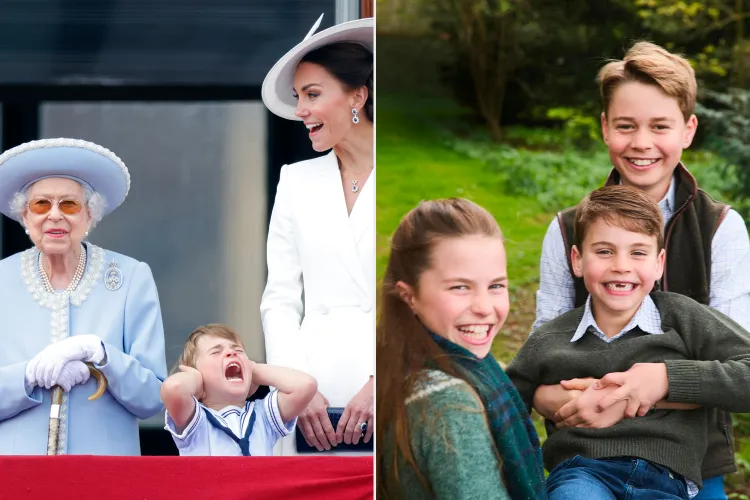
Growing up in a royal family may seem like a dream come true. Royal children can live in historic palaces, attend prestigious schools, meet world leaders, and take part in ceremonies watched by millions of people. Yet behind the beautiful photographs and carefully planned public appearances lies a childhood shaped by expectations that most families never encounter.
For children in the British royal family, everyday experiences can come with additional considerations. Their clothing may attract national attention, their school choices can become news stories, and even a simple appearance at a family event may be interpreted as a reflection of royal tradition. As they grow older, they must also learn how to balance their private lives with the responsibilities associated with their family name.
However, not every rule commonly associated with royal children is an official requirement. Some expectations come from royal protocol, while others reflect long-standing traditions, parental preferences, security arrangements, or practical decisions made to protect young family members. The details can also change depending on a child’s age, position in the line of succession, and level of public involvement.
From learning appropriate public behavior to understanding the importance of privacy, royal children gradually become familiar with a world in which their actions may be observed far more closely than those of their classmates.
Here are 10 important rules, traditions, and expectations that help shape the lives of young members of the British royal family.
1. They Must Learn How to Behave at Official Events
One of the most visible expectations for royal children is learning how to behave during public engagements. Royal ceremonies often involve formal greetings, speeches, photographs, and meetings with people from different backgrounds. Even a relatively short appearance may require patience and attention.
Young children are not expected to behave like adults at every moment. Their parents generally allow them to grow into these responsibilities gradually. Nevertheless, as they become more familiar with official events, they learn basic social expectations, such as greeting people politely, listening when others speak, and following instructions from their parents or event organizers.
Prince George, Princess Charlotte, and Prince Louis have occasionally attracted attention during royal appearances because their reactions are recognizably childlike. A curious expression, a wave, or a moment of restlessness can become a widely shared photograph.
These moments also illustrate the challenge facing royal parents. They must introduce their children to public life while allowing them enough freedom to behave naturally.
The expectation is not necessarily perfect behavior. Instead, royal children gradually learn that official occasions require consideration for the people around them and an understanding of why the event matters.
As they grow older, those early experiences can help prepare them for more demanding responsibilities should they choose or be expected to undertake them.
2. They Are Expected to Dress Appropriately for the Occasion
Clothing is another noticeable part of royal life. Photographs of royal children often show carefully selected outfits that reflect the formality of an event, the weather, and the family’s preferences.
At official occasions, children may wear traditional or relatively formal clothing. At school or during private family activities, their outfits can be much more ordinary. There is no single public rule requiring every royal child to wear a particular style every day.
Nevertheless, clothing choices can carry symbolic meaning when a royal family appears in public. Formal attire may communicate respect for an occasion, while traditional garments can connect an event with its historical or cultural context.
Parents also make practical decisions about children’s clothing. Comfortable shoes, weather-appropriate coats, and outfits suitable for outdoor engagements are important when a child must spend time greeting people or attending a ceremony.
The attention paid to royal children’s clothes can sometimes make ordinary fashion decisions appear more significant than they really are. A coat or dress may attract extensive commentary, even though it was simply chosen by a parent for a particular day.
For young royals, the underlying lesson is similar to that taught in many families: dress appropriately for the situation, respect the occasion, and understand that formal events may involve different expectations from everyday life.
3. They Must Understand the Importance of Privacy
Privacy is one of the most important considerations in the lives of royal children. Unlike most children, they may attract attention from photographers and members of the public simply because of their family connections.
The Prince and Princess of Wales have generally sought to give their children opportunities to experience ordinary family life while acknowledging their public roles. Schooling, friendships, hobbies, and family outings are important parts of childhood, and protecting these experiences can help young royals develop away from constant attention.
The British royal family has also experienced periods when media intrusion became a serious concern. The experiences of previous generations, including the intense press attention surrounding Princess Diana, have influenced wider discussions about the treatment of royal family members and their children.
Privacy does not mean that royal children never appear in public. Official photographs, birthdays, religious celebrations, and selected family occasions are often shared with the public. The distinction is between planned appearances and unnecessary intrusion into a child’s everyday activities.
For young royals, understanding privacy also means learning that not every personal experience needs to become public information. As they grow older, they may have to consider what they share online, how they interact with strangers, and how public attention can affect their relationships.
This expectation is especially relevant in the digital age, when photographs and comments can spread rapidly. Protecting a child’s privacy is not merely a matter of royal protocol; it is also a practical way to preserve a sense of normality during childhood.
4. They Are Expected to Learn Good Manners and Respect
Politeness is an important part of royal public life. Royal children may meet people from different generations, cultures, professions, and social backgrounds, so learning to communicate respectfully is a useful part of their upbringing.
This expectation includes familiar social skills: saying thank you, greeting people appropriately, listening to others, and treating staff and guests with consideration. During formal events, children may also be introduced to particular forms of address and established customs.
However, there is no need to assume that every royal family interaction follows a complicated set of rules. Many expectations are ordinary principles of good manners, adapted to situations that happen to receive public attention.
Children in royal households also grow up around people who help manage family schedules, residences, travel, and official engagements. Learning to treat those individuals respectfully is an important part of understanding that a household functions through the efforts of many people.
Good manners can also help young royals navigate unfamiliar situations. A polite greeting or thoughtful response may make an encounter more comfortable for everyone involved.
As they mature, these habits can become useful in diplomatic and charitable settings, where the ability to listen carefully and communicate respectfully is often more important than formal titles.
Ultimately, courtesy is not simply about following etiquette. It is about recognizing other people’s dignity and treating them with consideration, whether the interaction takes place at a palace reception or in an ordinary school environment.
5. They May Receive Special Guidance About School and Education
Education is a significant part of royal childhood, although there is no single school that every member of the British royal family must attend.
Different generations have followed different educational paths. Some royal children have attended private schools, while others have pursued university education or received additional preparation related to public service. Decisions depend on individual circumstances, family preferences, and the responsibilities a child may eventually undertake.
For Prince George, Princess Charlotte, and Prince Louis, their parents have sought to provide a structured education while allowing them to experience school life alongside other children. Their exact routines and school arrangements are not all matters of public record, and it is important not to mistake media speculation for confirmed policy.
Education can serve several purposes for young royals. It provides academic knowledge, supports social development, and gives children opportunities to build friendships outside their immediate family circle.
For those who may eventually carry out official duties, education can also help develop an understanding of history, government, culture, and international affairs. These subjects may become useful later in life, but they are not exclusive to royal education.
Royal children also need opportunities to discover their personal interests. Sports, music, literature, science, and other activities can help them develop skills and confidence beyond the expectations associated with their family name.
The broader goal is to prepare children for adulthood without reducing their education to a training program for public appearances.
6. They Must Learn That Public Appearances Have a Purpose
As children become familiar with royal events, they may gradually learn why particular ceremonies take place and why the family attends them.
The British monarchy participates in a range of public activities, including commemorations, charitable engagements, national celebrations, and meetings with community organizations. These events can carry historical, cultural, or civic significance.
Young royal children may initially experience such occasions as unfamiliar environments filled with crowds, cameras, and formal procedures. Over time, explanations from their parents can help them understand the meaning behind the events.
For example, a family appearance at a national celebration may introduce children to the traditions associated with the monarchy. A visit connected with a charity may help them learn about the work of organizations supporting people in need.
However, royal children are not necessarily expected to perform official duties simply because they are present at an event. Their participation generally depends on their age, the occasion, and the role being undertaken by the adults accompanying them.
This gradual approach can help children understand the difference between a private family outing and an official engagement. It also allows them to become familiar with public responsibilities without expecting them to take on adult obligations too early.
For children who will later have a more prominent public role, these early experiences may provide a foundation for understanding the institution they belong to and the people it serves.
7. They Are Expected to Respect Family Traditions
Royal families have traditions that have been passed down through generations. These may include holiday gatherings, formal ceremonies, birthday celebrations, religious occasions, and events associated with the monarchy’s annual calendar.
For children, taking part in family traditions can provide a sense of continuity. They learn about the people who came before them, the history of their family, and the customs associated with important occasions.
The British royal family’s Christmas celebrations at Sandringham, for example, have long been part of its public image. Other family events and ceremonial appearances also connect current generations with earlier periods of royal history.
Not every tradition is compulsory for every family member in every circumstance. Attendance and participation can vary according to age, personal circumstances, and the nature of the event.
Royal traditions also evolve. Customs that were important to one generation may be adapted by the next, particularly as family members seek to balance established practices with modern life.
For royal children, the most meaningful part of tradition may be the opportunity to spend time with relatives and understand their family’s shared history. Rituals can create memories and provide a sense of belonging, much as they do in families without royal titles.
Learning about tradition does not necessarily mean accepting every custom without question. As children mature, they can develop their own understanding of the family’s history while deciding how they wish to participate in its future.
8. They Must Follow Security Arrangements
Security is a practical reality for royal children, especially those who are close to the throne or frequently appear in public.
Their family connections can make them targets for unwanted attention, so travel, public events, and certain private activities may involve arrangements that ordinary families do not need to consider. These measures can affect where children go, how they travel, and who is permitted to approach them.
Security arrangements are not the same as etiquette rules. They are intended to reduce risks and protect family members, and their details are often kept private for good reason.
For young children, following these arrangements may involve staying with a parent or trusted adult, observing instructions in crowded places, and understanding that certain activities require additional planning.
As they grow older, royal children may receive more detailed guidance about personal safety, recognizing risks, and dealing with unfamiliar people. Those lessons can be particularly important in a world where information and photographs are easily shared online.
Security considerations can also affect ordinary family experiences. A trip to a public venue or an appearance at a sporting event may require arrangements before the family arrives.
Although such measures can restrict spontaneity, they are part of the environment in which many prominent public figures raise their children. The objective is to protect young family members while allowing them as much freedom as circumstances reasonably permit.
9. They Are Encouraged to Develop a Sense of Duty
The idea of duty is closely associated with the British monarchy. Senior working royals undertake public engagements, support charitable organizations, and represent the monarch at selected events. Children growing up within the family may gradually become familiar with these responsibilities.
However, royal children do not all have identical futures. Their expected roles can differ substantially depending on their position in the line of succession, their age, and decisions made by the family as they mature.
Prince George, as the eldest child of the Prince and Princess of Wales, is directly in line to inherit the throne after his father. His eventual responsibilities are therefore likely to differ from those of his younger siblings. Even so, it would be premature to assume that every detail of his future role has already been determined.
Princess Charlotte and Prince Louis may also take part in public life as adults, but their paths can evolve according to their interests and the family’s needs.
The principle of duty is often introduced gradually. Children may observe their parents attending public events, supporting charities, or meeting people whose work benefits their communities. These experiences can help them understand that public service involves preparation, commitment, and responsibility toward others.
At the same time, developing a sense of duty should not mean overlooking personal wellbeing. Children need room to explore their interests and form their own identities before making decisions about adult responsibilities.
The challenge for a modern royal family is to preserve an understanding of service while recognizing that each child is an individual, not simply a future public figure.
10. They Must Balance Their Royal Identity With Being Children
Perhaps the most important expectation is also the most difficult to define: royal children must learn to live with a public identity while still experiencing childhood.
Their names and family connections may attract attention, but they also have ordinary needs. They need time to play, learn, develop friendships, make mistakes, and discover what interests them.
The Prince and Princess of Wales have often presented family life as an important priority. Public appearances provide glimpses of their children, but they do not reveal the entirety of the family’s private routines or the individual personalities of each child.
Allowing children to be children is especially important when the public may be tempted to interpret every expression or behavior as evidence of their future character. A child who appears shy at one event may be confident in another setting. A moment of impatience does not define a personality, and a formal photograph cannot tell the whole story of a family.
Royal children also grow up in a world where their actions may be compared with those of earlier generations. Such comparisons can create expectations long before they are old enough to understand the full meaning of their position.
A healthy balance requires adults to distinguish between the responsibilities appropriate to a child’s age and the expectations that belong to adulthood. Public appearances can introduce royal traditions, but they should not replace education, friendships, or opportunities for independent development.
The ability to balance these competing demands may be one of the most important skills a young royal develops.
What These Rules Reveal About Modern Royal Childhood
The lives of royal children are shaped by a mixture of tradition, family decisions, public expectations, and practical considerations. Some customs are visible during official ceremonies, while others involve private choices about education, security, and family life.
It is important to distinguish established practices from claims that every royal child must obey a rigid list of rules. The British royal family does not publish a universal childhood rulebook covering every aspect of daily life. Many of the expectations discussed here reflect broader royal protocol, parental guidance, or circumstances that vary from one child to another.
Modern royal parenting also involves a delicate balance between preserving the institution’s traditions and recognizing that children need privacy and freedom to develop. The public may be interested in their clothes, schools, and appearances, but those details represent only a small part of their lives.
For young royals, learning good manners, respecting others, understanding security arrangements, and becoming familiar with family traditions can help them navigate their unusual circumstances. Yet the most important foundations of childhood remain familiar: education, affection, personal growth, and the support of people who care about them.
The rules surrounding royal life may make growing up in a palace look very different from growing up elsewhere. Beneath the ceremony and public attention, however, royal children still face the same basic challenge as other young people: learning who they are while gradually preparing for adulthood.
And perhaps that is the most revealing lesson of all. A royal title may shape a child’s future, but it does not eliminate the need for patience, understanding, and the freedom to grow.